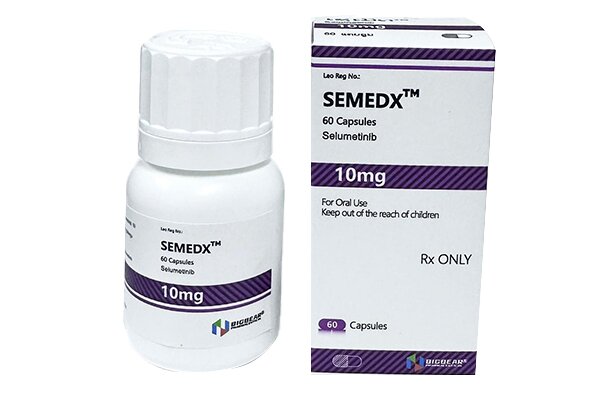
Therapeutic Effects
Selumetinib is a targeted therapeutic agent for tumor cells, with its main active ingredient being a selective inhibitor of mitogen‑activated protein kinase kinase 1 and 2 (MEK1/2).
This inhibitor blocks tumor cell growth and proliferation, reduces the number and size of neurofibromas, and is primarily used for the treatment of patients with inoperable pediatric neurofibromatosis.
Indications
Selumetinib is indicated for the treatment of children aged 3 years and older diagnosed with neurofibromatosis type 1 (NF1) who have symptomatic plexiform neurofibromas (PN).
These tumors are typically large and located in anatomically complex sites, making complete surgical resection unsafe or infeasible.The drug exerts its effect by inhibiting the core signaling pathway driving tumor cell proliferation, helping to control disease progression.
Symptom Relief
Selumetinib primarily improves the following typical symptoms:
Café‑au‑lait spots
Pigmented macules on the skin with a milk‑like appearance.
Multiple neurofibromas
Benign tumors along nerve distributions that may cause pain or compressive symptoms.
Iris hamartomas
Pigmented small nodules appearing in the iris of the eye.
Concomitant Use and Drug Interactions
Special attention is required for concomitant use with other drugs:
1.Erythromycin (a moderate‑strength CYP3A4 inhibitor): May increase plasma concentrations of selumetinib.
2.Fluoxetine (a potent CYP2C19/CYP2D6 inhibitor): Similarly increases systemic exposure of selumetinib.
When using these drug combinations, close medical monitoring and dosage adjustment based on actual clinical conditions are essential to ensure safe and effective treatment.