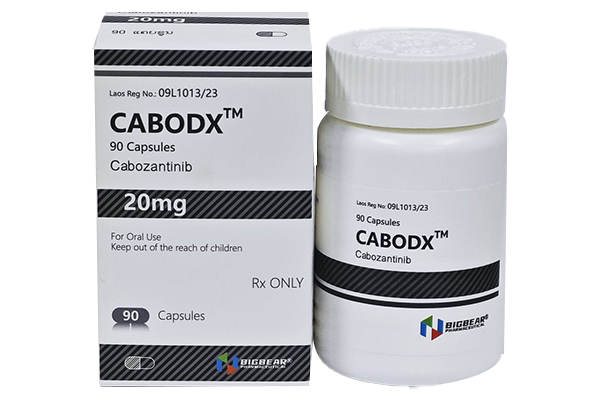
Common Adverse Reactions of Cabozantinib
1. Cabozantinib capsules (Cometriq) (incidence ≥25%): diarrhea, stomatitis, palmar-plantar erythrodysesthesia syndrome (hand-foot syndrome), weight loss, decreased appetite, nausea, fatigue, oral pain, hair color changes, dysgeusia, hypertension, abdominal pain, constipation, AST increased, ALT increased, lymphopenia, alkaline phosphatase increased, hypocalcemia, neutropenia, thrombocytopenia, hypophosphatemia, hyperbilirubinemia.
2. Cabozantinib tablets (Cabometyx) (incidence ≥20%): diarrhea, fatigue, palmar-plantar erythrodysesthesia syndrome (hand-foot syndrome), decreased appetite, hypertension, nausea, vomiting, weight loss, constipation.
3. Cabozantinib tablets (Cabometyx) in combination with nivolumab (incidence ≥20%): diarrhea, fatigue, hepatotoxicity, palmar-plantar erythrodysesthesia syndrome (hand-foot syndrome), stomatitis, rash, hypertension, hypothyroidism, musculoskeletal pain, decreased appetite, nausea, dysgeusia, abdominal pain, cough, upper respiratory tract infection.
Drug Interactions of Cabozantinib
1. Cabozantinib is metabolized in the liver by CYP3A4; it is a substrate of CYP3A4 in vitro. Inhibition of CYP3A4 reduces the formation of N-oxide metabolites by >80%; inhibition of CYP2C9 has minimal effect on metabolite formation (i.e., reduction<20%). inhibition="" of="" cyp="" isoenzymes="" 1a2="">
2. In vitro, it is an inhibitor of CYP2C8, but not an inhibitor of CYP isoenzymes 1A2 or 2D6.
3. In human hepatocyte cultures, it induces CYP1A1 messenger RNA (mRNA) but does not induce CYP1A2, CYP2B6, CYP2C8, CYP2C9, CYP2C19, or CYP3A4 mRNA or isoenzyme-related enzyme activities.
4. In bidirectional assay systems, it is an inhibitor of P-glycoprotein (P-gp) transport activity, but not a substrate. In vitro, it is a substrate of MRP2.
5. Drugs and foods that affect hepatic microsomal enzymes:
(1) Strong CYP3A4 inhibitors: potential pharmacokinetic interaction (increased systemic exposure of cabozantinib). If alternative therapy is available, avoid coadministration. If coadministration cannot be avoided, reduce the daily dose of cabozantinib capsules (Cometriq) by 40 mg (e.g., from 140 mg daily to 100 mg, or from 100 mg daily to 60 mg) and reduce the daily dose of cabozantinib tablets (Cabometyx) by 20 mg (e.g., from 60 mg daily to 40 mg, or from 40 mg daily to 20 mg, or in pediatric patients with BSA<1.2 m="">
(2) Strong CYP3A4 inducers: chronic coadministration may have a pharmacokinetic interaction (reduced systemic exposure of cabozantinib). If alternative therapy is available, avoid chronic coadministration. If coadministration cannot be avoided, increase the daily dose of cabozantinib capsules (Cometriq) by 40 mg as tolerated (e.g., from 140 mg daily to 180 mg, or from 100 mg daily to 140 mg) and increase the daily dose of cabozantinib tablets (Cabometyx) by 20 mg as tolerated (e.g., from 60 mg daily to 80 mg, or from 40 mg daily to 60 mg). If the strong CYP3A4 inducer is discontinued, resume the cabozantinib dose used before starting the inducer 2‑3 days after discontinuing the inducer. The daily dose of cabozantinib capsules (Cometriq) should not exceed 180 mg. The daily dose of cabozantinib tablets (Cabometyx) should not exceed 80 mg.
(3) During treatment, do not consume foods or dietary supplements known to inhibit or induce CYP isoenzymes, including CYP3A4.
6. Drugs affected by hepatic microsomal enzymes: clinically relevant effects on exposure of CYP2C8 substrate drugs are unlikely.
7. Drugs affecting multidrug resistance proteins: MRP2 inhibitors may increase cabozantinib plasma concentrations. Monitor for increased cabozantinib toxicity.
8. Drugs affected by P‑glycoprotein transport system: P‑gp substrates: potential pharmacokinetic interaction (increased plasma concentrations of P‑gp substrates).