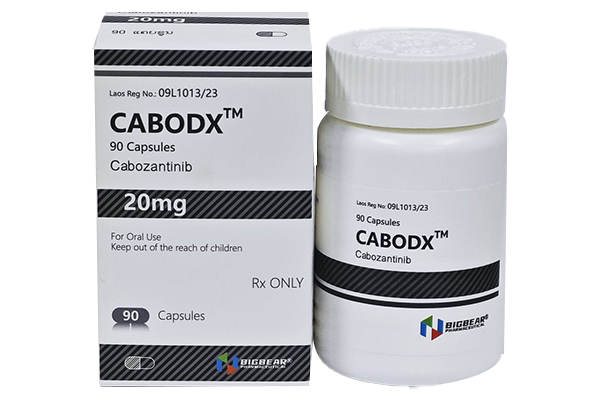
Management of Cabozantinib Side Effects for Healthcare Professionals
Patients should be closely monitored during the first 8 weeks of treatment, as most adverse reactions occur early in therapy.
1. Hepatobiliary System
Very common (≥10%): increased ALT (up to 86%), increased AST (up to 86%), increased alkaline phosphatase (up to 52%), hyperbilirubinemia (up to 25%).
Common (1%-10%): cholelithiasis.
Uncommon (0.1%-1%): hepatic encephalopathy.
2. Gastrointestinal
Very common (≥10%): diarrhea (up to 63%), stomatitis (up to 51%), nausea (up to 43%), oral pain (up to 36%), constipation (up to 27%), abdominal pain (up to 27%), vomiting (up to 24%), dysphagia (up to 13%), dyspepsia (up to 11%), glossodynia.
Common (1%-10%): hemorrhoids, gastrointestinal perforation, gastrointestinal fistula, gastrointestinal hemorrhage, pancreatitis, anal fissure, anal inflammation, cheilitis.
Uncommon (0.1%-1%): esophagitis.
3. Endocrine System
Very common (≥10%): increased thyroid‑stimulating hormone (TSH) (up to 57%).
Common (1%-10%): hypothyroidism, adrenal insufficiency.
Uncommon (0.1%-1%): amenorrhea.
4. Hematologic System
Very common (≥10%): lymphopenia (up to 53%), neutropenia (up to 35%), thrombocytopenia (up to 35%).
Uncommon (0.1%-1%): increased eosinophil count, increased platelet count.
Post‑marketing reports: arterial (including aortic) aneurysms, dissection, and rupture.
5. Skin and Subcutaneous Tissue
Very common (≥10%): palmar‑plantar erythrodysesthesia syndrome (up to 50%), hair colour changes/depigmentation/greying (up to 34%), rash (up to 19%), dry skin (up to 19%), alopecia (up to 16%), erythema (up to 11%).
Common (1%-10%): hyperkeratosis, folliculitis, acne, blister, abnormal hair growth, skin exfoliation, skin hypopigmentation.
Uncommon (0.1%-1%): skin ulcer, telangiectasia.
6. Metabolism and Nutrition
Very common (≥10%): weight decreased (up to 48%), appetite decreased (up to 46%), hypocalcaemia (up to 52%), hypophosphataemia (up to 28%), hypomagnesaemia (up to 19%), hypokalaemia (up to 18%), hyponatraemia (up to 10%), increased lactate dehydrogenase, increased creatine phosphokinase.
Common (1%-10%): dehydration, hypoalbuminaemia.
7. General Disorders and Other
Very common (≥10%): fatigue (up to 41%), asthenia (up to 21%), mucosal inflammation.
Common (1%-10%): abscess (including visceral, intra‑abdominal, skin, dental), fungal infection (including skin, oral, genital), ear pain, tinnitus, pallor, cold extremities, impaired wound healing/wound complications, chills, facial oedema.
Uncommon (0.1%-1%): aspergilloma, hearing loss, cyst, facial pain, localised oedema.
Incidence not reported: haemorrhage.
8. Nervous System
Very common (≥10%): dysgeusia (up to 34%), headache (up to 18%), dizziness (up to 14%).
Common (1%-10%): paraesthesia, peripheral sensory neuropathy, peripheral neuropathy, ageusia, tremor.
Uncommon (0.1%-1%): reversible posterior leukoencephalopathy syndrome (RPLS), ataxia, disturbance in attention, loss of consciousness, speech disorder, transient ischaemic attack (TIA).
9. Musculoskeletal and Connective Tissue
Very common (≥10%): arthralgia (up to 14%), muscle spasms (up to 12%).
Common (1%-10%): musculoskeletal chest pain, osteonecrosis of the jaw (ONJ).
Uncommon (0.1%-1%): rhabdomyolysis.
10. Cardiovascular System
Very common (≥10%): blood pressure increased (up to 96%), hypertension (up to 61%).
Common (1%-10%): hypotension, venous thromboembolism, arterial thromboembolism, atrial fibrillation.
Uncommon (0.1%-1%): angina pectoris, supraventricular tachycardia, activated partial thromboplastin time (aPTT) shortened.
Incidence not reported: QT interval prolongation.
11. Renal and Urinary Disorders
Common (1%-10%): proteinuria, dysuria, haematuria.
Uncommon (0.1%-1%): vaginal haemorrhage.
12. Ocular
Common (1%-10%): vision blurred.
Uncommon (0.1%-1%): cataract, conjunctivitis.
13. Psychiatric
Common (1%-10%): anxiety, depression, confusional state.
Uncommon (0.1%-1%): abnormal dreams, delirium.
14. Respiratory, Thoracic and Mediastinal
Very common (≥10%): dysphonia (up to 20%), oropharyngeal pain.
Common (1%-10%): non‑gastrointestinal fistula (including tracheal, mediastinal emphysema, tracheoesophageal fistula), pulmonary embolism, respiratory haemorrhage (including pulmonary, bronchial, tracheal haemorrhage), pneumonia, aspiration pneumonia.
Uncommon (0.1%-1%): atelectasis, pharyngeal oedema, pneumonitis (non‑infective).
15. Renal
Uncommon (0.1%-1%): acute renal failure.