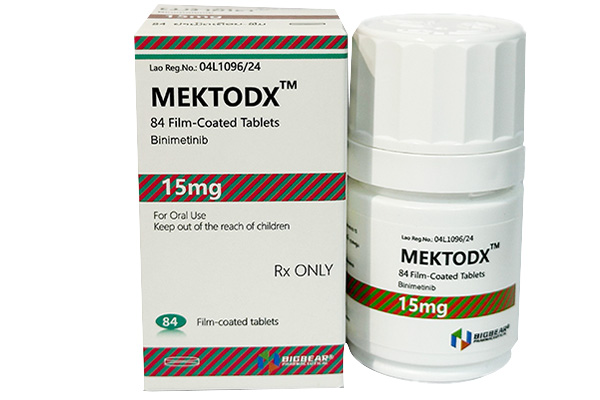
Binimetinib is an antineoplastic agent that inhibits mitogen-activated extracellular signal-regulated kinases MEK1 and MEK2.
Binimetinib Precautions
1. Combination therapy: When used in combination with encorafenib, consider the precautions, warnings, and contraindications for encorafenib.
2. New primary malignancies: New primary malignancies (cutaneous and non-cutaneous) may occur. Monitor patients for new malignancies before, during, and after treatment.
3. Cardiomyopathy: Cardiomyopathy (i.e., symptomatic or asymptomatic LVEF reduction) has been reported in patients treated with binimetinib in combination with encorafenib, sometimes requiring temporary interruption or dose reduction. In the COLUMBUS study, the median time to first onset of left ventricular dysfunction in patients treated with binimetinib and encorafenib was 3.6 months. Cardiomyopathy resolved in 87% of patients treated with binimetinib and encorafenib.
(1) The safety of combination therapy in patients with baseline LVEF below the LLN or<50% has="" not="" been="" established.="">
(2) Closely monitor patients with cardiovascular risk factors.
(3) Assess LVEF by echocardiography or multigated radionuclide angiography (MUGA) before treatment, at 1 month after treatment initiation, and then every 2–3 months. If left ventricular dysfunction occurs, treatment interruption, subsequent dose reduction, or discontinuation may be required.
4. Venous thromboembolism (VTE): Venous thromboembolism has been reported in patients treated with binimetinib in combination with encorafenib.
If DVT or PE occurs, treatment interruption, subsequent dose reduction, or discontinuation may be required.
5. Ocular effects: Ocular toxicities, including serous retinopathy, retinal vein occlusion, retinal pigment epithelial detachment, and macular edema, have been reported in patients treated with binimetinib in combination with encorafenib. The median time to initial onset of serous retinopathy was 1.2 months. Uveitis, including iritis and iridocyclitis, has also been reported in patients treated with binimetinib and encorafenib.
(1) Perform ophthalmic examinations periodically during treatment and as clinically indicated (i.e., upon new or worsening visual disturbances; follow up on new or persistent ophthalmic findings). Monitor patients for visual symptoms at each visit. If ocular toxicity occurs, interrupt treatment, reduce dose, or permanently discontinue.
(2) The safety in patients with a history or predisposition of retinal vein occlusion (including uncontrolled glaucoma or a history of hyperviscosity or hypercoagulability syndromes) has not been established.
6. Pulmonary effects: Interstitial lung disease or pneumonitis has been reported in patients treated with binimetinib in combination with encorafenib.
(1) Evaluate patients presenting with manifestations of interstitial lung disease (e.g., new or progressive pulmonary symptoms).
(2) If interstitial lung disease is confirmed, treatment interruption, subsequent dose reduction, or discontinuation may be required.
7. Hepatotoxicity: Liver function test abnormalities (i.e., elevated ALT, AST, or alkaline phosphatase) have been reported in patients treated with binimetinib in combination with encorafenib.
Perform liver function tests before treatment initiation and monthly thereafter or more frequently as clinically indicated. If liver function test abnormalities occur, interrupt treatment, reduce dose, or permanently discontinue.
8. Musculoskeletal effects: Rhabdomyolysis has been reported in patients treated with binimetinib in combination with encorafenib.
Assess serum CK and Scr concentrations at baseline, periodically during treatment, and as clinically indicated. If CK concentrations are elevated, treatment interruption, subsequent dose reduction, or discontinuation may be required.
9. Hemorrhage: Hemorrhagic events have been reported in patients treated with binimetinib in combination with encorafenib. In the COLUMBUS study, the most common hemorrhagic events in patients treated with binimetinib and encorafenib included gastrointestinal bleeding (e.g., rectal bleeding, hematochezia, hemorrhoidal bleeding). Fatal intracranial hemorrhage has also been reported.
If hemorrhagic events occur, treatment interruption, subsequent dose reduction, or discontinuation may be required.
10. Fetal/neonatal morbidity and mortality: May cause fetal harm. Animal studies show embryotoxicity, fetotoxicity, and teratogenicity.
(1) Confirm pregnancy status before treatment initiation. Avoid pregnancy during treatment. Women of reproductive potential should use effective contraception while receiving binimetinib and for ≥30 days after the last dose.
(2) Inform patients of the potential fetal risk.