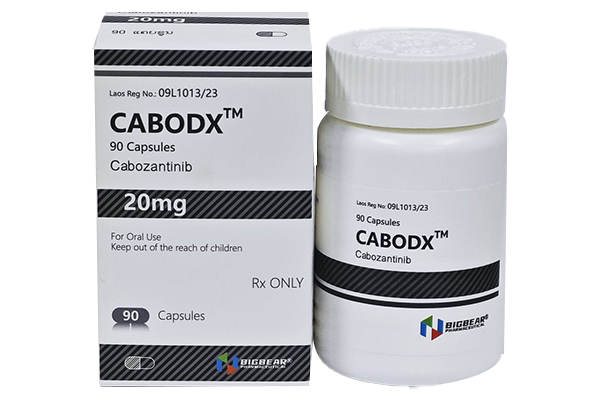
Cabozantinib is an antineoplastic agent belonging to the class of multiple receptor tyrosine kinase inhibitors.
Cabozantinib Warnings and Precautions
1. Perforations and Fistulas
(1) Gastrointestinal perforations were reported in 1-3% of patients receiving cabozantinib, and fistulas in 1%, including serious and fatal cases. Non-gastrointestinal fistulas (including tracheoesophageal fistulas) were reported in 4% of patients receiving cabozantinib capsules (Cometriq), two of which (1%) were fatal.
(2) Monitor patients for symptoms of perforations and fistulas. Permanently discontinue cabozantinib in patients who develop gastrointestinal perforation or fistula.
2. Hemorrhage
(1) Serious, sometimes fatal, hemorrhages including hemoptysis and gastrointestinal bleeding have been reported. The incidence of ≥Grade 3 adverse bleeding events was higher in patients receiving cabozantinib capsules (Cometriq) than in the placebo group (3% vs 1%, respectively). In patients receiving cabozantinib tablets (Cabometyx) for renal cell carcinoma (RCC), hepatocellular carcinoma (HCC), or differentiated thyroid cancer (DTC), Grade 3 to 5 bleeding events occurred in 5% of patients.
p> (2) Monitor patients for signs and symptoms of bleeding. Cabozantinib is contraindicated in patients with severe bleeding or a recent history of bleeding, hemoptysis, hematemesis, or melena. Withhold cabozantinib before surgery or if Grade 3 or 4 bleeding occurs.
3. Thromboembolic Events
(1) Increased risk of thromboembolic events. Venous thromboembolism and arterial thromboembolism have been reported.
(2) Permanently discontinue cabozantinib in patients who develop acute myocardial infarction or arterial or venous thromboembolic events requiring medical intervention.
4. Impaired Wound Healing
(1) Wound healing complications have been reported.
(2) Withhold cabozantinib for at least 3 weeks prior to elective surgery, including invasive dental procedures. Resume treatment after major surgery at least 2 weeks later and when the wound is adequately healed based on clinical judgment. The safety of resuming cabozantinib after resolution of wound healing complications has not been established.
5. Hypertension
(1) Treatment-induced hypertension occurred with increased incidence. In Phase 3 clinical studies, Grade 1 or 2 hypertension occurred in 61% of patients receiving cabozantinib capsules (Cometriq) compared to 30% in the placebo group; no patient developed malignant hypertension. Hypertension was reported in 37% of patients receiving cabozantinib tablets (Cabometyx); Grade 3 or 4 hypertension occurred in 16% and<1%, respectively.="">
(2) Do not initiate cabozantinib in patients with uncontrolled hypertension. Monitor blood pressure regularly before starting treatment and during therapy. Withhold cabozantinib for hypertension that is not adequately controlled with medical management; resume at a reduced dose after blood pressure is controlled. Permanently discontinue cabozantinib for hypertensive crisis or persistent, uncontrolled hypertension despite optimal medical therapy.
6. Osteonecrosis of the Jaw
(1) ONJ has been reported. It may present as jaw pain, osteomyelitis, osteitis, bone erosion, dental or periodontal infection, toothache, gingival ulceration or erosion, persistent jaw pain, or delayed healing of the mouth or jaw following dental surgery.
(2) Perform regular oral examinations before initiating treatment and periodically during therapy. Advise patients to maintain good oral hygiene.
(3) For invasive dental procedures, if possible, withhold cabozantinib for at least 3 weeks prior to the planned surgery. If ONJ develops, discontinue cabozantinib until ONJ completely resolves.
(4) After ONJ resolution, resume cabozantinib tablets (Cabometyx) at a reduced dose.
7. Diarrhea
(1) Diarrhea was reported in 62-63% of patients receiving cabozantinib; Grade 3-4 diarrhea was reported in 10-16% of patients.
(2) Withhold cabozantinib until diarrhea improves to Grade 1, then resume at a reduced dose. When resuming cabozantinib capsules (Cometriq), reduce the dose only for intolerable Grade 2 diarrhea, Grade 3 diarrhea unresponsive to standard anti-diarrheal therapy, or Grade 4 diarrhea.
8. Palmar-Plantar Erythrodysesthesia Syndrome
(1) Palmar-plantar erythrodysesthesia syndrome (hand-foot syndrome) was reported in 45-50% of patients receiving cabozantinib, with 13% of patients experiencing severe (Grade 3 or higher) cases. At least one patient reported hand-foot skin reaction with subungual splinter hemorrhages and hypertension.
(2) If palmar-plantar erythrodysesthesia syndrome occurs, temporary interruption of cabozantinib and dose reduction may be required.
9. Proteinuria
(1) Proteinuria, including one case of nephrotic syndrome, has been reported.
(2) Monitor urine protein regularly during treatment. Permanently discontinue cabozantinib in patients who develop nephrotic syndrome. If proteinuria occurs, temporary interruption of cabozantinib and dose reduction may be required.
10. Reversible Posterior Leukoencephalopathy Syndrome
(1) RPLS has been reported in one patient receiving cabozantinib.
(2) Consider the possibility of RPLS in patients presenting with seizures, headache, visual disturbances, confusion, or altered mental function. Magnetic resonance imaging (MRI) is necessary for confirmation. Permanently discontinue cabozantinib in patients who develop RPLS.
11. Hepatotoxicity
(1) Compared with cabozantinib alone, the combination of cabozantinib tablets (Cabometyx) with nivolumab resulted in a higher frequency of ≥Grade 3 hepatotoxicity and elevated ALT/AST concentrations.
(2) Based on severity, withhold cabozantinib tablets (Cabometyx) and resume at a reduced dose. Monitor liver enzymes regularly before and during treatment; more frequent monitoring should be considered when cabozantinib is used in combination with nivolumab. For elevated liver enzymes, temporarily interrupt both cabozantinib tablets (Cabometyx) and nivolumab, and consider systemic corticosteroids.
12. Adrenal Insufficiency
(1) Primary or secondary adrenal insufficiency has been reported in patients receiving cabozantinib tablets (Cabometyx) in combination with nivolumab. In clinical trials, management of adrenal insufficiency included systemic corticosteroids, temporary interruption of the cabozantinib and nivolumab combination, and/or hormone replacement therapy.
(2) For ≥Grade 2 adrenal insufficiency, initiate symptomatic treatment including hormone replacement therapy as clinically indicated. Withhold cabozantinib (Cabometyx) and/or nivolumab, and resume cabozantinib (Cabometyx) at a reduced dose based on severity.
13. Thyroid Dysfunction
(1) Thyroid dysfunction, predominantly hypothyroidism, has been reported in patients receiving cabozantinib tablets (Cabometyx).
(2) Assess patients for signs of thyroid dysfunction before initiating cabozantinib (Cabometyx) therapy; monitor for signs and symptoms of thyroid dysfunction during treatment and manage as clinically indicated.
14. Hypocalcemia
(1) Hypocalcemia has been reported in patients receiving cabozantinib.
(2) Monitor serum calcium levels and supplement calcium as needed. Withhold cabozantinib, and resume at a reduced dose or permanently discontinue based on resolution of hypocalcemia.
15. Fetal/Neonatal Morbidity and Mortality
(1) Cabozantinib may cause fetal harm; it is embryotoxic, fetotoxic, and teratogenic in animals.
(2) Advise females of reproductive potential to use effective contraception during treatment and for 4 months after the last dose. If used during pregnancy or if the patient becomes pregnant, apprise the patient of the potential fetal risk.