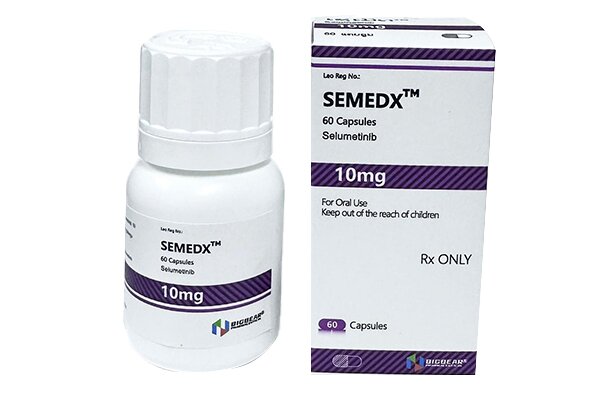
In addition to its expected therapeutic effects, selumetinib may cause some adverse reactions. While not all side effects will occur, medical intervention may be necessary if they do.
Selumetinib Side Effects Requiring Immediate Medical Attention
1. Common Side Effects
Skin blisters, crusting, irritation, itching, or redness; blood in urine; cracked, dry, or peeling skin; diarrhea; rapid heartbeat; itchy, painful, red, tender, or hot skin; loose nails; muscle or bone pain; nosebleeds; redness or pain around the nails; swelling.
2. Less Common Side Effects
Blurred vision; visual changes; difficulty breathing or shortness of breath; dizziness; headache; nervousness; unusual halos around lights; pulsating sensation in the ear; rapid weight gain; flashes of light or sparks in the field of vision; floaters or partial obstruction of vision; slow or fast heartbeat; chest tightness.
Other Side Effects of Selumetinib
Some side effects of selumetinib usually do not require medical intervention and may subside as the body adapts to the drug. In addition, medical professionals may provide methods to prevent or reduce these side effects.
Selumetinib Side Effects - Consult Your Doctor Immediately
Common Side Effects
Constipation; fever; hair loss, thinning hair; decreased appetite; nausea; stomach pain; swelling or inflammation of the mouth; unusual fatigue or weakness; vomiting.
Side Effect Management for Medical Professionals
1. Overall Adverse Events
The most common adverse reactions with an incidence of ≥40% include: vomiting, various rashes, abdominal pain, diarrhea, nausea, dry skin, fatigue, musculoskeletal pain, fever, acneiform rash, stomatitis, headache, paronychia, and pruritus.
2. Cardiovascular System
Very common (≥10%): decreased ejection fraction (up to 23%), sinus tachycardia (20%), increased blood pressure, and hypertension (less than 20%).
3. Dermatology
(1) Very common (≥10%): Various rashes (up to 91%), dry skin (60%), acne-like rashes (50%), paronychia including nail infections (48%), pruritus (46%), dermatitis (36%), hair changes (32%), skin infections (20%).
(2) Other events reported in studies (frequency not listed): Palmoplantar erythema hyposensitivity syndrome.
The most common rash types included acne-like dermatitis (54%), maculopapular rash (39%), and eczema (28%). All types of rashes include: acne-like dermatitis, maculopapular rash, erythema, pustular rash, urticaria, exfoliative rash, pruritic rash, and erythematous rash. Acne-like rash specifically refers to acne-like dermatitis. Dermatitis includes: atopic dermatitis, diaper dermatitis, eczema, seborrheic dermatitis, and skin irritation. Hair changes include: hair loss, hair color changes. Skin infections include: abscesses, cellulitis, impetigo, and staphylococcal skin infections.
4. Digestive System
(1) Very common (≥10%): vomiting (82%), abdominal pain (76%), diarrhea (up to 77%), nausea (up to 73%), stomatitis including oral ulcers (50%), constipation (34%), elevated lipase (32%), dry mouth (less than 20%), elevated amylase (18%).
(2) Events reported in other studies (frequency not listed): perforation, colitis, intestinal obstruction, intestinal embolism.
5. Hematologic System
Very common (≥10%): decreased albumin (51%), decreased hemoglobin (41%), neutropenia (33%), lymphopenia (20%).
6. Hepatic System
Very common (≥10%): Elevated aspartate aminotransferase (AST) (41%), elevated alanine aminotransferase (ALT) (35%).
7. Metabolic System
Very common (≥10%): Elevated serum potassium (27%), decreased appetite (22%), weight gain (less than 20%), decreased serum potassium (18%), elevated alkaline phosphatase (18%), elevated serum sodium (18%), decreased serum sodium (16%).
8. Musculoskeletal System
(1) Very common (≥10%): Elevated creatine phosphokinase (up to 79%), musculoskeletal pain including limb, back, and neck pain (58%).
(2) Events reported in other studies (frequency not listed): Rhabdomyolysis.
9. Nervous System
Very common (≥10%): Headache (48%).
10. Ocular System
(1) Very common (≥10%): Visual disturbances including blurred vision, photophobia, cataracts, and elevated intraocular pressure (<20%).
(2) Other less common events in studies (0.1% to 1%): Retinal vein occlusion (RVO), retinal pigment epithelium detachment (RPED), central serous retinopathy (CSR).
11. Other
Very common (≥10%): Fatigue and weakness (56%), fever (56%), generalized and localized edema including peripheral swelling (20%), facial and periorbital edema (<20%).
12. Respiratory System
Very common (≥10%): Epistaxis (28%), dyspnea including during activity and at rest (<20%).
13. Renal System
Very common (≥10%): Hematuria (22%), proteinuria (22%), acute kidney injury (<20%).