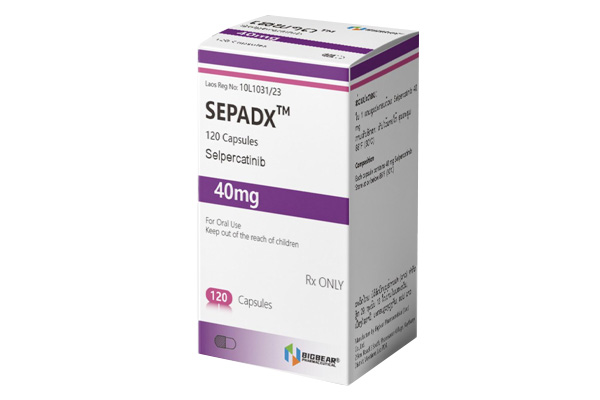
On September 21, 2022, Eli Lilly and Company announced that the FDA has granted accelerated approval to Retevmo (selpercatinib) for the treatment of adults with locally advanced or metastatic solid tumors that have a transfection-associated rearrangement (RET) gene fusion, have progressed with or after prior systemic therapy, or have no satisfactory alternative treatment. The accelerated approval is based on overall response rate (ORR) and duration of response (DOR). Continued approval for this indication may depend on validation and description of clinical benefit in a confirmatory trial.
Retevmo (selpercatinib) is the first and only RET inhibitor for adults with advanced or metastatic solid tumors with RET gene fusions, regardless of their type.
These two approvals are based on data from the pivotal multicenter, open-label, short-term phase 1/2 LIBRETTO-001 trial (ClinicalTrials.gov identifier: NCT03157128), which evaluated the efficacy and safety of the selective RET kinase inhibitor selpercatinib in patients with locally advanced or metastatic RET fusion-positive solid tumors (including NSCLC). The primary efficacy outcomes were ORR and DOR, assessed by a blinded independent review committee.
In 41 patients with RET fusion-positive solid tumors, the ORR was 44% (95% CI, 28–60), with 4.9% achieving complete response (CR) and 39% achieving partial response (PR). The median DOR was 24.5 months (95% CI, 9.2–non-evaluable [NE]), and 67% of patients had a DOR lasting at least 6 months.
In 247 patients with RET fusion-positive non-small cell lung cancer who had previously received platinum-based chemotherapy, the objective response rate (ORR) was 61% (95% CI, 55-67), with 7.3% achieving complete remission (CR) and 54% achieving partial remission (PR). The median duration of response (DOR) was 28.6 months (95% CI, 20-NE), and 63% of patients had a DOR lasting at least 12 months. Furthermore, according to an exploratory subgroup analysis, in 144 patients who had previously received anti-PD-1 or anti-PD-L1 therapy, the ORR was 63% (95% CI, 54-70), and the median DOR was 28.6 months (95% CI, 14.8-NE). These patients had received anti-PD-1 or anti-PD-L1 therapy or concurrently with platinum-based chemotherapy.
In 69 treatment-naïve patients with RET fusion-positive non-small cell lung cancer, the ORR was 84% (95% CI, 73-92), with 5.8% achieving CR and 78% achieving PR. The median duration of response (DOR) was 20.2 months (95% CI, 13-NE), and 50% of DORs lasted at least 12 months.
Regarding safety, the most common adverse reactions to serpatinib were edema, diarrhea, fatigue, dry mouth, hypertension, abdominal pain, constipation, rash, nausea, and headache. The most common grade 3 or 4 laboratory abnormalities were lymphopenia, increased alanine aminotransferase (ALT), increased aspartate aminotransferase (AST), decreased sodium, and decreased calcium.