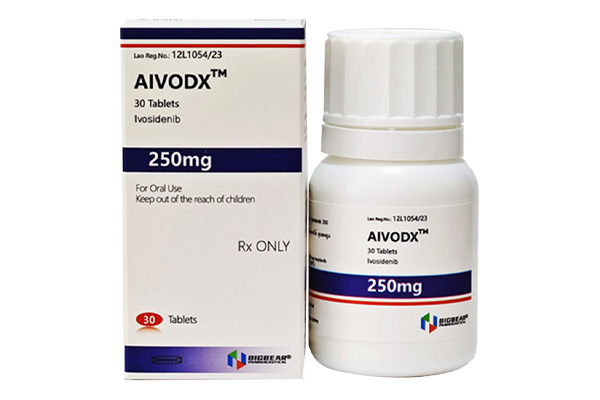
Management of Adverse Effects of Ivosidenib in Medical Personnel
1. Overall Adverse Events
Most common adverse reactions reported in patients with acute myeloid leukemia (≥10%): leukopenia, diarrhea, decreased hemoglobin, thrombocytopenia, hyperglycemia, fatigue, increased alkaline phosphatase, edema, hypokalemia, nausea, vomiting, hypophosphatemia, decreased appetite, hyponatremia, leukocytosis, hypomagnesemia, AST increased, arthralgia, dyspnea, uric acid increased, abdominal pain, creatinine increased, mucositis, rash, electrocardiogram QT prolonged, differentiation syndrome, hypocalcemia, neutropenia, myalgia.
Most common adverse reactions reported in patients with cholangiocarcinoma (≥10%): fatigue, nausea, abdominal pain, diarrhea, cough, decreased appetite, ascites, vomiting, anemia, rash, decreased hemoglobin, AST increased, bilirubin increased.
2. Cardiovascular System
Very common (≥10%): electrocardiogram QT prolonged (up to 26%), hematoma (including hematoma, eye hematoma, catheter site hematoma, oral mucosal hematoma, spontaneous hematoma, application site hematoma, injection site hematoma, periorbital hematoma; up to 15%), hypertension (including blood pressure increased, essential hypertension, hypertension; up to 13%), hypotension (including hypotension, orthostatic hypotension; up to 12%).
Frequency not reported: ventricular fibrillation, pericardial effusion.
3. Skin and Subcutaneous Tissue
Very common (≥10%): rash (including acneiform dermatitis, dermatitis, rash, maculopapular rash, urticaria, erythematous rash, macular rash, pruritic rash, generalized rash, papular rash, skin exfoliation, skin ulcer, erythema, generalized exfoliative dermatitis, drug eruption, drug allergy; up to 26%), pruritus (up to 14%).
4. Gastrointestinal System
Very common (≥10%): diarrhea (up to 61%), nausea (up to 42%), vomiting (including vomiting, retching; up to 41%), abdominal pain (including abdominal pain, upper abdominal pain, abdominal discomfort, abdominal tenderness, lower abdominal pain, epigastric discomfort, gastrointestinal pain; up to 35%), mucositis (including mouth ulceration, esophageal pain, esophagitis, gingival pain, gingivitis, oral ulcer, mucosal inflammation, oral pain, oropharyngeal pain, rectal pain, stomatitis; up to 28%), ascites (up to 23%), constipation (up to 21%), dyspepsia (up to 11%).
Frequency not reported: stomatitis, intestinal obstruction.
5. Blood and Lymphatic System
Very common (≥10%): leukopenia (up to 65%), decreased hemoglobin (up to 60%), thrombocytopenia (up to 58%), leukocytosis (including leukocytosis, white blood cell count increased, hyperleukocytosis; up to 38%), neutropenia (up to 25%), lymphocytosis (up to 24%), anemia (up to 18%).
Frequency not reported: thrombocytopenia.
6. Hepatobiliary System
Very common (≥10%): aspartate aminotransferase (AST) increased (up to 37%), bilirubin increased (up to 30%), alanine aminotransferase (ALT) increased (up to 15%).
Frequency not reported: transaminases increased, hyperbilirubinemia, cholestatic jaundice, hepatic encephalopathy.
7. Metabolism and Nutrition
Very common (≥10%): hyperglycemia (up to 56%), decreased appetite (up to 39%), uric acid increased (up to 32%).
Common (1%-10%): tumor lysis syndrome.
Frequency not reported: fluid overload.
8. Musculoskeletal and Connective Tissue
Very common (≥10%): arthralgia (including limb pain, arthralgia, back pain, musculoskeletal stiffness, cancer pain, neck pain; up to 36%), myalgia (including myalgia, muscle weakness, musculoskeletal pain, musculoskeletal chest pain, musculoskeletal discomfort, intercostal myalgia; up to 25%).
9. Nervous System
Very common (≥10%): dizziness (up to 21%), headache (up to 16%), neuropathy (including burning sensation, lumbosacral plexopathy, peripheral neuropathy, paresthesia, peripheral motor neuropathy, ataxia, gait disturbance, Guillain-Barré syndrome, peripheral sensory neuropathy, sensory disturbance; up to 14%), peripheral neuropathy (including peripheral neuropathy, peripheral sensory neuropathy, paresthesia; up to 11%).
Rare (0.1%-1%): Guillain-Barré syndrome.
Frequency not reported: cerebral ischemia, posterior reversible encephalopathy syndrome, progressive multifocal leukoencephalopathy.
10. Neoplasm Related
Very common (≥10%): differentiation syndrome (up to 25%).
Note: Differentiation syndrome is often associated with other reported events such as peripheral edema, leukocytosis, fever, dyspnea, pleural effusion, hypotension, hypoxemia, pulmonary edema, pneumonia, pericardial effusion, rash, fluid overload, tumor lysis syndrome and creatinine increased.
11. General Disorders and Administration Site Conditions
Very common (≥10%): fatigue (including asthenia, fatigue; up to 50%), alkaline phosphatase increased (up to 46%), edema (including edema, facial edema, fluid overload, fluid retention, hypervolemia, peripheral edema, facial swelling; up to 43%), hypokalemia (up to 43%), hypophosphatemia (up to 41%), hyponatremia (up to 39%), hypomagnesemia (up to 38%), hypocalcemia (up to 25%), hyperkalemia (up to 24%), pyrexia (up to 23%), chest pain (including angina pectoris, chest pain, chest discomfort, non-cardiac chest pain; up to 16%), weight decreased (up to 11%).
Frequency not reported: sepsis, peripheral edema.
12. Psychiatric System
Very common (≥10%): insomnia (up to 18%).
13. Renal and Urinary System
Very common (≥10%): creatinine increased (up to 29%).
Frequency not reported: acute kidney injury.
14. Respiratory, Thoracic and Mediastinal Disorders
Very common (≥10%): dyspnea (including dyspnea, exertional dyspnea, hypoxemia, respiratory failure; up to 33%), cough (including cough, productive cough, upper-airway cough syndrome; up to 27%), pleural effusion (up to 13%).
Frequency not reported: pneumonia, pulmonary embolism, hypoxemia, pulmonary edema.