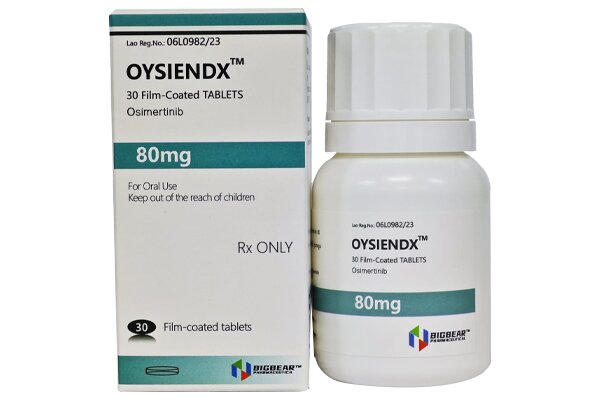
Osimertinib Use in Special Populations
1. Renal Impairment
(1) Patients with creatinine clearance (CrCl) between 15 and 89 mL/min: no dose adjustment is required.
(2) Patients with end-stage renal disease (CrCl<15 ml="">
2. Hepatic Impairment
(1) Patients with mild (Child-Pugh A) to moderate (Child-Pugh B) hepatic impairment; or patients with total bilirubin ≤ upper limit of normal (ULN) and aspartate aminotransferase (AST) > ULN; or patients with total bilirubin between 1 and 3 times ULN and AST at any level: no dose adjustment is required.
(2) Patients with severe (Child-Pugh C) hepatic impairment (total bilirubin between 3 and 10 times ULN and AST at any level): no recommended dose is available.
3. Pediatrics
Safety and efficacy in patients under 18 years of age have not been established.
4. Dialysis
No data are available.
Dose Adjustments for Adverse Reactions to Osimertinib
1. Pulmonary
Interstitial lung disease (ILD)/pneumonitis: permanently discontinue.
2. Cardiac
(1) QTc interval >500 msec on at least two separate electrocardiogram (ECG) examinations: withhold treatment until QTc interval<481 msec="" or="" returns="" to="" baseline="">
(2) QTc interval prolongation with life‑threatening arrhythmic symptoms: permanently discontinue.
(3) Symptomatic congestive heart failure: permanently discontinue.
3. Skin
Stevens‑Johnson syndrome (SJS), toxic epidermal necrolysis (TEN): withhold if suspected; permanently discontinue if confirmed.
4. Other
(1) Grade ≥3 adverse reactions: withhold treatment for up to 3 weeks.
(2) If improved to Grade 0‑2 within 3 weeks: resume at a dose of 40 to 80 mg daily.
(3) If not improved within 3 weeks: permanently discontinue.
Precautions for Osimertinib
(1) Avoid concomitant use of strong CYP3A inducers with osimertinib whenever possible.
(2) If concomitant use is unavoidable, increase osimertinib dose to 160 mg daily during co‑administration with a strong CYP3A4 inducer; resume osimertinib at 80 mg daily 3 weeks after discontinuation of the strong CYP3A4 inducer.
Storage of Osimertinib
Store at 25°C (77°F); excursions permitted between 15°C and 30°C (59°F to 86°F).
Monitoring During Osimertinib Treatment
1. Cardiovascular: monitor left ventricular ejection fraction (LVEF) by echocardiogram (ECG) or multigated acquisition (MUGA) scan (before starting treatment and every 3 months during treatment); for patients with risk factors, periodically monitor QTc interval by ECG and electrolytes during treatment.
2. Respiratory: monitor for worsening respiratory symptoms (e.g., dyspnea, cough, fever; if present, confirm whether it is ILD).
Cautions
1. Avoid grapefruit, grapefruit juice, and St. John's wort during treatment.
2. Female patients: effective contraception is required during treatment and for 6 weeks after the last dose.
3. Male patients with female partners: effective contraception is required for 4 months after the last dose.
4. Breastfeeding is not recommended during treatment and for 2 months after the last dose.