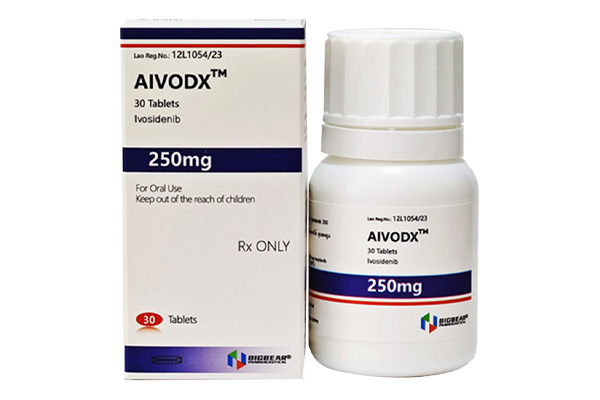
Patients should take Ivosidenib as prescribed by their physician, and at approximately the same time each day.
Important Safety Information for Ivosidenib
1. Differentiation Syndrome in Acute Myeloid Leukemia and Myelodysplastic Syndromes
Differentiation syndrome has been reported in association with IDH1 inhibitors such as Ivosidenib; symptoms include acute respiratory distress (dyspnea and/or hypoxia), pulmonary infiltrates, renal impairment, multi-organ dysfunction, fever, pulmonary or peripheral edema, rapid weight gain, rash, hypotension, tumor lysis syndrome, leukocytosis without infectious etiology, and pleural or pericardial effusion. Observations have been made as early as 1 day to 3 months after initiation of Ivosidenib (see Boxed Warning). If no clear alternative etiology is identified, differentiation syndrome should be suspected. If signs or symptoms suggestive of differentiation syndrome occur, initiate intravenous or oral corticosteroid therapy (e.g., dexamethasone 10 mg intravenously every 12 hours [or equivalent]) for ≥3 days until symptoms resolve, followed by gradual tapering of corticosteroid dose; monitor hemodynamic parameters until symptom improvement. If concomitant leukocytosis without infectious etiology is present, initiate hydroxyurea therapy per standard practice and perform leukapheresis as needed. If signs or symptoms of differentiation syndrome persist for >48 hours despite corticosteroid therapy, interrupt Ivosidenib treatment.
2. QT Interval Prolongation
QTc interval prolongation and ventricular arrhythmias (i.e., ventricular fibrillation) have been reported. Monitor ECG at least weekly during the first 3 weeks of treatment, and at least monthly thereafter. Congenital long QT syndrome, congestive heart failure, electrolyte abnormalities, CYP3A4 inhibitors, and drugs known to prolong the QTc interval (e.g., antiarrhythmics, fluoroquinolone anti-infectives, azole antifungals, type 3 serotonin [5-HT3] receptor antagonists) increase the risk of QT prolongation. More frequent monitoring (i.e., ECG, serum electrolytes) may be required. Monitor blood chemistry at baseline, at least weekly during the first month, every two weeks during the second month, and monthly thereafter. Correct electrolyte abnormalities before initiating Ivosidenib and during treatment as clinically indicated. If QTc prolongation occurs, temporary interruption, dose reduction, or discontinuation of Ivosidenib may be required. Monitor ECG at least weekly until QTc prolongation resolves for two weeks.
3. Guillain-Barré Syndrome
Guillain-Barré syndrome has been reported infrequently. Monitor for signs or symptoms of motor and/or sensory neuropathy (e.g., unilateral or bilateral weakness, sensory changes, paresthesia, dyspnea). If Guillain-Barré syndrome occurs, discontinue Ivosidenib.
Special Population Considerations for Ivosidenib
1. Pregnancy
May cause fetal harm; embryofetal toxicity and teratogenicity have been demonstrated in animals. Avoid pregnancy during treatment. Patients should use adequate contraception during therapy. If used during pregnancy, inform of potential fetal risk.
2. Lactation
It is unknown whether Ivosidenib or its metabolites are excreted in human milk, or whether the drug affects milk production or the nursing infant. Discontinue breastfeeding during treatment and for ≥1 month after the last dose.
3. Pediatric Use
Safety and efficacy have not been established.
4. Geriatric Use
No overall differences in safety and efficacy compared with younger adults.
5. Hepatic Impairment
Mild or moderate hepatic impairment (Child-Pugh class A or B) reduces systemic exposure to Ivosidenib. Not studied in severe hepatic impairment (Child-Pugh class C).
6. Renal Impairment
In a population pharmacokinetic analysis, mild or moderate renal impairment (eGFR 30 to<90 ml="">