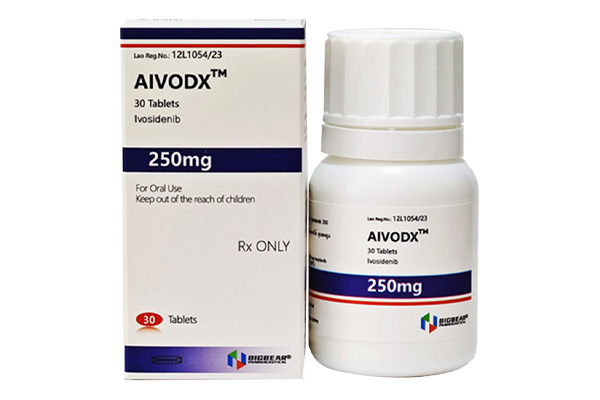
Ivosidenib Use in Special Populations
1. Renal Impairment
Mild to moderate renal impairment (eGFR ≥30 mL/min/1.73m², MDRD formula): no dose adjustment needed at initiation.
Severe renal impairment (eGFR<30 ml="">
Note: pharmacokinetic and safety data in this population are unknown.
2. Hepatic Impairment
Mild to moderate hepatic impairment (Child‑Pugh A or B): no dose adjustment needed at initiation.
Severe hepatic impairment (Child‑Pugh C): assess risks and benefits before use.
Note: pharmacokinetic and safety data in this population are unknown.
3. Pediatric Patients
Safety and efficacy have not been established in patients under 18 years of age.
4. Dialysis Patients
Assess risks and benefits before use (pharmacokinetics and safety unknown).
Ivosidenib Dose Adjustments for Toxicity
1. Differentiation Syndrome
(1) If suspected, initiate systemic corticosteroids immediately and monitor hemodynamics until symptoms resolve and persist for ≥3 days.
(2) If severe symptoms persist after 48 hours of corticosteroid use, withhold the drug; resume after symptoms improve to ≤ grade 2.
2. Non‑Infectious Leukocytosis
If white blood cell count >25×10⁹/L or increase >15×10⁹/L from baseline:
(1) Use hydroxyurea per standard practice, and perform leukapheresis if necessary.
(2) Gradually reduce and discontinue hydroxyurea only after leukocyte count decreases.
(3) If hydroxyurea is ineffective, withhold ivosidenib; resume at 500 mg/day after white blood cell count returns to normal.
3. QTc Interval Prolongation
(1) 480‑500 ms
Withhold drug, monitor electrolytes, and adjust concomitant medications.
Resume at 500 mg/day after QTc returns to ≤480 ms, then monitor ECG at least weekly for 2 weeks.
(2) >500 ms
Withhold drug, monitor electrolytes, and adjust concomitant medications.
Resume at 250 mg/day after QTc returns to ≤480 ms or within ≤30 ms of baseline.
If QTc prolongation can be clearly attributed to other causes, re‑escalation to 500 mg/day may be considered.
(3) QTc prolongation with life‑threatening arrhythmias
Permanently discontinue.
4. Guillain‑Barré Syndrome
Permanently discontinue.
5. Other Grade ≥3 Adverse Reactions
(1) Acute myeloid leukemia monotherapy
Withhold until toxicity reduces to ≤ grade 2, then resume at 250 mg/day; if toxicity is ≤ grade 1, may increase to 500 mg/day.
If grade ≥3 toxicity recurs, permanently discontinue.
(2) Acute myeloid leukemia in combination with azacitidine, or for cholangiocarcinoma
Withhold until toxicity reduces to ≤ grade 1 or returns to baseline, then resume at 500 mg/day (for grade 3) or 250 mg/day (for grade 4).
Second recurrence of grade 3 toxicity: reduce to 250 mg/day, and after recovery attempt to increase to 500 mg/day.
Third recurrence of grade 3 toxicity or recurrence of grade 4 toxicity: permanently discontinue.