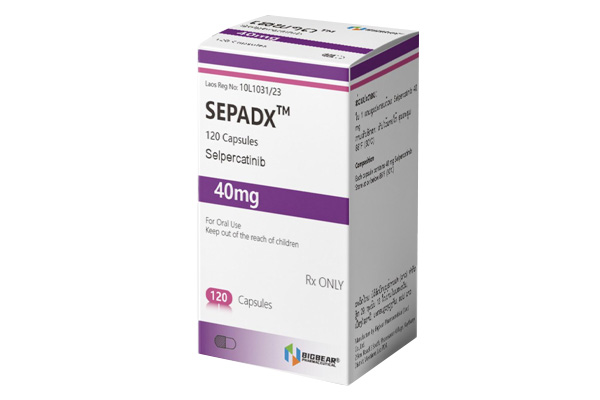
Selpercatinib is a highly selective RET kinase inhibitor used for the treatment of various cancers (such as non-small cell lung cancer, medullary thyroid cancer, etc.) carrying RET gene fusions or mutations.
What are the purchase channels for the Laos Dabear version of Selpercatinib?
The Laos Dabear version of Selpercatinib is available in the specification of 40mg*120 capsules/box. For specific purchasing methods, we recommend adding professional customer service for detailed consultation.
Dose adjustment strategy for Selpercatinib when used with acid-reducing agents
To avoid affecting drug absorption, Selpercatinib should be avoided as much as possible for concurrent use with proton pump inhibitors (PPIs), H2 receptor antagonists, or locally acting antacids. If concurrent use is unavoidable, adjustments should be made as follows: When used with PPIs, Selpercatinib must be taken with food; when used with H2 receptor antagonists, Selpercatinib should be taken 2 hours before or 10 hours after the H2 antagonist; when used with local antacids containing aluminum, magnesium, calcium, simethicone, etc., Selpercatinib should be taken 2 hours before or 2 hours after the antacid. These adjustment measures are intended to reduce the adverse effects of gastric acid-suppressing drugs on the solubility and bioavailability of Selpercatinib, ensuring stable efficacy. Patients should provide their doctor with a complete list of medications, including prescription drugs, over-the-counter drugs, and health supplements.
Health conditions to inform the doctor before medication
Before taking Selpercatinib, patients should truthfully inform their doctor of all medical history, including: liver problems, high blood pressure, heart disease (especially QT interval prolongation), bleeding tendencies, and any planned surgeries. Because Selpercatinib may affect wound healing or increase bleeding risk, those planning surgery should stop the medication at least 7 days before the procedure. Additionally, Selpercatinib may cause harm to a fetus, therefore women of childbearing potential must have a pregnancy test before treatment and take effective contraception during treatment and for at least 1 week after the last dose. Male patients with female partners of childbearing potential should also use contraceptive measures during treatment and for 1 week after stopping the medication. Breastfeeding women should not breastfeed during treatment and for 1 week after the last dose.