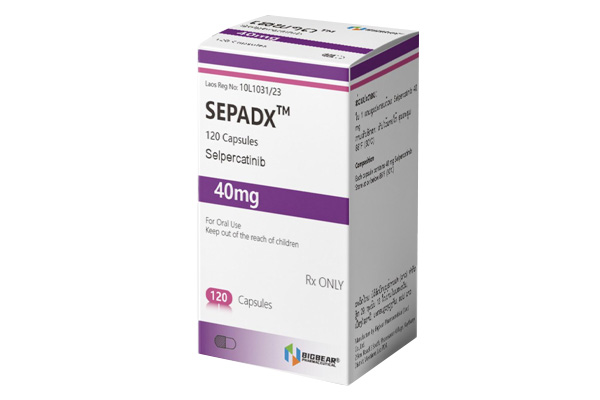
The U.S. FDA recently approved Retevmo (selpercatinib, 40 mg and 80 mg capsules), a targeted anticancer drug from Eli Lilly subsidiary LoxoOncology, for the treatment of patients with cancers exhibiting genetic alterations (mutations or fusions) in a specific gene (a gene rearranged during transfection, the RET gene): non-small cell lung cancer (NSCLC), medullary thyroid carcinoma (MTC), and other types of thyroid cancer.
Retevmo is the first approved treatment specifically for cancer patients with RET gene alterations. Specifically, it is approved for the treatment of: (1) adult patients with advanced or metastatic NSCLC; (2) patients aged ≥12 years with advanced or metastatic MTC requiring systemic therapy; and (3) patients aged ≥12 years with advanced RET fusion-positive thyroid cancer requiring systemic therapy, who have stopped responding to radioactive iodine therapy, or are unsuitable for radioactive iodine therapy. Notably, up to 50% of RET fusion-positive NSCLC patients may have brain metastases. In patients with baseline brain metastases, Retevmo demonstrated robust efficacy, with an intracranial response rate (CNS-ORR) as high as 91% (n=10/11).
Retevmo is a potent, oral, highly selective, transfection-associated rearrangement (RET) kinase inhibitor for the treatment of cancer patients with RET abnormalities. The RET gene, named for its rearrangement during transfection, encodes a cell membrane receptor tyrosine kinase, and its abnormalities are a rare driver in many types of tumors. Retevmo is designed to inhibit natural RET signaling and anticipated acquired resistance mechanisms, and is being developed to treat patients with abnormal RET kinases in their tumors. It can also block RET kinases and inhibit cancer cell growth; however, the drug may also affect healthy cells, potentially causing side effects.
This approval is based on data from the Phase I/II LIBRETTO-001 clinical trial. This study is the largest clinical trial to evaluate a RET inhibitor in patients with RET-altered cancers, including NSCLC, MTC, and other types of thyroid cancer. During the study, patients received 160 mg Retevmo orally twice daily until disease progression or unacceptable toxicity. The primary efficacy endpoints were overall response rate (ORR) and duration of response (DOR).
—Treatment of NSCLC: Efficacy was evaluated in 105 adult patients with RET fusion-positive NSCLC who had previously received platinum-based chemotherapy (treatment-experienced) and 39 who had been treatment-naïve (treatment-naïve). Results showed that in the 105 treatment-experienced patients, the ORR was 64%, and 81% of responders had a DOR ≥ 6 months. In the 39 treatment-naïve patients, the ORR was 84%, and 58% of responders had a DOR ≥ 6 months. In 11 previously treated patients with baseline brain metastases, the intracranial response rate (CNS-ORR) was 91% (n=10/11), and the duration of intracranial response (CNS-DOR) in all 10 responding patients was ≥6 months.
—Treatment of MTC: Efficacy was evaluated in 143 patients (aged ≥12 years) with advanced or metastatic RET-mutant MTC, of whom 55 had previously received cabozantinib, vandetanib, or both, and 88 had not previously received cabozantinib or vandetanib. Results showed that in the 55 previously treated patients, the ORR was 69%, and 76% of responders had a DOR ≥6 months. In the 88 patients who had not previously received approved MTC therapies, the ORR was 73%, and 61% of responders had a DOR ≥6 months.
—Treatment of RET fusion-positive thyroid cancer: Efficacy was evaluated in 27 patients with RET fusion-positive thyroid cancer, including 19 patients refractory to radioactive iodine (RAI, if an appropriate regimen) and who had received alternative systemic therapy, and 8 patients refractory to RAI and who had not received any other therapy. Data showed that in the 19 patients who had received alternative systemic therapy, the ORR was 79%, and 87% of responders had a DOR ≥ 6 months; in the 8 patients who had not received any therapy other than RAI, the ORR was 100%, and 75% of responders had a DOR ≥ 6 months.
It is estimated that RET fusions are present in approximately 2% of non-small cell lung cancer (NSCLC), 10–20% of papillary thyroid carcinoma (PTC) and other types of thyroid cancer, as well as other cancer subgroups (such as colorectal cancer); RET point mutations are present in approximately 60% of medullary thyroid carcinoma (MTC). RET fusion and RET point mutation cancers primarily rely on RET kinase activation to maintain their proliferation and survival; this dependence is often referred to as "oncogene addiction," making these tumors highly sensitive to small-molecule inhibitors targeting RET.
This approval is based on overall response rate (ORR) and duration of response (DOR) data from the Phase I/II clinical trial of LIBRETTO-001, and was granted through the FDA's accelerated approval process. Continued approval for these indications will depend on the validation and description of clinical benefit in confirmatory trials.
Further Reading:
In the United States, the FDA has granted Breakthrough Therapy Designation (BTD) to selpercatinib for the treatment of three patient groups: (1) metastatic RET fusion-positive NSCLC patients whose disease has progressed after platinum-based chemotherapy and one PD-1 or PD-L1 immunotherapy and who require systemic therapy; (2) RET-mutant medullary thyroid carcinoma (MTC) patients whose disease has progressed after prior treatment and who have no acceptable alternative treatment options and who require systemic therapy; and (3) advanced RET fusion-positive thyroid cancer patients whose disease has progressed after prior treatment and who have no acceptable alternative treatment options and who require systemic therapy.
In 2019, the FDA granted selpercatinib Orphan Drug Designation for the treatment of: RET fusion-positive NSCLC, RET fusion-positive and RET-mutant thyroid cancer, including poorly differentiated thyroid cancer, undifferentiated or anaplastic thyroid cancer, MTC, and locally advanced or metastatic follicular or papillary thyroid cancer.