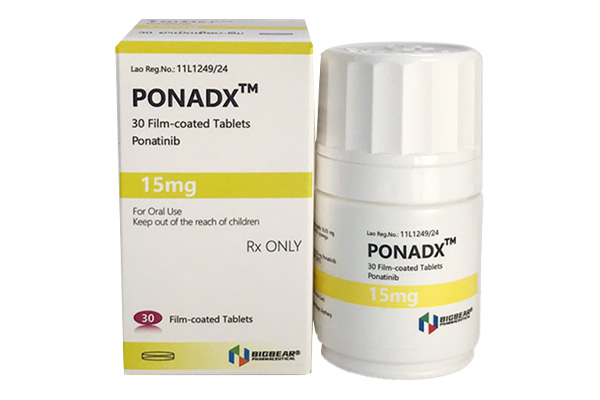
Ponatinib's Efficacy and Actions
Ponatinib is a tyrosine kinase inhibitor that inhibits tumor cell proliferation by targeting and inhibiting the activity of BCR-ABL fusion protein (including the T315I mutant) and other kinases (such as VEGFR, PDGFR, FGFR, etc.), blocking abnormal signal transduction.
Ponatinib's Efficacy and Actions
1. Philadelphia Chromosome-Positive Acute Lymphoblastic Leukemia
Newly diagnosed Philadelphia chromosome-positive acute lymphoblastic leukemia, used in combination with chemotherapy.
As monotherapy, for patients with Philadelphia chromosome-positive acute lymphoblastic leukemia who are not suitable for other kinase inhibitors or who are T315I positive.
2. Chronic Myeloid Leukemia
Chronic phase chronic myeloid leukemia that is resistant to or intolerant to at least two prior kinase inhibitors.
Accelerated phase or blast crisis chronic myeloid leukemia that is not suitable for other kinase inhibitors.
T315I-positive chronic myeloid leukemia.
Usage Restrictions: Ponatinib is not indicated for, and is not recommended for, the treatment of newly diagnosed chronic-phase chronic myeloid leukemia.
Ponatinib Dosage and Administration
1. Recommended dose for newly diagnosed Philadelphia chromosome-positive acute lymphoblastic leukemia:
The starting dose is 30 mg orally once daily in combination with chemotherapy. After achieving complete remission with minimal residual disease negativity at the end of induction therapy, the dose should be reduced to 15 mg orally once daily.
2. Recommended dose for monotherapy in patients with T315I-positive Philadelphia chromosome-positive acute lymphoblastic leukemia for whom other kinase inhibitors are not applicable or for T315I-positive patients.
The starting dose is 45 mg orally once daily.
3. Recommended dose for chronic-phase chronic myeloid leukemia:
The starting dose is 45 mg orally once daily. After achieving a BCR::ABL1 international normalized ratio ≤1%, the dose should be reduced to 15 mg orally once daily.
4. Recommended Dosage for Chronic Myeloid Leukemia in Accelerated and Blast Phases
The starting dose is 45 mg orally once daily.
Precautions for Ponatinib
1. Hypertension
Monitor blood pressure and manage hypertension according to clinical indications. If hypertension is not controlled by medical means, discontinue administration, reduce the dose, or stop using ponatinib.
2. Pancreatitis
Monitor serum lipase. Depending on the severity, discontinue administration and then resume medication at the same or reduced dose, or discontinue ponatinib. When lipase is elevated and accompanied by abdominal symptoms, pancreatitis should be evaluated.
3. Neuropathy
Monitor for symptoms of peripheral and cranial neuropathy. Depending on the relapse/severity, discontinue administration and then resume medication at the same or reduced dose, or discontinue ponatinib.
4. Ocular Toxicity
Perform a comprehensive ophthalmological examination before treatment and regularly during treatment.
5. Bleeding
Monitor for bleeding and manage the patient according to clinical indications. Depending on the relapse/severity, interrupt administration and then resume at the same or reduced dose, or discontinue ponatinib.
6. Fluid Retention
Monitor for fluid retention and manage the patient according to clinical indications. Depending on the relapse/severity, interrupt administration and then resume at the same or reduced dose, or discontinue ponatinib.
7. Cardiac Arrhythmias
Monitor for signs or symptoms of cardiac arrhythmias and manage the patient according to clinical indications. Depending on the relapse/severity, interrupt administration and then resume at the same or reduced dose, or discontinue ponatinib.
8. Myelosuppression
Obstetric complete blood counts should be performed every 2 weeks for the first 3 months of treatment, and monthly thereafter or as clinically indicated. If the absolute neutrophil count is below 1.0 x 10⁹/L or the platelet count is below 50 x 10⁹/L, ponatinib treatment should be interrupted until the absolute neutrophil count reaches at least 1.5 x 10⁹/L and the platelet count reaches at least 75 x 10⁹/L, then resumed at the same or reduced dose.
9. Tumor lysis syndrome
Before starting ponatinib treatment, ensure adequate hydration and correct elevated uric acid levels.
10. Reversible posterior leukoencephalopathy syndrome
If this occurs, ponatinib treatment should be interrupted until remission. The safety of resuming ponatinib after symptom remission is unknown.