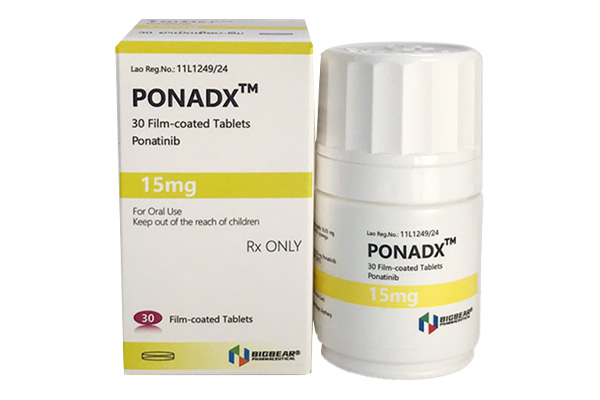
Ponatinib Precautions and Drug Interactions
Ponatinib is a third-generation BCR-ABL tyrosine kinase inhibitor developed and manufactured by Takeda Pharmaceutical Company Limited of Japan. It should be used under the guidance of a physician.
Precautions for Ponatinib
1. Arterial Occlusive Events
If an arterial occlusive event, including a fatal event, occurs in a patient receiving ponatinib treatment, monitor for evidence of such events. Discontinue administration based on recurrence/severity, and then resume administration at the same or reduced dose, or discontinue ponatinib, considering the benefit-risk ratio to guide the decision to restart ponatinib.
2. Venous Thromboembolic Events
If a severe or serious VTE occurs in a patient receiving ponatinib treatment, monitor for evidence of VTE. Discontinue administration based on recurrence/severity, and then resume administration at the same or reduced dose, or discontinue ponatinib.
3. Heart Failure
If a fatal, severe, or serious heart failure event occurs in a patient receiving ponatinib treatment.
Monitor patients for signs or symptoms consistent with heart failure and manage heart failure according to clinical indications. For new-onset or worsening heart failure, discontinue administration and then resume administration at a reduced dose or discontinue ponatinib.
4. Hepatotoxicity
Ponatinib can cause hepatotoxicity, including liver failure and death. Monitor liver function at baseline and thereafter at least monthly or as clinically indicated. Discontinue administration based on recurrence/severity and then resume administration at a reduced dose or discontinue ponatinib.
5. Hypertension
Severe or major hypertension, including hypertensive crisis, may occur in patients receiving ponatinib treatment. Patients may require urgent clinical intervention due to hypertension accompanied by confusion, headache, chest pain, or dyspnea.
Monitor blood pressure at baseline and as clinically indicated, and manage hypertension according to clinical indications. If hypertension cannot be controlled with medication, discontinue, reduce, or discontinue ponatinib. For significantly worsening, unstable, or refractory hypertension, discontinue ponatinib and consider evaluating for renal artery stenosis.
6. Neuropathy
Monitor patients for symptoms of neuropathy, such as hypoesthesia, hyperesthesia, paresthesia, malaise, burning sensation, neuropathic pain, or weakness. Discontinue administration based on recurrence/severity, then resume administration at the same or reduced dose, or discontinue ponatinib.
7. Ocular Toxicity
Serious ocular toxicities leading to blindness or blurred vision have occurred in patients treated with ponatinib. Perform a comprehensive ophthalmological examination at baseline and regularly throughout treatment.
8. Hemorrhage
Fatal and serious hemorrhage events have occurred in patients treated with ponatinib.
Monitor for hemorrhage and manage patients according to clinical indications. Discontinue administration based on recurrence/severity, then resume administration at the same or reduced dose, or discontinue ponatinib.
9. Fluid Retention
Fatal and serious fluid retention events have occurred in patients treated with ponatinib.
Monitor for fluid retention and manage patients according to clinical indications. Discontinue use based on the severity of relapse/relapse, then resume use at the same or reduced dose, or discontinue ponatinib.
Ponatinib Drug Interactions
1. Potent CYP3A Inhibitors
Concomitant use of ponatinib with a potent CYP3A inhibitor increases plasma concentrations of ponatinib, potentially increasing the risk of adverse reactions.
Avoid concomitant use of ponatinib with potent CYP3A inhibitors. If concomitant use cannot be avoided, reduce the dose of ponatinib.
2. Potent CYP3A Inducers
Concomitant use of ponatinib with a potent CYP3A inducer decreases plasma concentrations of ponatinib. Avoid concomitant use of ponatinib with potent CYP3A inducers unless the benefit outweighs the risk of reduced ponatinib exposure. Monitor patients for a decline in efficacy. It is recommended to choose concomitant medications with no or minimal CYP3A induction potential.
Ponatinib Storage
Ponatinib tablets should be stored at 20°C to 25°C (68°F to 77°F), with short-term storage permitted at 15°C to 30°C (59°F to 86°F).