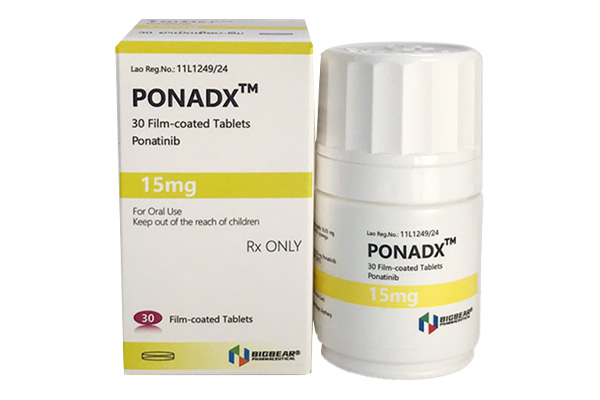
The generic version of ponatinib, PONADX, launched by BigbearPharma in Laos, is a third-generation tyrosine kinase inhibitor for Philadelphia chromosome-positive leukemias such as chronic myeloid leukemia. It offers a new treatment option for patients who are resistant or intolerant to first- or second-generation targeted drugs.
Is there a Laos generic version of Ponatinib?
Yes, there is a Laos generic version of ponatinib. The Laos Bigbear version of ponatinib is available in specifications of 15 mg * 30 tablets/box and 45 mg * 30 tablets/box. For more questions, we recommend that you contact professional customer service for detailed consultation.
Basic positioning and indications of Ponatinib
Ponatinib is an oral targeted anticancer drug that holds an important position in the treatment of hematological malignancies. Its core applicable population consists of two rare hematological malignancies – chronic myeloid leukemia (CML) and Philadelphia chromosome-positive acute lymphoblastic leukemia (Ph+ALL). It should be emphasized that this drug is not intended for all CML or Ph+ALL patients, but is specifically designed for the following two particular scenarios:
① Adult patients who have failed, are resistant, or intolerant to at least one prior other tyrosine kinase inhibitor (TKI) therapy – i.e., those who "no longer benefit from other drugs";
② Patients carrying the T315I gene mutation, regardless of whether they are in the chronic phase, accelerated phase, or blast phase of CML, or have Ph+ALL, may be considered for use. The T315I mutation is a "gatekeeper" mutation that renders most commonly used TKIs (such as imatinib, dasatinib, nilotinib) ineffective, whereas ponatinib, with its unique molecular structure, can effectively overcome this resistance mechanism.
In addition, please note: ponatinib is not indicated for newly diagnosed chronic-phase CML patients, as its risk-benefit ratio in this population has not been established, and long-term safety data are limited. For children and adolescents under 18 years of age, adequate clinical studies on safety and efficacy are lacking, and its use is not recommended at present. Before starting treatment, patients must undergo rigorous evaluation by a specialist physician to confirm disease stage, mutation status, and prior medication history, to ensure that the above indication criteria are met.
Precautions before using Ponatinib
Because ponatinib has a potent mechanism of action and affects multiple signaling pathways, before starting treatment, patients must fully disclose their personal and family medical history to their physician, so that risk stratification and individualized monitoring plans can be developed. The following key conditions require special prior disclosure:
① Liver disease (e.g., cirrhosis, chronic hepatitis), pancreatic disease (e.g., history of pancreatitis), or renal impairment – these organ dysfunctions may affect drug metabolism and excretion, increasing the risk of toxic accumulation;
② History of long-term alcohol abuse, as alcohol can exacerbate liver injury and may add to the potential elevation of liver enzymes associated with this drug;
③ Previous myocardial infarction, stroke (cerebrovascular accident), or any arterial/venous thrombotic event, because ponatinib has been clearly reported to increase the risk of occlusive vascular events;
④ Renal artery stenosis (which may cause refractory hypertension) or already diagnosed hypertension – blood pressure must be effectively controlled before starting medication;
⑤ Underlying cardiac disease, including heart failure, arrhythmias (especially prolonged QT interval syndrome or family history) – regular electrocardiogram monitoring is required during treatment;
⑥ Any bleeding tendency or coagulation disorder, as the drug may affect platelet function;
⑦ Past or current hepatitis B virus (HBV) infection status, because TKI may trigger viral reactivation, which in severe cases can lead to fulminant hepatitis or even death; therefore, serological screening should be performed before treatment, and prophylactic antiviral therapy should be initiated if necessary.
Patients should answer the above questions truthfully and cooperate with the physician to complete baseline laboratory tests (complete blood count, liver and kidney function, coagulation parameters, viral markers, etc.) – this is the first line of defense to ensure medication safety.