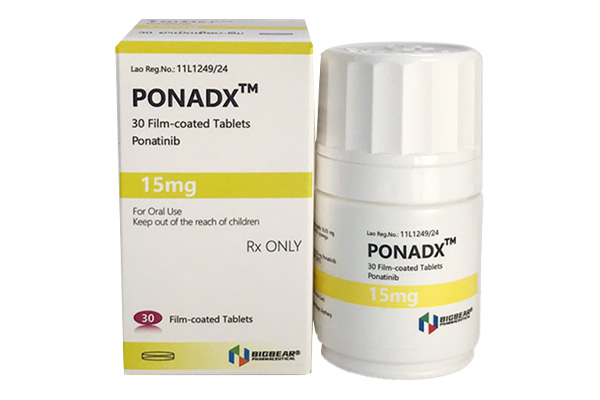
Against the backdrop of high prices for the original ponatinib, the generic version produced by Lao Big Bear Pharmaceutical has entered the market at a highly competitive price, enabling more drug‑resistant leukemia patients to access this critical targeted therapy.
What are the purchasing channels for Lao Big Bear generic ponatinib?
Lao Big Bear generic ponatinib is available in 15 mg × 30 tablets/box and 45 mg × 30 tablets/box. For specific purchasing methods, we recommend that you contact professional customer service for detailed consultation.
Drug interactions with ponatinib
Ponatinib metabolism depends primarily on the hepatic cytochrome P450 enzyme system (CYP3A4), and it also affects multiple transporters. Therefore, it has significant interactions with many commonly used drugs, which may substantially alter plasma concentrations or exacerbate adverse reactions. Before starting ponatinib, patients must fully inform their physician of all current prescription drugs, over‑the‑counter medications, herbal products, and dietary supplements (especially St. John's wort / hypericum perforatum). Any addition or discontinuation of medications during treatment should also be communicated immediately. The following are key drug classes and specific agents that require particular attention:
① Imatinib (another TKI) – concomitant use may increase the risk of myelosuppression and hepatotoxicity, requiring dose adjustment;
② The antidepressant/anxiolytic nefazodone – a strong CYP3A4 inhibitor that can raise ponatinib concentrations;
③ Macrolide antibiotics (clarithromycin, telithromycin) and azole antifungals (itraconazole, ketoconazole, posaconazole, voriconazole) – all are strong CYP3A4 inhibitors; close monitoring for toxicity is required when co‑administered;
④ Cardiovascular drugs, such as the calcium channel blocker nicardipine and the antiarrhythmic quinidine – may affect cardiac conduction and blood pressure;
⑤ Antiviral agents (used for HIV or hepatitis: atazanavir, boceprevir, cobicistat, delavirdine, efavirenz, fosamprenavir, indinavir, nelfinavir, ritonavir, saquinavir, telaprevir) – most are strong inhibitors or inducers and should be used with caution;
⑥ Antiepileptics (carbamazepine, phenytoin) and antituberculosis drugs (isoniazid, rifampin) – are strong CYP3A4 inducers that can significantly reduce ponatinib efficacy; concomitant use should generally be avoided, or the ponatinib dose may need substantial adjustment.
Based on the strength of the interaction, the physician will decide whether to switch medications, adjust the ponatinib dose, or increase monitoring frequency. Patients must not combine medications on their own.
Recommended dosage regimen and correct administration of ponatinib
Ponatinib is a film‑coated tablet available in 15 mg, 30 mg, and 45 mg strengths to facilitate flexible dose titration. The standard starting recommended dose is 45 mg once daily, orally, with or without food, but it is advisable to take it at the same time each day to maintain stable plasma concentrations. Key practical points for administration include:
① Swallow the tablet whole; do not crush, chew, or dissolve it, as this would destroy the sustained‑release properties and increase the risk of sudden adverse effects;
② The bottle contains a desiccant canister (molecular sieve) to keep the tablets dry; do not remove or swallow this canister;
③ If a dose is missed, take it as soon as you remember, but if it is less than 12 hours until the next scheduled dose, skip the missed dose and take the next one at the regular time. Do not take a double dose to make up for the missed one;
④ In case of accidental overdose (e.g., taking more than the prescribed amount at one time), contact your physician immediately or go to the nearest hospital emergency department, and bring the drug packaging for identification by emergency staff.
Dose adjustments may occur during treatment – for example, if severe adverse reactions occur (such as vascular occlusion, marked liver enzyme elevations, pancreatitis, etc.), the physician will reduce the dose stepwise to 30 mg or 15 mg once daily, or even temporarily interrupt therapy. After toxicity resolves, treatment may be resumed or maintained at a lower maintenance dose under medical guidance. Patients must strictly adhere to the individualised prescription and must not adjust the dose on their own.