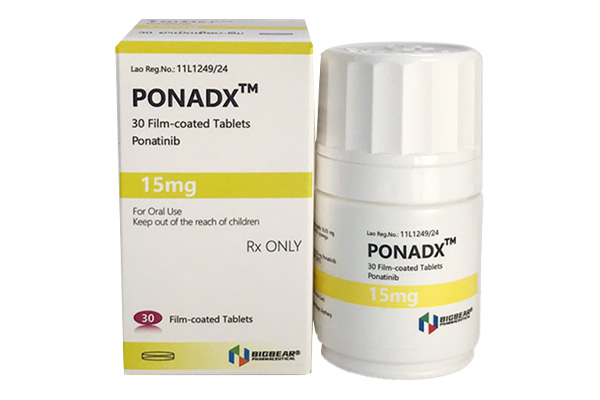
As an approved generic version of ponatinib launched in Laos, the ponatinib produced by Lao Big Bear Pharmaceutical offers bioequivalent efficacy to the originator drug and significantly reduced treatment costs, making it an important medication option for many patients with chronic myeloid leukemia.
How much does Lao Big Bear version ponatinib cost?
Lao Big Bear version ponatinib is available in strengths of 15mg*30 tablets/box and 45mg*30 tablets/box, with prices ranging approximately from $188 to $76. Actual prices may vary due to multiple factors and should be confirmed at the point of sale.
Serious side effect warnings for ponatinib
The side effect profile of ponatinib can be divided into two categories: one includes relatively common but generally manageable reactions, and the other includes rare but potentially life-threatening emergencies that require recognition by patients and their families.
Very common side effects (incidence ≥10%) include:
Upper respiratory tract infections (nasal congestion, sore throat, fever, etc.);
Decreased appetite, insomnia, headache, dizziness;
Cough, diarrhea, vomiting, nausea;
Elevated liver enzymes (alanine aminotransferase ALT and aspartate aminotransferase AST elevation – requires regular blood monitoring);
Rash, dry skin, pruritus;
Bone, joint and muscle pain (back pain, limb pain, muscle cramps);
Fatigue, peripheral edema (fluid accumulation in arms or legs), fever, generalized pain.
Serious warning signs requiring immediate medical attention (may indicate myocardial infarction, stroke, severe thrombosis, or visceral injury) include:
① Crushing chest pain or discomfort, with pain radiating to the jaw or left shoulder, accompanied by sudden shortness of breath – may indicate acute coronary syndrome;
② Sudden weakness/numbness on one side of the face, arm or leg, slurred speech, blurred or double vision, severe headache – suggests stroke or transient ischemic attack;
③ Severe abdominal pain (especially in the upper abdomen or around the navel), sudden swelling, redness, or increased warmth in an arm or leg, or coughing up fresh blood – may indicate mesenteric venous thrombosis, deep vein thrombosis, or pulmonary embolism.
If any of the above emergency signs occur, the patient should call emergency services immediately or be taken to the hospital by family members; do not wait for a routine clinic appointment. In addition, hepatitis B reactivation may present with fatigue, jaundice, dark urine, and right upper quadrant pain, which should also be reported promptly.
Storage guidelines for ponatinib
Proper storage conditions are essential to maintain the efficacy and safety of ponatinib, and also involve household safety and environmental protection. Patients should follow these principles:
① Keep the medication out of sight and reach of children, preferably in a locked cabinet or high, closed storage to prevent accidental ingestion;
② Follow the expiration date printed on the original packaging (bottle and outer carton); do not use after expiration. The expiration date expressed as "the last day of the month" means the end of that month – for example, "2026/06" indicates that the product should not be used after June 30, 2026;
③ Always keep the tablets in the original amber bottle to protect from light and moisture. The desiccant canister inside the bottle must remain in the bottle; do not discard it, and do not remove or swallow it – the desiccant is molecular sieve and is not edible;
④ Store at room temperature (15–30°C), avoid high temperatures, humidity (e.g., bathroom), or freezing;
⑤ Regarding disposal of unused medication: Do not flush expired or leftover tablets down the toilet (into wastewater) or discard them in household trash, as the drug ingredients may contaminate water sources and soil. The correct approach is: consult your local pharmacy or hospital about drug take-back programs, or follow national/local environmental guidelines to deliver the medication to designated collection points for safe disposal. These measures not only protect the environment but also prevent misuse by others. Patients should develop the habit of regularly checking the remaining quantity and expiration date of the bottle, and when traveling, always carry the original packaging to avoid sun exposure or damage from jostling.