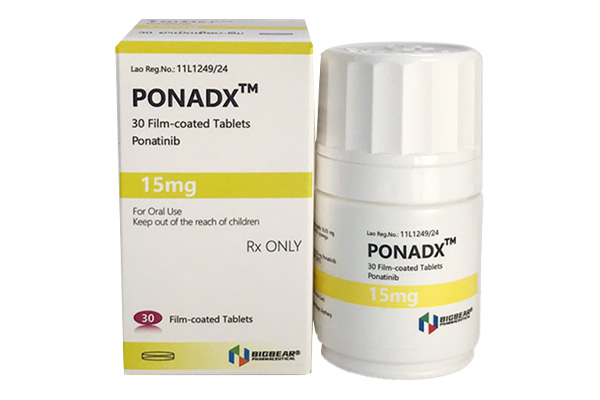
Ponatinib is a third-generation kinase inhibitor developed by Takeda Pharmaceutical Company of Japan, specifically designed for the treatment of adult hematologic malignancies.
Ponatinib's Efficacy and Precautions
Its core mechanism of action is through potent inhibition of the BCR-ABL fusion protein (including the T315I mutant), overcoming the resistance bottleneck of traditional TKI drugs. This drug has been approved for all stages (chronic, accelerated, and blast crisis) of Philadelphia chromosome-positive acute lymphoblastic leukemia (Ph+ALL) and chronic myeloid leukemia (CML), especially for patients with the T315I mutation or those resistant/intolerant to at least two prior kinase inhibitors, providing a crucial treatment option for clinical practice.
Indications
Ponatinib is a kinase inhibitor indicated for the treatment of the following diseases in adult patients:
Philadelphia chromosome-positive acute lymphoblastic leukemia
Newly diagnosed Ph+ALL, used in combination with chemotherapy.
This indication was approved through an accelerated approval process based on minimal residual disease (MRD)-negative complete remission (CR) achieved at the end of induction therapy. Continued approval for this indication may depend on validation of clinical benefit in confirmatory clinical trials.
Monotherapy for Ph+ ALL without indications for other kinase inhibitors, or T315I mutation-positive Ph+ ALL.
Chronic Myeloid Leukemia
Chronic phase (CP) CML with resistance or intolerance to at least two prior kinase inhibitors.
Accelerated phase (AP) or blast crisis (BP) CML without indications for other kinase inhibitors.
T315I mutation-positive CML (including chronic phase, accelerated phase, or blast crisis).
Usage Restrictions: Ponatinib is not indicated for, and is not recommended for, newly diagnosed chronic phase chronic myeloid leukemia (CP-CML).
Dosage and Administration
Recommended dose for newly diagnosed Ph+ ALL: In combination with chemotherapy, the starting dose is 30 mg orally once daily; after induction therapy, if MRD-negative complete remission is achieved (BCR::ABL1/ABL1 ≤ 0.01%), the dose is reduced to 15 mg orally once daily.
Recommended dose for monotherapy of specific Ph+ ALL: For Ph+ ALL without indications for other kinase inhibitors or with T315I positivity, the starting dose is 45 mg orally once daily.
Recommended dose for chronic phase CML: The starting dose is 45 mg orally once daily; if the BCR::ABL1 international standard (IS) ≤ 1% is achieved, the dose is reduced to 15 mg orally once daily.
Recommended dose for accelerated phase and blast crisis CML: The starting dose is 45 mg orally once daily.
Patients with hepatic impairment: For dosage adjustment guidelines for patients with hepatic impairment, please refer to the complete prescribing information.
Ponatinib can be taken with or without food.
Adverse Reactions
The most common adverse reactions with an incidence >20% are as follows:
Ponatinib monotherapy: rash and related conditions, arthralgia, abdominal pain, fatigue, headache, constipation, hypertension, dry skin, hepatotoxicity, fluid retention and edema, fever, pancreatitis/elevated lipase, nausea, bleeding, anemia, arterial occlusive events (AOEs), arrhythmias.
The most common grade 3/4 laboratory abnormalities with an incidence >20%: decreased platelet count, decreased neutrophil count, decreased white blood cell count.
Ponatinib in combination with chemotherapy: hepatotoxicity, arthralgia, rash and related conditions, headache, fever, abdominal pain, constipation, fatigue, nausea, stomatitis, hypertension, pancreatitis/elevated lipase, peripheral neuropathy, bleeding, febrile neutropenia, fluid retention and edema, vomiting, paresthesia, arrhythmias.
The most common grade 3/4 laboratory abnormalities with an incidence >20% include: decreased white blood cell count, decreased neutrophil count, decreased platelet count, decreased lymphocyte count, decreased hemoglobin, elevated lipase, and elevated alanine aminotransferase.
Contraindications
Not yet clear.
Precautions
Hypertension: Monitor blood pressure and control hypertension as clinically indicated if necessary. If hypertension cannot be controlled with medication, ponatinib administration should be discontinued, the dose reduced, or the drug permanently discontinued.
Pancreatitis: Monitor serum lipase levels. Depending on the severity of pancreatitis, discontinue administration and then resume at the original or reduced dose, or permanently discontinue the drug. If elevated lipase is accompanied by abdominal symptoms, further evaluation for pancreatitis is necessary.
Neuropathy: Monitor for symptoms of peripheral neuropathy and cranial nerve neuropathy. Depending on the recurrence or severity of symptoms, discontinue administration and then resume at the original or reduced dose, or permanently discontinue the drug.
Ocular toxicity: Comprehensive ophthalmological examinations are required at baseline and throughout treatment.
Bleeding: Monitor for bleeding symptoms and manage as needed according to clinical indications. Depending on the recurrence or severity of bleeding, discontinue administration and then resume at the original or reduced dose, or permanently discontinue the drug.
Fluid Retention: Monitor for fluid retention symptoms and manage as needed according to clinical indications. Depending on the recurrence or severity of symptoms, discontinue administration and then resume at the original or reduced dose, or permanently discontinue the drug.
Arrhythmias: Monitor for signs or symptoms of arrhythmias and manage as needed according to clinical indications. Depending on the recurrence or severity of arrhythmias, discontinue administration and then resume at the original or reduced dose, or permanently discontinue the drug.
Myelosuppression: Perform a complete blood count every 2 weeks for the first 3 months of treatment; thereafter, perform a monthly count or as indicated by clinical indications. If the absolute neutrophil count (ANC) is <1×10⁹/L or the platelet count is <50×10⁹/L, discontinue ponatinib administration; once the ANC is ≥1.5×10⁹/L and the platelet count is ≥75×10⁹/L, administration can be resumed at the original dose or a reduced dose.
Tumor lysis syndrome: Before initiating ponatinib treatment, ensure adequate hydration and correct elevated serum uric acid levels.
Reversible posterior leukoencephalopathy syndrome (RPLS): Discontinue administration if RPLS occurs until symptoms resolve. The safety of resuming ponatinib after symptom resolution has not been established.
Poor wound healing and gastrointestinal perforation: Discontinue administration at least 1 week before elective surgery; discontinue administration at least 2 weeks after major surgery, and only resume administration after the wound has fully healed. The safety of resuming ponatinib after resolution of wound healing complications has not been established.
Embryo-fetal toxicity: This product can cause fetal harm. Women of childbearing potential are advised to be aware of the potential risks of this medication to the fetus and to use effective contraception.
Special Populations
Lactation: Breastfeeding women are advised not to breastfeed.
Drug Interactions
Potent CYP3A Inhibitors: Avoid concurrent use; if concurrent use cannot be avoided, the dose of ponatinib should be reduced.
Potent CYP3A Inducers: Avoid concurrent use.
Drug Overdose
In case of overdose, ponatinib should be discontinued, the patient's vital signs closely monitored, and symptomatic and supportive treatment provided as appropriate.