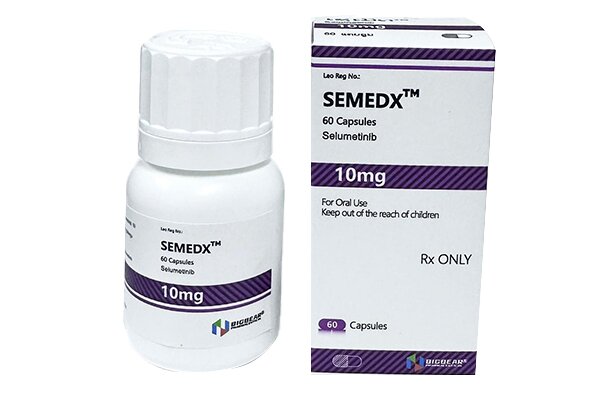
Precautions for Selumetinib Use
Selumetinib was approved by the U.S. Food and Drug Administration (FDA) on April 10, 2020, under the brand name Koselugo. Selumetinib is used to treat neurofibromatosis type 1 (NF1) in children aged 2 years and older with plexiform neurofibromas that cannot be completely removed surgically.
Precautions for Selumetinib Use
1. Cardiomyopathy
Assess cardiac function before starting selumetinib, every 3 months during the first year of treatment, every 6 months thereafter, and as clinically necessary. For patients with decreased LVEF, repeat echocardiography or cardiac MRI every 3-6 weeks during treatment interruption, and every 2-3 months after recovery.
2. Ocular Toxicity
Perform a comprehensive ophthalmological examination before starting selumetinib, regularly during treatment, and whenever visual changes occur. Perform optical coherence tomography (OCT) monitoring every 3 weeks. Restart the treatment at a reduced dose after recovery.
3. Gastrointestinal Toxicity
Administer an antidiarrheal medication (such as loperamide) immediately upon the first episode of diarrhea and increase fluid intake. Adjust the dosage according to severity.
4. Skin Toxicity
Monitor for severe skin rashes and adjust the selumetinib dosage according to severity.
5. Elevated Creatine Kinase (CPK)
Monitor serum CPK levels before treatment, periodically during treatment, and as clinically necessary. If elevated levels are found, assess for rhabdomyolysis or other causes and adjust the selumetinib dosage according to severity.
6. Vitamin E and Bleeding Risk
Avoid vitamin E supplementation to levels exceeding the safe limit. Monitor for bleeding when used concomitantly with vitamin K antagonists or antiplatelet drugs, and increase the frequency of INR monitoring.
7. Embryo-Fetal Toxicity
Inform pregnant women of the potential risks to the fetus. Women of reproductive potential and their male partners should use contraception during treatment and for one week after discontinuation of selumetinib.
Precautions before using selumetinib:
1. Before taking selumetinib, inform your doctor of all your health conditions, including: heart problems, eye problems, liver problems, pregnancy or planning pregnancy, and breastfeeding or planning to breastfeed.
2. Selumetinib should not be given to children under 2 years of age.
3. Selumetinib may harm an unborn fetus. Your doctor should check for pregnancy before starting selumetinib treatment. Women of childbearing age should use effective contraception during selumetinib treatment and for one week after the last dose.
4. Men with female partners who are capable of pregnancy should use effective contraception during selumetinib treatment and for one week after the last dose.
5. If you become pregnant during treatment or suspect you may be pregnant, inform your doctor immediately.
6. It is unknown whether selumetinib passes into breast milk. Do not breastfeed during selumetinib treatment and for one week after the last dose.
Precautions after taking Selumetinib:
1. If you vomit shortly after taking this medication, do not take an extra dose. Wait until your next scheduled dose.
2. If you start experiencing loose stools (diarrhea), inform your doctor. You may be given antidiarrheal medication. Continue using this medication as prescribed by your doctor.
3. If you experience diarrhea, drink plenty of water.
4. Selumetinib may cause your heart to pump blood at a lower than normal level. While taking this medication, you should have your heart function checked every 3 to 6 months.
5. Selumetinib may also cause eye problems that could lead to blindness. Frequent vision checks are necessary, and depending on the results, your next dose may be delayed.