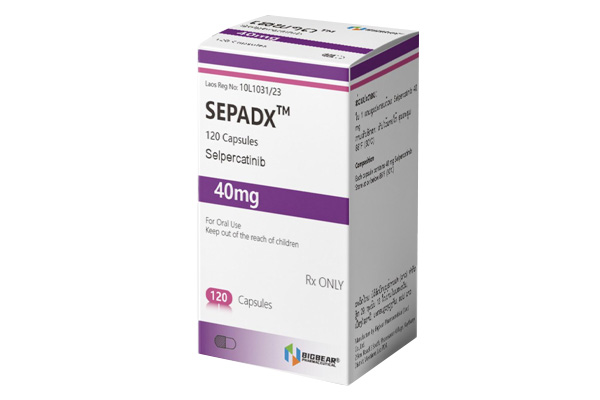
According to Eli Lilly, the U.S. Food and Drug Administration (FDA) announced on September 27 that it has granted regular approval to the RET inhibitor Retevmo (selpercatinib) for the treatment of adult and pediatric patients aged 2 years and older with RET-mutant advanced or metastatic medullary thyroid carcinoma (MTC) requiring systemic therapy.
Previously, in May 2020, the FDA granted accelerated approval to Retevmo (selpercatinib) for adult and pediatric patients aged 12 years and older with advanced or metastatic RET-positive medullary thyroid carcinoma requiring systemic therapy. The drug subsequently received another accelerated approval in May 2024 for the treatment of pediatric patients aged 2 years and older with RET-mutant advanced or metastatic medullary thyroid carcinoma requiring systemic therapy, patients with RET gene fusions requiring systemic therapy and resistant to radioactive iodine in advanced or metastatic thyroid carcinoma, and specific patients with locally advanced or metastatic solid tumors and RET gene fusions.
In June 2024, the FDA approved Retevmo (selpercatinib) for the treatment of adult patients and children aged 2 years and older with advanced or metastatic RET fusion-positive thyroid cancer who require systemic therapy and are resistant to radioactive iodine (RAI).
The approval was based on the LIBRETTO-531 (NCT04211337) randomized, multicenter, open-label study evaluating the efficacy in adults and adolescents with advanced or metastatic RET-mutant medullary thyroid carcinoma. Patients were randomized (2:1) to receive Retevmo (160 mg twice daily) or a physician-selected treatment regimen (i.e., the control group): cabozantinib (140 mg once daily) or vandetanib (300 mg once daily). If randomized to the control group, patients were grouped according to their RET mutation (M918T versus others) and the expected treatment.
The primary efficacy outcome was progression-free survival (PFS), determined by a blinded independent review committee according to RECIST v1.1.
Median progression-free survival was not reached in the Retevmo group (95% CI: not evaluable [NE], NE), while the median progression-free survival was 16.8 months in the cabozantinib/vandetanib group (95% CI: 12.2, 25.1), with a hazard ratio of 0.280 (95% CI: 0.165, 0.475; p<0.0001).
Prespecified analyses of the relative impact of patient-reported side effects supported the clinical benefit of Retevmo; patients in the Retevmo group experienced fewer serious side effects compared to those receiving cabozantinib or vandetanib.
Regarding safety, the most common adverse reactions (≥25%) were hypertension, edema, dry mouth, fatigue, and diarrhea. The most common grade 3 or 4 laboratory abnormalities (≥5%) are lymphopenia, elevated alanine aminotransferase (ALT), neutropenia, elevated alkaline phosphatase (ALP), elevated serum creatinine, decreased calcium, and elevated aspartate aminotransferase (AST).