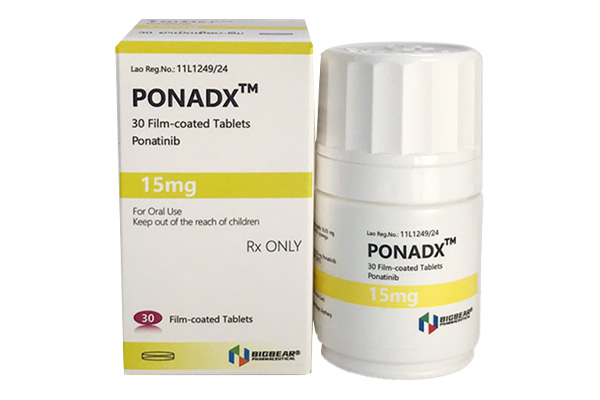
Ponatinib (also known as iclusig or Incoxin) is an anti-tumor drug, a multi-target receptor tyrosine kinase inhibitor. It is used to treat chronic myeloid leukemia (CML) or Philadelphia chromosome-positive acute lymphoblastic leukemia (Ph+ALL). Warnings and precautions during its use include:
Warnings
Arterial Occlusive Events
In clinical trials, patients receiving ponatinib hydrochloride experienced arterial occlusive events, including death (see black box warning).
Assess whether the benefits outweigh the risks before treatment. Monitor patients for arterial occlusive events during treatment. If arterial occlusion is suspected, pause or discontinue treatment, and reassess the risks and benefits of restarting treatment.
Venous Thromboembolic Events
Patients receiving ponatinib hydrochloride experienced serious venous thromboembolic events (see black box warning).
Monitor patients for signs of venous thromboembolic events; if such events occur, suspend treatment and subsequently resume, reduce, or discontinue the drug depending on the recurrence/severity.
Heart Failure
Serious heart failure events, including death, have occurred in patients receiving ponatinib hydrochloride (see black box warning).
Monitor for signs of heart failure and manage according to clinical indications; if new or worsening heart failure occurs, suspend treatment and reduce the dose or discontinue the drug upon resumption.
Hepatotoxicity
There is a risk of hepatotoxicity, including liver failure and death (see black box warning); rare cases of fulminant hepatic failure leading to death have occurred after 1 week of treatment; elevated liver enzymes are a common adverse reaction.
Test liver function before starting treatment and at least monthly during treatment, or as needed according to clinical indications; if hepatotoxicity occurs, suspend treatment, reduce the dose, or discontinue the drug.
Precautions
Hypertension
Severe hypertension, including hypertensive crisis, is observed, with elevated blood pressure being a common adverse reaction; hypertension-related symptoms (such as confusion, headache, chest pain, and dyspnea) may require urgent clinical intervention.
Monitor blood pressure and treat according to clinical indications; if hypertension cannot be controlled with medication, discontinue treatment, reduce the dose, or discontinue the medication; if blood pressure significantly worsens, fluctuates greatly, or is unresponsive to medication, discontinue the medication and consider evaluating renal artery stenosis.
Pancreatitis
Pancreatitis and abnormal pancreatic laboratory indicators (such as elevated serum amylase and lipase) have been observed. Most cases resolve within 2 weeks after discontinuing treatment or reducing the dose.
Measure serum lipase every 2 weeks for the first 2 months of treatment, then monthly, or as needed based on clinical indications; increase the frequency of testing in patients with a history of pancreatitis or alcohol abuse. If elevated serum lipase is accompanied by abdominal pain, pancreatitis should be investigated.
If pancreatitis occurs, discontinue treatment, and subsequently resume the original dose, reduce the dose, or discontinue the medication.
Increased Toxicity in Newly Diagnosed Chronic Myeloid Leukemia Patients
This product is not recommended for newly diagnosed chronic myeloid leukemia patients. Compared with imatinib, patients treated with ponatinib hydrochloride have at least a 2-fold higher incidence of arterial and venous thrombosis and occlusion events, as well as a higher incidence of myelosuppression, pancreatitis, hepatotoxicity, heart failure, hypertension, and skin and subcutaneous tissue diseases.
Peripheral Neuropathy
Peripheral and cranial neuropathy have been observed, mostly occurring in the first month of treatment; the most common peripheral neuropathy symptoms are paresthesia, hypoesthesia, and muscle weakness.
Monitor patients for signs of neuropathy; if neuropathy occurs, suspend treatment and subsequently resume at the original dose, reduce the dose, or discontinue the drug.
Ocular Toxicity
Serious ocular toxicities that can lead to blindness or blurred vision have been observed, including retinal toxicity (macular edema, age-related macular degeneration, retinal vein occlusion, retinal hemorrhage, vitreous opacity), blurred vision, eye pain, and dry eye.
Perform comprehensive ophthalmological examinations at baseline and regularly during treatment.
Bleeding
Bleeding events have been observed, some of which are severe and even fatal. The incidence of severe bleeding is higher in patients with accelerated/blast crisis chronic myeloid leukemia or Philadelphia chromosome-positive acute lymphoblastic leukemia than in those with chronic phase. The most common severe bleeding events are gastrointestinal bleeding and subdural hematoma, primarily occurring in patients with grade 4 thrombocytopenia.
Monitor for bleeding and manage according to clinical indications; if bleeding occurs, suspend treatment and subsequently resume, reduce, or discontinue the medication.
Fluid Retention
There is a risk of severe fluid retention (e.g., pleural effusion, pericardial effusion, angioedema); cerebral edema leading to death is rare.
Monitor for signs and symptoms of fluid retention; if fluid retention occurs, manage according to clinical indications, suspend treatment, and subsequently resume, reduce, or discontinue the medication.
Cardiac Arrhythmias
Grade 3/4 arrhythmic events were reported, some requiring hospitalization, including atrial fibrillation, atrial flutter, ventricular arrhythmias, symptomatic bradycardia requiring pacemaker implantation, cardiac and respiratory arrest, supraventricular premature contractions, supraventricular tachycardia, ventricular tachycardia, atrial tachycardia, sinus bradycardia, bradycardia, QT interval prolongation, complete atrioventricular block, sinoatrial node dysfunction, loss of consciousness, and syncope.
Monitor for signs and symptoms of bradycardia (e.g., syncope, dizziness) or tachycardia (e.g., chest pain, palpitations, dizziness) and manage according to clinical indications; if an arrhythmia occurs, discontinue treatment and subsequently resume the original dose, reduce the dose, or discontinue the medication.
Myelosuppression
There is a risk of grade 3/4 myelosuppression (neutropenia, anemia, thrombocytopenia); the incidence is higher in patients with blast crisis/accelerated phase chronic myeloid leukemia or Philadelphia chromosome-positive acute lymphoblastic leukemia.
Complete blood cell counts should be performed every 2 weeks for the first 3 months of treatment, then monthly, or as needed based on clinical indications; if hematologic toxicity occurs, treatment should be suspended, and the original dose should be resumed or the dose reduced.
Tumor lysis syndrome
Tumor lysis syndrome and hyperuricemia have been reported.
Ensure adequate hydration and control of hyperuricemia before starting treatment.
Reversible posterior encephalopathy syndrome (RPLS)
Reversible posterior encephalopathy syndrome (RPLS) has been reported, with symptoms including hypertension, seizures, headache, decreased alertness, altered mental status, vision loss, and other visual and neurological abnormalities, requiring diagnosis by magnetic resonance imaging.
If reversible posterior encephalopathy syndrome occurs, treatment should be suspended until symptoms resolve; the safety of restarting treatment after symptom resolution has not been established.
Wound Healing Complications and Gastrointestinal Perforation
Poor wound healing has been reported; this product should be discontinued for at least 1 week before elective surgery, and for at least 2 weeks after major surgery until the wound has fully healed; the safety of restarting the product after wound healing complications have been resolved has not been established.
Gastrointestinal perforation or fistula formation has been reported; patients experiencing gastrointestinal perforation must permanently discontinue the product.
Fetal/Neonatal Morbidity and Mortality Risk
Based on the mechanism of action and animal studies, this product may cause harm to the fetus. Confirm the pregnancy status of women of childbearing potential before initiating treatment; women of childbearing potential are advised to use effective contraception during treatment and for 3 weeks after the last dose. If this product is used during pregnancy or if the patient becomes pregnant during treatment, the potential risks to the fetus must be explained to the patient.