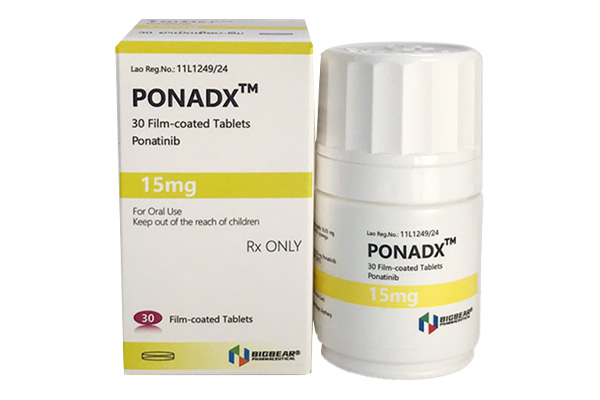
Ponatinib is an oral multi-target tyrosine kinase inhibitor. The price is currently undetermined and will depend on the actual price.
What is the latest price per box of Ponatinib?
In the international market, the price of Ponatinib varies significantly due to differences in drug specifications, procurement channels, and exchange rate fluctuations. Patients typically need to obtain it through overseas medical institutions or pharmacies, resulting in higher costs.
Drug Interactions of Ponatinib
1. Interaction with CYP3A Inhibitors
Potential CYP3A inhibitors (such as ketoconazole, clarithromycin, ritonavir, etc.) can significantly increase the blood concentration of Ponatinib, increasing the risk of adverse reactions.
Concomitant use should be avoided. If concurrent use is necessary, the Ponatinib dose should be reduced according to the instructions, and the original dose should be resumed 3-5 half-lives after discontinuing the inhibitor.
2. Interactions with CYP3A inducers
Potassium CYP3A inducers (such as rifampin, carbamazepine, phenytoin, etc.) can reduce ponatinib blood concentrations, potentially leading to treatment failure.
Concomitant use should be avoided. If unavoidable, efficacy should be closely monitored, and alternative drugs with no or weak CYP3A induction should be considered.
3. Interactions with other drugs or foods
(1) Gastric acid inhibitors: Concomitant use with proton pump inhibitors (such as lansoprazole) may slightly decrease ponatinib exposure, but the clinical significance is unclear; efficacy monitoring is recommended.
(2) Special foods: Avoid consuming grapefruit or grapefruit juice during treatment, as it may inhibit CYP3A enzymes, increasing drug exposure and toxicity risks.
Pharmacokinetics of Ponatinib
1. Absorption and Distribution
(1) Absorption: Peak concentration is reached approximately 6 hours after oral administration. Consumption with food does not affect absorption; therefore, it can be taken with meals or on an empty stomach.
(2) Bioavailability: Absolute bioavailability is unclear.
(3) Protein binding: Extremely high (>99%), widely bound to plasma proteins, but displacement interactions with other highly protein-bound drugs (such as warfarin) are clinically insignificant.
(4) Volume of distribution: The average apparent volume of distribution is large, approximately 1223 liters, indicating widespread distribution in tissues.
2. Metabolism and Excretion
(1) Metabolic pathway: Primarily metabolized in the liver by CYP3A4 enzymes, with CYP2C8, CYP2D6, and CYP3A5 also involved in some metabolism. Esterases/amidases also participate in its metabolic process.
(2) Excretion pathway: After oral administration of the radiolabeled drug, approximately 87% is excreted in feces, and 5% in urine.
(3) Half-life: The average terminal elimination half-life is approximately 24 hours, supporting a once-daily dosing regimen.