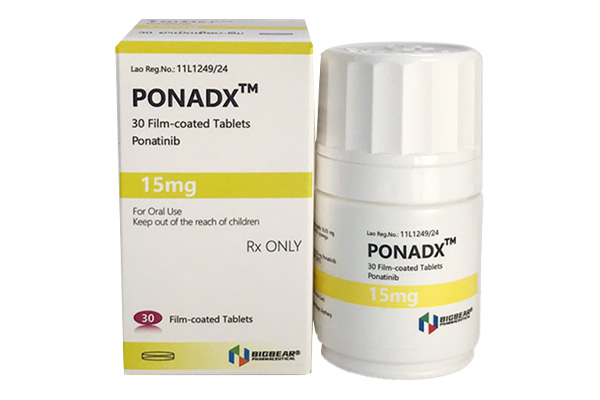
Currently, Ponatinib is available in hospitals and pharmacies in countries where it is marketed.
Where to Buy Ponatinib
1. Overseas Medical Treatment and Drug Purchase: Patients can go to designated medical institutions in countries or regions where Ponatinib is approved, have a prescription issued by a registered local doctor, and purchase the drug at a local pharmacy.
2. Medical Service Institutions: Patients can also consult domestic medical service institutions, which can help purchase the required drug through direct overseas mail.
Pharmacokinetics of Ponatinib
1. Absorption
The time to peak concentration (Tmax) after oral administration is approximately 6 hours.
Food Effects: Compared with the fasting state, neither high-fat nor low-fat diets significantly affected its plasma exposure (AUC and Cmax), indicating that this product can be taken with food or on an empty stomach.
2. Distribution
Plasma protein binding is extremely high, exceeding 99%, and the apparent volume of distribution is large, approximately 1223 liters, indicating widespread distribution of the drug in tissues.
3. Metabolism and Excretion
Primarily metabolized by the liver, involving the CYP3A4 enzyme. CYP2C8, CYP2D6, and CYP3A5 also participate in some metabolism. Esterases/amidases also participate in its metabolism.
Contraindications of Ponatinib
1. Absolute Contraindications
According to the drug's package insert, there are no absolute contraindications listed for ponatinib, but this does not mean it can be used indiscriminately.
2. Strict Usage Restrictions and Warnings
(1) Contraindicated in Specific Populations
Ponatinib is not suitable for and is not recommended for newly diagnosed patients with chronic phase chronic myeloid leukemia. Clinical studies have shown that in such patients, ponatinib carries a doubled risk of serious adverse reactions compared to imatinib.
(2) Situations Requiring Suspension or Discontinuation Due to Serious Risks
When a patient experiences any of the following specific serious adverse reactions, immediate discontinuation or even permanent discontinuation of the drug is necessary:
Arterial occlusive events: such as myocardial infarction, stroke, peripheral artery disease requiring emergency revascularization, etc., especially grade ≥3 events, which usually require permanent discontinuation.
Venous thromboembolic events: Permanent discontinuation is required if a grade ≥4 event occurs.
Heart failure: Permanent discontinuation is required if a grade ≥4 event occurs.
Pancreatitis: Permanent discontinuation is required if symptomatic pancreatitis occurs and serum lipase is >5 times the ULN.
Gastrointestinal perforation: Permanent discontinuation is required if this occurs.