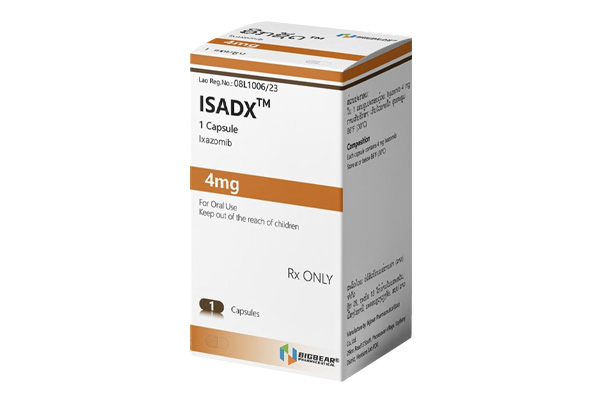
Ixazomib was approved by the U.S. Food and Drug Administration (FDA) on November 20, 2015, for the treatment of adult patients with relapsed or refractory multiple myeloma.
Ixazomib Efficacy and Uses
Ixazomib, in combination with lenalidomide and dexamethasone, is indicated for patients with multiple myeloma who have received at least one prior therapy (this use is designated as an orphan drug).
It is not recommended for use in combination with lenalidomide and dexamethasone during maintenance therapy or in newly diagnosed multiple myeloma outside of controlled clinical trials.
Ixazomib Dosage and Administration
1. Pretreatment Screening
Before the start of each treatment cycle, an absolute neutrophil count ≥1000/mm³ and a platelet count ≥75,000/mm³ must be confirmed.
Verify the pregnancy status of women of childbearing potential.
2. Patient Monitoring
Monitor platelet counts at least monthly, with more frequent monitoring considered during the first three cycles of treatment.
Monitor for symptoms of peripheral neuropathy.
Monitor for signs and symptoms of thrombotic thrombocytopenic purpura or hemolytic uremic syndrome.
Monitor liver enzymes regularly.
3. Pre-treatment and Prophylaxis
Consider antiviral prophylaxis to reduce the risk of varicella-zoster virus reactivation. In clinical studies, antiviral prophylaxis has been associated with a reduced incidence of varicella-zoster infection.
4. Preparation and Administration Precautions
Avoid direct contact with capsule contents. If the capsule breaks, avoid direct contact of the contents with skin or eyes. If contact occurs, wash skin thoroughly with soap and water; rinse eyes thoroughly with water.
When used in combination with lenalidomide and dexamethasone, consider the precautions, warnings, and contraindications of lenalidomide and dexamethasone.
5. Dosage
The recommended starting dose for each 28-day cycle is: ixazomib 4 mg once weekly on days 1, 8, and 15; combined with lenalidomide 25 mg once daily on days 1-21; and dexamethasone 40 mg on days 1, 8, 15, and 22, continuing treatment until disease progression or unacceptable toxicity occurs.
6. Route of Administration
For the first 3 weeks of each 4-week cycle, administer orally once daily on the same day at approximately the same time.
Take on an empty stomach, at least 1 hour before or 2 hours after a meal.
When ixazomib and dexamethasone are administered on the same day, they should not be taken concurrently; dexamethasone should be taken with food, while ixazomib should be taken on an empty stomach.
Swallow the capsules whole with water; do not crush, chew, or open the capsules.
7. Management of Vomiting
If vomiting occurs after taking the medication, do not take an additional dose. Resume treatment at the next scheduled dosing time.
Precautions for Ixazomib
1. Thrombocytopenia
Thrombocytopenia is commonly reported. Platelet count troughs typically occur between days 14 and 21 of each 28-day cycle and return to baseline levels before the start of the next cycle.
Monitor platelet counts at least monthly, considering more frequent monitoring during the first three cycles of treatment. Manage thrombocytopenia through dose adjustments and platelet transfusions according to standard medical practice.
2. Gastrointestinal Toxicity
Gastrointestinal toxicity (e.g., diarrhea, constipation, nausea, vomiting) has been reported, occasionally requiring antidiarrheal or antiemetic medications and/or supportive care. Adjust the dose for patients experiencing grade 3 or 4 gastrointestinal toxicity.
3. Peripheral Edema
Peripheral edema has been reported (mostly grade 1 or 2). Assess the underlying cause and provide supportive care as needed. For grade 3 or 4 symptoms, adjust the ixazomib dose and the dexamethasone dose according to the manufacturer's label.