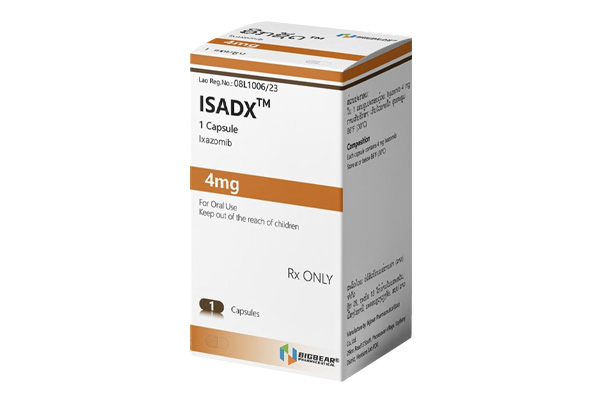
Ixazomib is an orally administered, highly selective proteasome inhibitor that must be used in combination with lenalidomide and dexamethasone.
Ixazomib Precautions
1. Hematologic Toxicity
(1) Thrombocytopenia: Very common (85%), with the lowest platelet count usually occurring between days 14 and 21 of each 28-day cycle.
Monitoring and Management: Monitor platelet counts at least monthly during ixazomib treatment, with increased frequency recommended for the first three cycles. Discontinue use, reduce the dose, or administer platelet transfusions depending on severity.
(2) Neutropenia: Common (74%), increasing the risk of infection.
Monitoring and Management: Monitor neutrophil counts regularly; granulocyte colony-stimulating factor (G-CSF) support may be considered.
2. Gastrointestinal Reactions
Symptoms: Diarrhea (52%), constipation (35%), nausea (32%), and vomiting (26%) are extremely common.
Management: Provide symptomatic supportive treatment such as antidiarrheal and antiemetics, and encourage patients to maintain adequate fluid intake. Dosage adjustment is necessary for severe (grade 3-4) symptoms.
3. Neurological and Skin Toxicity
(1) Peripheral Neuropathy: Occurs in 32%, mostly grade 1-2, manifesting as paresthesia, numbness, or pain.
Management: Patients should report symptoms promptly, and medication should be discontinued or the dose reduced depending on the severity.
(2) Skin Reactions: Rash is common (27%). Be alert for rare but serious skin adverse reactions, such as Stevens-Johnson syndrome and toxic epidermal necrolysis; if these occur, permanent discontinuation of the drug is necessary.
4. Other Important Warnings
(1) Thrombotic Microangiopathy: Monitor for relevant signs (such as mental abnormalities, worsening renal function, fever, petechiae, etc.); discontinue medication and evaluate if suspected.
(2) Hepatotoxicity: Monitor liver enzymes regularly and adjust the dosage for grade 3-4 hepatotoxicity.
(3) Embryo-fetal toxicity: There is a potential risk to the fetus. Men and women of reproductive age must use effective non-hormonal contraception during treatment and for 90 days after the last dose.
Ixazomib Drug Interactions
1. Contraindications for Concomitant Use
Potential CYP3A inducers: such as rifampin, carbamazepine, phenytoin, and St. John's wort.
Effect: Significantly reduces ixazomib blood concentration (AUC decreases by 74%), leading to weakened efficacy. Concomitant use should be avoided.
2. Concomitant Drug Use Requires Attention
(1) Dexamethasone: As part of the treatment regimen, dexamethasone itself is a weak to moderate CYP3A inducer. This may reduce the effectiveness of hormonal contraceptives; therefore, barrier contraception is recommended for women of reproductive age.
(2) Other Medications: Strong CYP3A and CYP1A2 inhibitors have no clinically significant effect on ixazomib exposure, but it is still recommended to inform your doctor about all medications you are currently using.
3. Effects of Ixazomib on Other Medications
Studies have shown that ixazomib does not inhibit or induce major CYP enzyme systems (such as CYP1A2, 2B6, 2C8, 2C9, 2C19, 2D6, 3A4/5) or common drug transporters (such as P-gp, BCRP). Therefore, ixazomib is not expected to have clinically significant interactions with the metabolism of co-administered drugs.
Pharmacokinetics of Ixazomib
1. Absorption
(1) Bioavailability: The mean absolute bioavailability after oral administration is 58%.
(2) Time to Peak Concentration: The median time to peak plasma concentration is 1 hour.
(3) Food Influence: High-fat meals significantly reduce absorption (AUC decreases by 28%, Cmax decreases by 69%), therefore it must be taken on an empty stomach (1 hour before a meal or 2 hours after a meal).
2. Distribution
(1) Protein Binding: Up to 99%.
(2) Volume of Distribution: Large steady-state volume of distribution (543 L), indicating its widespread distribution in tissues.
3. Metabolism and Excretion
(1) Metabolism: Primarily metabolized by a variety of CYP enzymes and non-CYP proteins, with no single dominant metabolic enzyme.
(2) Excretion: Primarily excreted through the kidneys, with approximately 62% of the radioactive dose recovered in urine and 22% in feces. Very little of the parent drug is excreted (<3.5%).
(3) Half-Life: Relatively long terminal half-life, approximately 9.5 days. When administered weekly, the accumulation ratio is 2:1.
4. Use in Special Populations
(1) Patients with Hepatic Impairment: Exposure increases by approximately 20% in patients with moderate to severe hepatic impairment; the starting dose should be reduced to 3 mg.
(2) Patients with Renal Impairment: Exposure increases by approximately 39% in patients with severe renal impairment or end-stage renal disease requiring dialysis; the starting dose should be reduced to 3 mg. This drug is not suitable for dialysis, and administration should not be staggered from dialysis sessions.