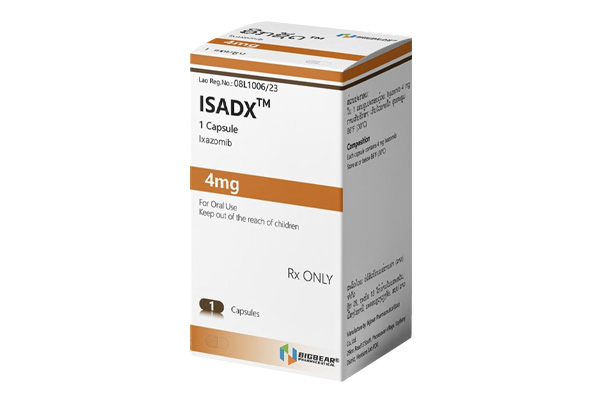
Ixazomib is an oral proteasome preparation. Platelet counts should be monitored at least monthly during treatment, with increased monitoring frequency during the first three cycles.
Ixazomib Precautions Before Use
1. Confirm Indications and Usage Restrictions
(1) Applicable Population: Patients with multiple myeloma who have received at least one prior therapy, and should be used in combination with lenalidomide and dexamethasone.
(2) Usage Restrictions: Ixazomib is not recommended for maintenance therapy or newly diagnosed multiple myeloma patients (unless in a clinical trial).
2. Assess Patient Background
(1) Liver Function: The starting dose should be reduced to 3 mg for patients with moderate to severe liver damage.
(2) Renal Function: The starting dose should be reduced to 3 mg for patients with severe renal insufficiency or end-stage renal disease requiring dialysis.
(3) Pregnancy and Contraception:
Female patients must be confirmed to be pregnant before use. Effective non-hormonal contraception should be used during treatment and for 90 days after the last dose.
Male patients with fertile female partners must use effective contraception during treatment and for 90 days after the last dose.
3. Drug Interaction Screening
Avoid concurrent use with strong CYP3A inducers (such as rifampin, phenytoin, carbamazepine, and St. John's wort) to prevent lowering ixazomib blood concentrations.
Ixazomib Precautions
1. Strictly Follow the Dosage Regimen
(1) Dosage and Timing: 4 mg once a week (3 mg for patients with hepatic or renal insufficiency), taken on days 1, 8, and 15 of a 28-day cycle.
(2) Combined Use: Take lenalidomide (days 1-21) and dexamethasone (days 1, 8, 15, and 22) as scheduled.
(3) Missed Dosage Management: If a missed dose is ≥72 hours from the next scheduled dose, it can be taken; otherwise, skip it.
(4) Vomiting Management: No additional dose is needed after vomiting; take the next scheduled dose as planned.
2. Closely monitor adverse reactions
(1) Thrombocytopenia: Monitor complete blood counts at least monthly, with more frequent monitoring recommended for the first three cycles.
(2) Gastrointestinal reactions: Such as diarrhea, constipation, nausea, vomiting. Use symptomatic medications and adjust the dosage if necessary.
(3) Peripheral neuropathy: Pay attention to symptoms such as numbness, tingling, and pain. Assess and adjust the dosage promptly.
(4) Rash and skin reactions: Severe rashes (such as Stevens-Johnson syndrome) require immediate discontinuation of the drug and medical attention.
(5) Edema and abnormal liver function: Regularly check liver enzymes, assess the cause of edema, and adjust the dosage of dexamethasone or ixazomib.
Ixazomib Post-Treatment Precautions
1. Efficacy Assessment and Continued Treatment
Assess efficacy every 4 weeks until disease progression or intolerable toxicity occurs. Treatment should continue until disease progression or uncontrollable adverse reactions occur.
2. Long-term follow-up and management
(1) Blood routine and liver and kidney function: Regular follow-up examinations are required during treatment, and the recovery status should still be monitored after discontinuation of medication.
(2) Eye health: Pay attention to the occurrence of symptoms such as cataracts, blurred vision, and dry eyes, and conduct ophthalmological examinations if necessary.