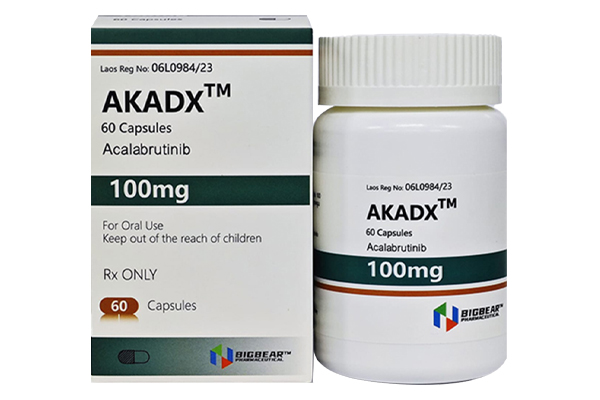
In the global pharmaceutical landscape where innovative drugs and generics coexist, the Lao Big Bear version of Acalabrutinib, with its strict quality control and affordable pricing, has become an affordable targeted therapy alternative for many families.
How much does the Lao Big Bear version of Acalabrutinib cost?
The Lao Big Bear version of Acalabrutinib is available in a specification of 100mg*60 capsules per box, priced at approximately $276. The actual price may be affected by various factors and should be based on the actual selling price.
Medical condition disclosure and drug interactions before taking Acalabrutinib
Before you receive treatment with Acalabrutinib, be sure to inform your doctor of all your medical conditions, including: whether you have had or plan to have any surgical procedures (as anticoagulant or antiplatelet medications may need to be adjusted before or after surgery to manage bleeding risk); whether you have bleeding problems or a bleeding tendency (such as hemophilia, platelet function disorders, etc.); whether you have or have had heart rhythm problems, particularly a history of atrial fibrillation or atrial flutter; whether you have or have had hepatitis B virus (HBV) infection (as BTK inhibitors can cause HBV reactivation); whether you are pregnant or planning to become pregnant (Acalabrutinib may cause harm to an unborn baby, and women of childbearing age should use effective contraception during treatment); whether you are breastfeeding or planning to breastfeed (it is unknown whether Acalabrutinib passes into breast milk, therefore breastfeeding is not recommended during treatment and for at least 2 weeks after the last dose). Also, tell your doctor about all the medications you are taking, including prescription drugs, over-the-counter medicines, vitamins, and herbal supplements. Concomitant use of Acalabrutinib with other drugs may affect its efficacy or increase the risk of side effects. It is especially important to inform your doctor if you are taking blood thinners (such as warfarin, aspirin, clopidogrel, rivaroxaban, etc.), as combined use significantly increases the risk of bleeding events. In addition, CYP3A inhibitors (e.g., ketoconazole, clarithromycin) may increase the blood concentration of Acalabrutinib and should be avoided with strong CYP3A inhibitors; if short-term use of a strong CYP3A inhibitor is necessary, it is recommended to suspend Acalabrutinib. CYP3A inducers (e.g., rifampin, phenytoin) may reduce the blood concentration of Acalabrutinib and should be avoided; if concomitant use is necessary, the dose of Acalabrutinib should be increased to 200 mg per dose.
Precautions for taking Acalabrutinib
When taking Acalabrutinib, follow your doctor's instructions strictly. Do not change your dose or stop taking this medicine unless your doctor tells you to change your treatment plan. The standard recommended dose is 100 mg twice daily, approximately every 12 hours, taken orally. You may take it with or without food, but swallow the entire capsule whole with water. Do not crush, open, or chew the capsule, as this may affect drug release and absorption. If you need to take antacids (such as aluminum magnesium carbonate, calcium carbonate, etc.), take them 2 hours before or 2 hours after taking Acalabrutinib to avoid antacids raising gastric pH and reducing the solubility and absorption of Acalabrutinib. For H2 receptor antagonists (such as famotidine, ranitidine), concomitant use should also be avoided; if necessary, take Acalabrutinib 2 hours before or 2 hours after taking the H2 receptor antagonist. If side effects occur, your doctor will advise you to reduce the dose, temporarily suspend treatment, or permanently discontinue therapy based on the situation. Use in special populations: Pregnancy - Acalabrutinib may cause harm to the fetus. There are no adequate data on the use in pregnant women. Women of childbearing potential should avoid pregnancy during treatment. Lactation - It is recommended that breastfeeding women do not breastfeed for at least 2 weeks after the last dose, as Acalabrutinib or its active metabolites may be present in breast milk and the risk to the infant cannot be excluded. Children - The safety and efficacy of Acalabrutinib in pediatric patients have not been established, so it is not recommended for use in the pediatric population. Elderly - In clinical trials of Acalabrutinib, no overall differences in effectiveness or safety were observed between elderly and younger patients, and no dose adjustment is needed based on age. For storage, it is recommended to keep the medicine at room temperature between 68°F and 77°F (20°C to 25°C) and keep Acalabrutinib out of the reach of children. Do not store in the bathroom or expose to high temperature and humidity.