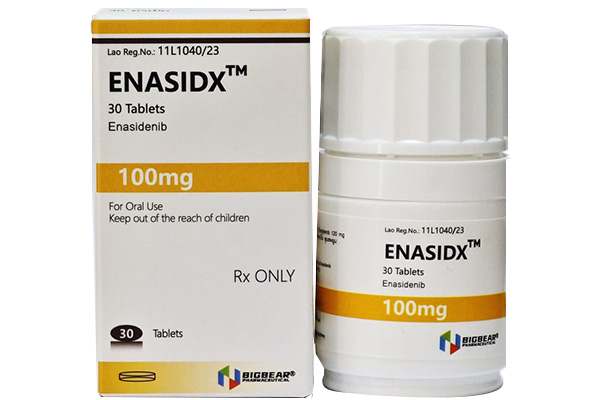
Enasidenib Pharmacokinetics
1. Absorption: Absolute bioavailability is 57%, with a high-fat meal increasing exposure by 50%. Median time to peak concentration is 4 hours, and steady-state plasma concentration is achieved at 29 days.
2. Distribution: Enasidenib plasma protein binding is 98.5%, and AGI-16903 is 96.6%.
3. Metabolism and Excretion: Primarily excreted via feces (89%) and urine (11%). Elimination half‑life is 7.9 days.
4. Special Populations: Age (19‑100 years), sex, race, body weight (39‑136 kg), and body surface area do not affect pharmacokinetics.
Enasidenib Pharmacological Effects
Selectively inhibits mutant IDH2 (40‑fold more potent than wild‑type), reduces 2‑HG levels, and induces myeloid differentiation. In patients with IDH2‑mutant AML, it reduces blasts and increases the proportion of mature myeloid cells.
Enasidenib Storage
Store in original packaging with desiccant at 20‑25°C (excursions permitted between 15‑30°C).
Patient Counseling
1. Swallow tablets whole; do not crush or chew. Take at the same time each day. If a dose is missed, take it on the same day; do not double the next day's dose.
2. Immediately report symptoms of differentiation syndrome: fever, cough, dyspnea, bone pain, rapid weight gain, or edema.
3. Be aware of tumor lysis syndrome: monitor blood chemistry as directed and maintain adequate hydration.
4. Report common gastrointestinal reactions (nausea, vomiting, diarrhea, loss of appetite, taste disturbance) or jaundice to your doctor.
5. Contraception requirements: Females of childbearing potential and their partners must use effective contraception during treatment and for 2 months after stopping (avoid sole reliance on hormonal contraceptives). Report suspected pregnancy immediately.
6. Breastfeeding women should not breastfeed during treatment and for 2 months after the last dose.