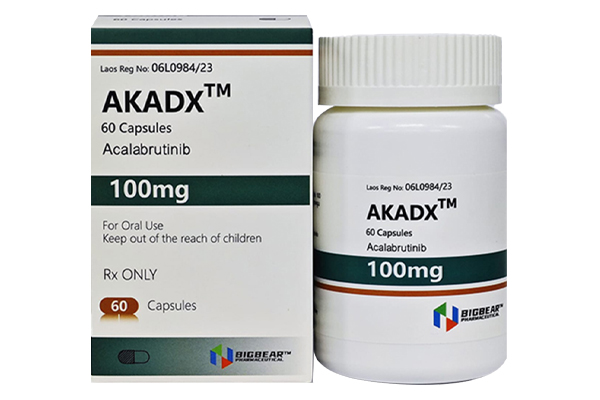
As an important generic version of the Bruton's tyrosine kinase (BTK) inhibitor, the Laos Dabear version of Acalabrutinib is helping more patients with mantle cell lymphoma and other conditions receive continuous treatment through its accessibility advantages.
What are the purchasing channels for Laos Dabear version of Acalabrutinib?
The Laos Dabear version of Acalabrutinib is available in a specification of 100mg*60 capsules/box. For specific purchasing methods, we recommend you add our professional customer service for detailed consultation.
Important safety information about Acalabrutinib
Regarding Acalabrutinib, you need to understand the following important safety information. First, bleeding is a serious side effect that requires close attention during Acalabrutinib treatment. Patients may experience bleeding events of varying severity, regardless of whether anticoagulants are used concurrently. Mild cases may manifest as skin bruising or nosebleeds, while severe cases can include intracranial hemorrhage or major gastrointestinal bleeding. If you have any signs or symptoms of bleeding, including: blood in your stool or black stools (resembling tar), pink or brown urine, unexpected bleeding or bleeding that does not stop (even from minor injuries), vomiting blood or vomit that looks like coffee grounds, coughing up blood or blood clots, sudden dizziness, unexplained weakness, persistent headache that does not go away, or sudden changes in your voice, please contact your doctor immediately. Second, the risk of infection is also significant. Acalabrutinib may increase susceptibility to bacteria, viruses, and fungi by affecting immune function. Serious infections (such as pneumonia, sepsis) can lead to hospitalization or death. If you develop fever, chills, night sweats, persistent cough, sore throat, or flu-like systemic symptoms, tell your doctor right away. Third, decreased blood cell counts are very common during Acalabrutinib treatment and can become severe. The drug may cause decreases in white blood cells (increasing infection risk), platelets (increasing bleeding risk), and red blood cells (leading to anemia symptoms such as fatigue, shortness of breath). Your doctor should arrange a complete blood count test for you once a month to dynamically monitor changes in blood cell counts. Additionally, second primary cancers have been reported, including skin cancer. It is recommended that you use sunscreen when outdoors and undergo regular skin examinations. These are not all the possible side effects of Acalabrutinib. If you experience any discomfort, please proactively call your doctor for medical advice.
Description, mechanism of action, and indications of Acalabrutinib
Acalabrutinib is a selective inhibitor of Bruton's tyrosine kinase (BTK). BTK is a key enzyme in the B-cell receptor signaling pathway and plays a central role in the proliferation, differentiation, survival, and activation of B lymphocytes. In B-cell malignancies such as mantle cell lymphoma, abnormal activation of the BTK signaling pathway drives continuous tumor cell growth. Acalabrutinib irreversibly inhibits BTK phosphorylation and its downstream signaling by covalently binding to the cysteine residue in the BTK active site, thereby blocking tumor cell survival signals and inducing apoptosis. Its molecular formula is C26H23N7O2, and its molecular weight is 465.51. Physicochemically, Acalabrutinib is a white to yellow powder with pH-dependent solubility: freely soluble in water at pH<3, and="" practically="" insoluble="" at="" ph="">6. This property suggests that gastric acid environment may significantly affect its oral absorption, so special attention should be paid to dosing intervals with gastric acid reducers (such as proton pump inhibitors, H2 receptor antagonists) and antacids. The approved indication for Acalabrutinib is: for the treatment of adult patients with mantle cell lymphoma (MCL) who have received at least one prior therapy. It should be noted that this indication is based on objective response rate under accelerated approval; subsequent confirmatory trials will be used to confirm and describe clinical benefit. The safety and efficacy of Acalabrutinib have not been established for previously untreated MCL patients. This drug is for oral use only. The recommended dosage is 100 mg twice daily, approximately every 12 hours, with or without food.