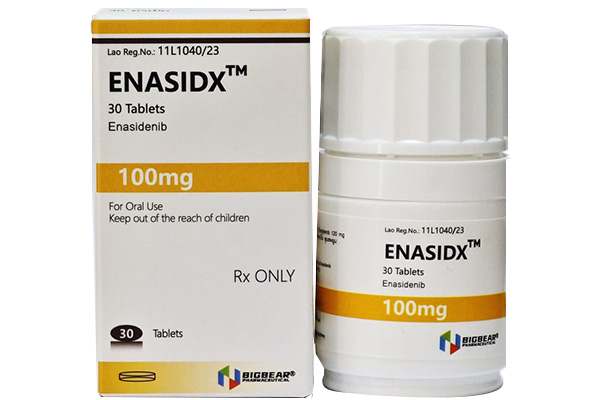
Enasidenib may cause different side effects during treatment. If you do not have much knowledge about the side effects of enasidenib, it is recommended that you consult your doctor promptly.
Serious side effects of enasidenib
If you experience any of the following side effects while using enasidenib, contact your doctor immediately:
Agitation; bluish lips, nails, or skin; bone pain; chest pain; chills; confusion; cough, sometimes with pink frothy sputum; decreased awareness or responsiveness; decreased urine output; depression; difficulty or labored breathing; rapid, forced, or noisy breathing; dizziness; eye pain; fainting; fast heartbeat; fever; general feeling of discomfort; headache; hostility; increased sweating; irregular breathing (too fast, too slow, or shallow); irritability; lightheadedness; loss of consciousness; muscle or joint pain; muscle twitching; nausea; pale skin; rapid weight gain; shallow, rapid breathing; seizures; severe sleepiness; sore throat; swelling in the neck, groin, or armpit areas; swelling of the arms, feet, or lower legs; swelling of the face, ankles, or hands; unusual sleepiness, dullness, tiredness, weakness, or sluggishness; yellowing of the skin or eyes (jaundice).
Other side effects of enasidenib
Some side effects usually do not require medical attention and may go away as your body adjusts to the medication. Your healthcare professional can also advise you on ways to prevent or reduce some of these side effects.
If any of the following side effects persist, are bothersome, or if you have any questions, consult your healthcare professional:
Altered taste; decreased appetite; diarrhea; loss of taste; vomiting.
Management of enasidenib side effects by healthcare professionals
1. General adverse events
The most common adverse reactions of any grade (incidence ≥30%) include: elevated bilirubin, decreased blood calcium, decreased blood potassium, nausea, diarrhea, vomiting, and decreased appetite.
2. Hepatobiliary system
Very common (≥10%): elevated total bilirubin (81%).
3. Metabolism and nutrition
Very common (≥10%): decreased blood calcium (74%), decreased blood potassium (41%), decreased appetite (34%), decreased blood phosphorus (27%). Common (1%-10%): tumor lysis syndrome, weight loss.
4. Gastrointestinal
Very common (≥10%): nausea (50%), diarrhea (43%), vomiting (34%). Common (1%-10%): abdominal pain.
5. Blood and lymphatic system
Very common (≥10%): differentiation syndrome (14%), non-infectious leukocytosis (12%).
6. Nervous system
Very common (≥10%): dysgeusia (12%).
7. Skin and subcutaneous tissue
Common (1%-10%): rash.
8. Genitourinary system
Common (1%-10%): elevated uric acid.
9. General disorders and administration site conditions
Common (1%-10%): fever, peripheral edema.
10. Renal and urinary system
Common (1%-10%): renal insufficiency.
11. Respiratory, thoracic and mediastinal disorders
Common (1%-10%): respiratory failure, dyspnea, hypoxemia, pulmonary edema, acute respiratory distress syndrome.