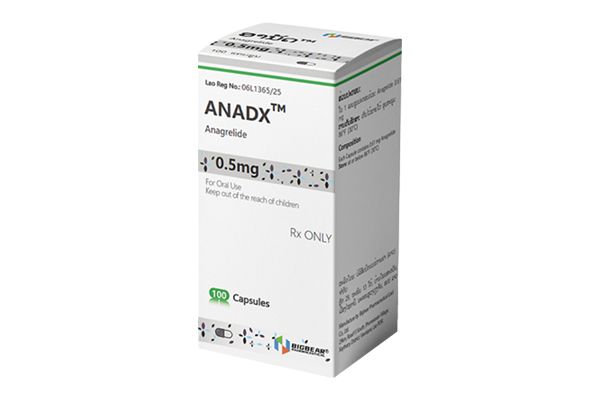
Anagrelide Adverse Reactions
1、Cardiac disorders: Prinzmetal angina, torsade de pointes.
2、Respiratory, thoracic and mediastinal disorders: Interstitial lung disease (including allergic alveolitis, eosinophilic pneumonia and interstitial pneumonia) [see Warnings and Precautions (5.4)].
3、Renal and urinary disorders: Tubulointerstitial nephritis.
4、Hepatobiliary disorders: Clinically significant hepatotoxicity (including symptomatic ALT and AST elevations and elevations greater than three times the upper limit of normal).
5、Nervous system disorders: Cerebral infarction.
6、Blood and lymphatic system disorders: Anemia.
7、Skin and subcutaneous tissue disorders: Photosensitivity reaction.
Anagrelide Drug Interactions
1、Drugs that Prolong the QT Interval
Avoid concomitant use of anagrelide with drugs that may prolong the QT interval (including but not limited to chloroquine, clarithromycin, haloperidol, methadone, moxifloxacin, amiodarone, disopyramide, procainamide and pimozide).
2、PDE3 Inhibitors
Anagrelide is a phosphodiesterase 3 (PDE3) inhibitor. Avoid use of drug products with similar properties, such as inotropic agents and other PDE3 inhibitors (e.g., cilostazol, milrinone).
3、Aspirin and Drugs that Increase Bleeding Risk
When anagrelide is administered with aspirin as a single or repeated dose, it shows greater in vitro antiplatelet aggregation effect than aspirin alone. Monitor patients for bleeding, especially in those receiving concomitant therapy with other drugs known to cause bleeding (e.g., anticoagulants, PDE3 inhibitors, nonsteroidal anti-inflammatory drugs, antiplatelet agents, selective serotonin reuptake inhibitors).
4、CYP450 Interactions
(1)、CYP1A2 inhibitors: Anagrelide and its active metabolite are primarily metabolized by CYP1A2. Drugs that inhibit CYP1A2 (e.g., fluvoxamine, ciprofloxacin) may increase anagrelide exposure. When coadministering with CYP1A2 inhibitors, monitor patients for cardiovascular events and adjust dose accordingly.
(2)、CYP1A2 inducers: CYP1A2 inducers may decrease anagrelide exposure. Dose adjustment may be necessary in patients concomitantly taking CYP1A2 inducers (e.g., omeprazole) to compensate for reduced anagrelide exposure.
(3)、CYP1A2 substrates: Anagrelide has limited inhibitory activity on CYP1A2 in vitro and may alter the exposure of coadministered CYP1A2 substrates (e.g., theophylline, fluvoxamine, ondansetron).
Anagrelide Mechanism of Action
The exact mechanism by which anagrelide reduces blood platelet count is unknown. In cell culture studies, anagrelide inhibited the expression of transcription factors required for megakaryopoiesis, including GATA-1 and FOG-1, ultimately leading to decreased platelet production.