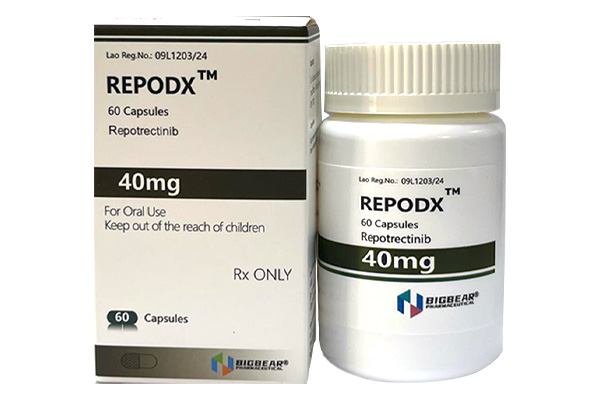
Based on the durable efficacy and intracranial activity demonstrated in the TRIDENT-1 clinical trial, the next-generation ROS1/TRK inhibitor repotrectinib has become an important therapeutic option for ROS1-positive non-small cell lung cancer; the generic version REPODX (40mg×60 capsules/bottle) produced by BIGBEARPharma in Laos makes this innovative therapy accessible to more patients at a lower cost.
How much does Laos Big Bear version of repotrectinib cost?
The Laos Big Bear version of repotrectinib is available in a specification of 40mg*60 capsules/box, priced at approximately $224. The specific price may be affected by various factors and the actual selling price shall prevail.
Standard administration and contraindications for repotrectinib
Initial and maintenance dose: Treatment starts at 160 mg once daily for 14 days. If well tolerated, the dose is then escalated to the maintenance dose of 160 mg twice daily until disease progression or unacceptable toxicity occurs.
Correct administration: Capsules must be swallowed whole, do not open, chew, or crush them. Take at a fixed time each day, with or without food. If a dose is missed or vomiting occurs after taking the dose, skip that dose and take the next dose at the regularly scheduled time; do not double the dose to make up for it.
Storage: Store the medication at room temperature between 20°C and 25°C; brief temperature excursions are acceptable. Keep away from moisture.
Avoid concomitant use of strong or moderate CYP3A4 inhibitors/inducers: such as certain azole antifungals, macrolide antibiotics, antiepileptics, etc., as they significantly alter repotrectinib plasma concentrations. A pharmacist must comprehensively review all concomitant medications.
Dietary and lifestyle precautions: Do not consume grapefruit or grapefruit juice, as their components interfere with CYP3A4 enzyme metabolism. Alcohol consumption should also be limited to reduce the risk of hepatotoxicity.
Central nervous system warning: Given the high incidence of dizziness, remain vigilant when driving, operating machinery, or engaging in high-risk activities, and suspend such activities when necessary.
Extended long‑term efficacy of repotrectinib
TOTEM trial combined with osimertinib: Early data presented at the 2025 American Society of Clinical Oncology annual meeting showed that repotrectinib in combination with osimertinib for EGFR-mutant non-small cell lung cancer resistant to prior TKIs achieved a median progression‑free survival of 4.4 months in 15 patients. Notably, for brain metastases, nearly 43% of patients achieved intracranial complete response, with an overall objective response rate of 33%, highlighting sustained intracranial antitumor activity.
REPOSE Phase II trial: The ongoing REPOSE study is specifically designed to evaluate the intracranial efficacy of repotrectinib in ROS1-positive non-small cell lung cancer with active brain metastases, planning to enroll 20 patients with the primary endpoint of intracranial objective response rate. The results will provide evidence for its brain‑metastasis‑specific indication.
Pharmacokinetic characteristics: Repotrectinib is primarily metabolized by CYP3A4, with a terminal half‑life of approximately 40 hours after single dosing, and the majority is excreted via feces. This provides a pharmacological basis for its daily dosing interval and combination therapy.
Future outlook: From single‑agent targeted therapy to combination regimens, and from tackling brain metastases to overcoming resistance, repotrectinib is continuously expanding the frontiers of precision anticancer therapy, bringing hope of long‑term survival to more patients with hard‑to‑treat oncogene‑driven tumors.