
BIGBEAR
PHARMACEUTICAL
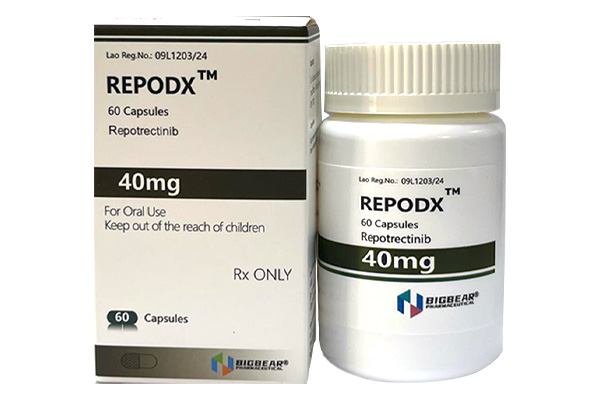
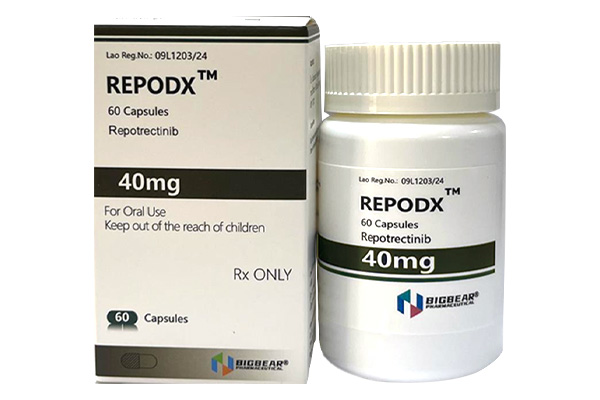
Repotrectinib potently and selectively inhibits the abnormally activated kinase signaling pathways of ROS1 and NTRK, effectively overcomes resistance mutations to conventional targeted therapies, and exhibits favorable central nervous system penetration.

 AuthenticGuaranteeFast DeliveryPrivacy
 Repotrectinib capsules target oncogenic factors including ROS1, TRKA, TRKB and TRKC (NTRK).With its compact molecular structure, repotrectinib potently and selectively inhibits the abnormally activated kinase signaling pathways of ROS1 and NTRK, and effectively overcomes resistance mutations associated with conventional targeted therapies such as crizotinib.
Repotrectinib Capsules is indicated for adult patients with ROS1-positive locally advanced or metastatic non-small cell lung cancer (NSCLC).
This indication has been conditionally approved for marketing based on a surrogate endpoint. Clinical endpoint data have not yet been obtained, and the efficacy and safety are to be further confirmed after marketing.
Treatment with this product may be initiated only in patients with locally advanced or metastatic non‑small cell lung cancer (NSCLC) confirmed to have ROS1 gene rearrangement using a validated test.
The recommended dosage of this product is 160 mg orally once daily for 14 consecutive days, then increased to 160 mg orally twice daily.
Treatment should be continued until disease progression or unacceptable toxicity.
Patients are advised to take this product at approximately the same time each day, with or without food.
Patients should swallow the capsules whole.
Do not open, chew, crush or dissolve the capsules before swallowing.
Do not take any repotrectinib capsules that are broken, cracked or damaged.
If a dose is missed or vomiting occurs at any time after taking this product, the dose should not be made up.
The next prescribed dose should be taken at the next scheduled time.
Females and Males of Reproductive Potential
Pregnancy Testing
Verify the pregnancy status of females of reproductive potential prior to initiating treatment with this product.
Contraception
Use of repotrectinib by pregnant women may impair embryo‑fetal development.
Females: Advise females of reproductive potential to use highly effective contraception during treatment with repotrectinib and for at least 2 months after the last dose. If hormonal contraceptives are used, advise females of reproductive potential to use an additional highly effective non‑hormonal method or barrier contraception, as repotrectinib may render hormonal contraceptives ineffective (see [Drug Interactions] Effects of repotrectinib on other drugs).
Males: Advise male patients with female partners of reproductive potential to use condoms during treatment with this product and for 4 months after the last dose.
Pregnant Women
Advise female patients of reproductive potential to avoid pregnancy during treatment with this product.
There are no available data on the use of repotrectinib in pregnant women.
Based on animal study results and the mechanism of action of this product, repotrectinib may cause fetal harm when administered to pregnant women.
Advise females of reproductive potential and pregnant women of the potential risk to the fetus.
Lactating Women
Repotrectinib has not been studied in lactating women.
There are no data on the presence of this product in human milk or its effects on the breastfed infant or milk production.
Due to the potential adverse reactions of this product in breastfed infants, advise lactating women to discontinue breastfeeding during treatment with this product and for 10 days after the last dose.
The safety and efficacy of repotrectinib in pediatric patients with ROS1‑positive NSCLC under 18 years of age have not been established.
Among 426 patients treated with repotrectinib, 25% of patients were 65 years of age or older, and 6% were 75 years of age or older.
No clinically meaningful differences in safety and efficacy were observed between patients younger than 65 years of age and those 65 years of age or older.
The most commonly reported adverse reactions (≥20%) were dizziness (64.6%), dysgeusia (56.8%), paresthesia (39.2%), constipation (38%), ataxia (28.4%), dyspnea (27.5%), cognitive impairment (24.6%), fatigue (22.3%), myasthenia (20%) and nausea (20%).
The most commonly reported serious adverse reactions (≥2%) was dyspnea (3.1%).
Repotrectinib capsules are contraindicated in patients with known hypersensitivity to the active ingredient or any excipient of this product.
Various central nervous system (CNS) adverse reactions, including dizziness, ataxia and cognitive impairment, have been reported in patients treated with repotrectinib.
Patients and caregivers should be informed of the above risks, as they may affect the ability to drive and use machines.
Patients experiencing CNS adverse reactions are advised not to drive or use machines temporarily.
For patients who develop CNS adverse reactions, dose interruption is recommended; treatment may be resumed at the same dose or a reduced dose level after the adverse reaction improves, or permanently discontinued based on severity (see [Dosage and Administration]).
Patients should be advised to report symptoms of ILD/non-infectious pneumonitis, which may include shortness of breath, cough, wheezing, chest pain or tightness, and hemoptysis.
Patients should be monitored for new or worsening pulmonary symptoms suggestive of ILD/non-infectious pneumonitis.
Repotrectinib should be immediately interrupted in patients with suspected ILD/non-infectious pneumonitis, and permanently discontinued if ILD/non-infectious pneumonitis is confirmed.
This product may cause hepatotoxicity.
Hepatic function should be monitored during treatment with this product: liver function tests, including ALT, AST and bilirubin, should be performed every 2 weeks during the first month of treatment, monthly thereafter, and as clinically indicated.
Based on the severity of hepatotoxicity, repotrectinib should be interrupted, then resumed at the same dose or a reduced dose level after the adverse reaction improves, or permanently discontinued.
This product may cause myalgia, with or without elevated creatine phosphokinase (CPK).
Patients should be advised to report any unexplained muscle pain, tenderness or weakness.
Serum CPK levels should be monitored during treatment with this product: every 2 weeks during the first month of treatment, and when patients report unexplained muscle pain, tenderness or weakness.
Supportive care should be initiated as clinically indicated when adverse reactions occur.
Based on the severity of the adverse reaction, repotrectinib should be interrupted, then resumed at the same dose or a reduced dose level after the adverse reaction improves.
This product may cause hyperuricemia.
Serum uric acid levels should be monitored before initiation of repotrectinib and periodically during treatment.
Urate-lowering therapy should be initiated as clinically indicated when adverse reactions occur.
Based on the severity of the adverse reaction, repotrectinib should be interrupted, then resumed at the same dose or a reduced dose level after the adverse reaction improves, or permanently discontinued.
This product may cause fractures.
Patients should be promptly evaluated if they develop signs or symptoms of a fracture (e.g., pain, changes in mobility, deformity) during repotrectinib treatment.
There are no data on the effects of this product on existing fracture healing or future fracture risk.
Based on literature reports of TRK signaling alterations due to human congenital mutations, animal study results, and its mechanism of action, repotrectinib may cause fetal harm when administered to pregnant women.
There are no available data on the use of repotrectinib in pregnant women.
Administration of repotrectinib to pregnant rats resulted in fetal malformations at maternal exposures (area under the curve [AUC]) approximately 2.4 times the human AUC at the 160 mg twice-daily dose.
Pregnant women should be informed of the potential risk to the fetus.
Females of reproductive potential are advised to use highly effective contraception during treatment with repotrectinib and for 2 months after the last dose.
Male patients with female partners of reproductive potential are advised to use condoms during treatment with repotrectinib and for 4 months after the last dose.
For more detailed drug information, please consult the official package leaflet.
If any issues arise, please contact us immediately.
Email: laosbigbear@gmail.com
If you forget to take a dose, skip the missed dose and take your next dose at your usual scheduled time. Do not take two doses at once to make up for a missed one.
In the event of an overdose, seek immediate emergency medical help or call the Poison Help hotline .
Grapefruit and grapefruit products may interact with repotrectinib and increase the risk of side effects. Do not consume grapefruit or grapefruit products during treatment.
Avoid driving or performing potentially hazardous activities until you know how repotrectinib affects you. This medication may cause dizziness, blurred vision, or problems with balance or memory, which could impair your judgment and coordination, leading to falls, accidents, or serious injury.
Certain medications should not be used together due to safety concerns. Some drugs may alter the blood levels of other medications you are taking, which can increase side effects or reduce the effectiveness of your treatment.
Be sure to tell your doctor about all other medicines you are using, particularly:
Birth control pills and other hormonal products
Many other drugs can interact with repotrectinib, including prescription and over‑the‑counter medicines, vitamins, and herbal supplements. Always inform your doctor about all medications you are currently taking or plan to take.
Copyright2024@ BIGBEAR All right reserved Bigbear | Bigbear Pharmaceutical | Bigbear Laos


