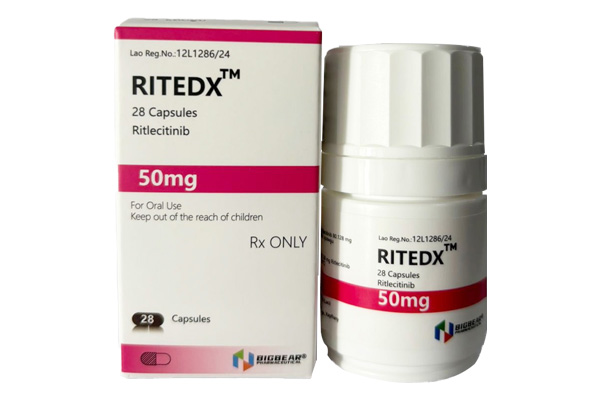
In the wave of exploring global accessibility of innovative drugs, the Laotian Daxiong version of Ritlecitinib appears as a more cost-effective generic alternative, offering another compliant option worth examining for patients requiring long-term management of hair loss.
What are the purchasing channels for the Laotian Daxiong version of Ritlecitinib?
The Laotian Daxiong version of Ritlecitinib is available in the specification of 50mg*28 capsules/box. For specific purchasing methods, we recommend contacting professional customer service for detailed consultation.
Precautions for using Ritlecitinib
In the process of using Ritlecitinib for the treatment of alopecia areata, the potential risk of serious infections is a core issue that physicians and patients must highly vigilantly address. Serious infection cases including appendicitis, COVID-19 infection (including pneumonia), and sepsis have been reported in treated patients. Regarding opportunistic infections, multiple dermatomal herpes zoster occurrences have been observed. Therefore, patients with active serious infections should avoid using Ritlecitinib. For patients with a history of chronic or recurrent infections, tuberculosis exposure, history of serious or opportunistic infections, as well as those who have resided or traveled in endemic areas for tuberculosis or fungal diseases, physicians need to carefully weigh the benefits and risks before initiating therapy. During and after treatment, close monitoring for any signs of infection is required. If a serious or opportunistic infection occurs, the drug should be immediately interrupted and may only be resumed after the infection is controlled. Additionally, a post-marketing safety study in rheumatoid arthritis patients aged over 50 with at least one cardiovascular risk factor (involving another JAK inhibitor) showed that patients receiving JAK inhibitor therapy had higher all-cause mortality (including cardiovascular sudden death) than those receiving TNF blockers. Although this study is not directly aimed at alopecia areata patients or Ritlecitinib itself, this finding constitutes a class warning for such drugs. Before initiating or continuing Ritlecitinib therapy, the potential benefits and risks for each patient must be individually assessed.
Other adverse reactions that Ritlecitinib may cause
Beyond infection risks, the use of Ritlecitinib is also accompanied by concerns regarding malignancies, major adverse cardiovascular events (MACE), and thromboembolic events. In clinical trials of Ritlecitinib, cases of malignancies including non-melanoma skin cancer (NMSC) have been observed. Another large post-marketing safety study on JAK inhibitors showed that compared with TNF blockers, patients treated with JAK inhibitors had higher overall malignancy (excluding NMSC) and lymphoma incidence, with a particularly significant increase in lung cancer incidence among current or past smokers. For patients with known malignancies (except for successfully treated NMSC or cervical cancer), careful evaluation is needed before initiating or continuing therapy. Regular skin examinations are recommended for patients at increased risk of skin cancer. Regarding cardiovascular events, the same study also observed that the incidence of major adverse cardiovascular events (including cardiovascular death, non-fatal myocardial infarction, and non-fatal stroke) was higher in the JAK inhibitor treatment group than in the TNF blocker group, especially for patients who are current or past smokers. If a patient experiences myocardial infarction or stroke, Ritlecitinib should be discontinued immediately. In addition, pulmonary embolism and retinal artery occlusion events have been reported in Ritlecitinib clinical trials. For patients with factors that may increase the risk of thrombosis, Ritlecitinib should be avoided; if symptoms of thrombosis or embolism occur, treatment should be immediately interrupted and timely evaluation performed.