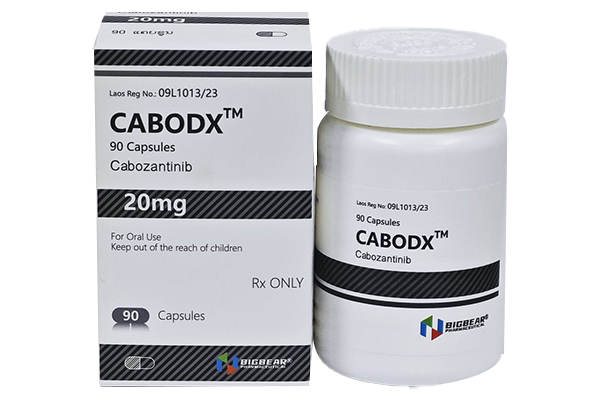
In the generic cabozantinib market, the capsule formulation launched by Lao Big Bear Pharmaceutical is highly favored for its affordable price and reliable quality. The monthly treatment cost is far lower than that of the originator drug, and the per-tablet cost offers better cost-effectiveness, effectively alleviating the financial burden for patients who cannot afford the high cost of the branded drug.
What are the purchasing channels for Lao Big Bear version of cabozantinib (Cabozantinib)?
Lao Big Bear version of cabozantinib (Cabozantinib) is available in specifications of 20mg*90 capsules/box and 60mg*30 tablets/box. For specific purchasing methods, we recommend that you contact our professional customer service for detailed consultation.
Mechanism of action and basic drug information of cabozantinib
The active ingredient of CABOMETYX is cabozantinib (S)-malate, which belongs to the class of multi-target tyrosine kinase inhibitors (TKIs). Its mechanism of action primarily involves potent inhibition of multiple receptor tyrosine kinases (RTKs), including MET, VEGFR1/2/3, RET, AXL, etc. These kinases play key driving roles in tumor cell proliferation, angiogenesis, and metastasis.
In hepatocellular carcinoma and renal cell carcinoma, these kinases are often overexpressed or abnormally activated, promoting tumor growth and neovascularization. By blocking these signaling pathways, cabozantinib can both directly inhibit tumor cell proliferation and reduce tumor blood supply, thereby "starving" the tumor while delaying disease progression.
This drug is a prescription medicine and can only be obtained with a physician's prescription. In addition to its approved indication for HCC after sorafenib treatment, cabozantinib (Cabozantinib) is also approved for the treatment of advanced renal cell carcinoma (RCC). The safety and efficacy in pediatric patients have not been established, and its use is not currently recommended in individuals under 18 years of age.
Patients should fully understand the scope of indications and use the medication as directed by their physician. If there are any questions regarding the purpose of the prescription, they should promptly consult their attending physician or pharmacist. This drug is an oral tablet available in different strengths. The clinically recommended dose is 60 mg once daily, but the specific dose may be adjusted based on individual tolerability and hepatic function.
Contraindications for cabozantinib (Cabozantinib)
Before starting cabozantinib (Cabozantinib), patients must fully inform their doctor of all their health conditions, especially the following high-risk situations: history of recent active bleeding (such as hemoptysis, hematemesis, melena, or tarry stools); presence of any unhealed open wounds or surgical incisions; presence of hypertension or ongoing antihypertensive treatment; and any planned surgical procedures (including invasive dental procedures).
For patients planning surgery, cabozantinib (Cabozantinib) should be discontinued at least 28 days before the procedure to reduce the risk of wound healing complications. The timing of resuming the drug after surgery should be reassessed by the physician based on wound healing status. In addition, this drug may exacerbate hypertension; blood pressure should be monitored regularly before and during treatment, and antihypertensive agents should be added if necessary.
Pregnancy and contraception: Cabozantinib (Cabozantinib) has potential fetal harm. Women of childbearing potential must have a pregnancy test to rule out pregnancy before starting treatment. During treatment and for at least 4 months after the last dose, effective contraceptive measures (such as hormonal contraception combined with barrier methods) must be used. If pregnancy is suspected or confirmed, the doctor should be informed immediately.
Nursing women: It is unknown whether cabozantinib is excreted in human milk. For safety, breastfeeding should be stopped during treatment and for 4 months after the last dose. At the same time, patients should inform their doctor of all other medications they are using (including prescription drugs, over-the-counter drugs, vitamins, and herbal supplements), because co-administration with certain drugs (such as strong CYP3A4 inhibitors/inducers) may significantly alter cabozantinib blood concentrations, increasing toxicity or reducing efficacy.