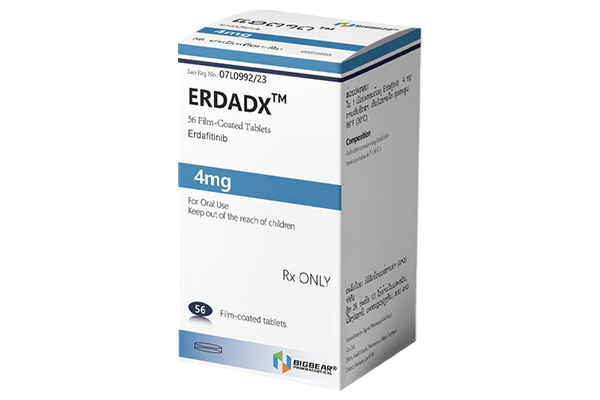
On August 29, Genzo Pharmaceuticals announced that it has filed a supplemental New Drug Application (NDA) with the US Food and Drug Administration (FDA) for BALVERSA (erdafitinib), seeking full approval for the treatment of patients with locally advanced or metastatic urothelial carcinoma (mUC) who have sensitive fibroblast growth factor receptor (FGFR)3 gene alterations and whose disease has progressed in the context of locally advanced or metastatic disease, or within 12 months of neoadjuvant or adjuvant therapy, during or after treatment with at least one programmed death receptor-1 (PD-1) or programmed death ligand 1 (PD-L1) inhibitor.
Urothelial carcinoma (mUC), also known as transitional cell carcinoma, is the most common form of bladder cancer, accounting for more than 90% of all bladder cancers. Approximately one in five (20%) patients diagnosed with mUC have FGFR gene alterations.
This drug is a once-daily oral FGFR kinase inhibitor that binds to and inhibits the enzyme activities of FGFR1, FGFR2, FGFR3, and FGFR4. Erdafitinib received Breakthrough Therapy Designation from the US FDA in 2018 and Accelerated Approval in 2019 for the treatment of adults with locally advanced or metastatic ulcerative colitis (mUC) with FGFR3 or FGFR2 susceptibility alterations who have progressed during or after at least one prior platinum-based chemotherapy regimen, including within 12 months of neoadjuvant or adjuvant platinum-based chemotherapy.
The sNDA is supported by randomized data from cohort 1 of the Phase 3 THOR study (ClinicalTrials.gov Identifier: NCT03390504), which compared the efficacy and safety of erdafitinib with standard-of-care chemotherapy (investigator-selective docetaxel or vinflunine). Cohort 1 included 266 adults with metastatic or unresectable UC, selective FGFR alterations, who had received at least one line of PD-L1 inhibitor therapy.
After a median follow-up of 15.9 months, at the pre-specified interim analysis data cutoff, erdatinib treatment met the primary endpoint of overall survival (OS), with a 36% reduction in the risk of death compared to placebo (hazard ratio [HR], 0.64 [95% CI, 0.47–0.88]; P = .005). The median OS was 12.1 months in the erdatinib group and 7.8 months in the chemotherapy group. The median progression-free survival (PFS) was 5.6 months in the erdatinib group and 2.7 months in the chemotherapy group (HR, 0.58 [95% CI, 0.44–0.78; P = 0.0002), with overall response rates (ORRs) of 45.6% vs 11.5% (relative risk 3.94 [95% CI, 2.37–6.57]; P < measure). These data met the pre-specified superiority criteria.
Based on these results, the independent data safety monitoring committee recommended discontinuing the study and recommending that all patients in the chemotherapy group be transferred to the erdafitinib group.
The safety profile of erdafitinib observed in the THOR study was consistent with its known safety profile.
In addition to the phase 3 THOR study, BALVERSA was also investigated in the phase 2 THOR–2/blc 2003 study (NCT04172675), which evaluated BALVERSA in conjunction with intravesical chemotherapy regimens selected by investigators in participants with high-risk recurrent non-muscle-invasive bladder cancer treated with BCG, and in a phase 1 study (NCT05316155) using the TARIS intravesical delivery system (TAR-210) to study BALVERSA in patients with non-muscle-invasive or muscle-invasive bladder cancer. This system is designed to deliver BALVERSA intravesically to treat localized bladder cancer while reducing systemic toxicity.