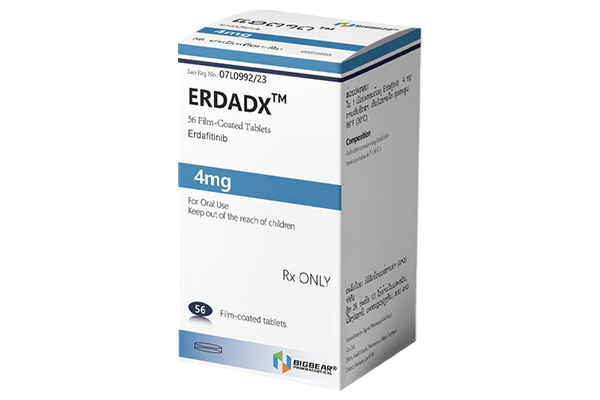
Erdafitinib, an FGFR inhibitor, is used to treat urothelial carcinoma with specific gene abnormalities.
I. Erdafitinib Dosage and Administration
1. Standard Dosage Regimen
(1) Initial Dose: 8 mg (2 tablets, 4 mg each) orally once daily.
(2) Dose Adjustment: If serum phosphorus is <5.5 mg/dL and well tolerated after 14-21 days of treatment, the dose can be increased to 9 mg (3 tablets, 3 mg each).
(3) Administration: Swallow whole tablets, before or after meals.
2. Dose Adjustment Principles
(1) Adjust the dose according to serum phosphorus levels and adverse reaction grading (maximum dose reduced to 4 mg).
(2) If a dose is missed, take it as soon as possible. If vomiting occurs, take the original dose the following day.
3. Treatment Management
Continue treatment until disease progression or intolerable toxicity occurs.
II. Precautions for Erdafitinib Use
1. Ophthalmological Monitoring
(1) 25% of patients develop retinopathy, with a median onset time of 50 days.
(2) Regular ophthalmological examinations are required before and during treatment (once a month for the first 4 months, then every 3 months thereafter).
2. Serum Phosphorus Management
(1) 76% of patients develop hyperphosphatemia, with a median onset time of 20 days.
(2) Phosphorus intake should be restricted (600-800 mg/day). Phosphate binders are required when serum phosphorus > 7 mg/dL.
3. Drug Interactions
(1) Avoid concomitant use with strong CYP2C9/CYP3A4 inducers (such as rifampin).
(2) Use strong CYP2C9/CYP3A4 inhibitors with caution.
4. Special Population Warnings
(1) Pregnancy: May cause fetal malformations; effective contraception is required until one month after discontinuation of the drug.
(2) Lactation: Breastfeeding is prohibited during treatment and for one month after discontinuation of the drug.
III. Healthy Lifestyle for Erdafitinib Patients
1. Dietary Management
(1) Limit high-phosphorus foods (such as dairy products and nuts).
(2) Maintain a balanced diet and prevent treatment-related weight loss.
2. Eye Care
(1) Use artificial tears daily (at least every 2 hours).
(2) Avoid prolonged eye use and pay attention to eye rest.
3. Skin Care
(1) Use mild skin care products and avoid irritating chemicals.
(2) Keep nails clean and dry when they are diseased, and avoid trauma.
3. Exercise and Rest
(1) Moderate exercise to improve fatigue (such as walking and yoga).
(2) Ensure sufficient sleep and avoid overwork.
4. Psychological Support
(1) Join a patient support group.
(2) Communicate regularly with the medical team about your treatment experience.