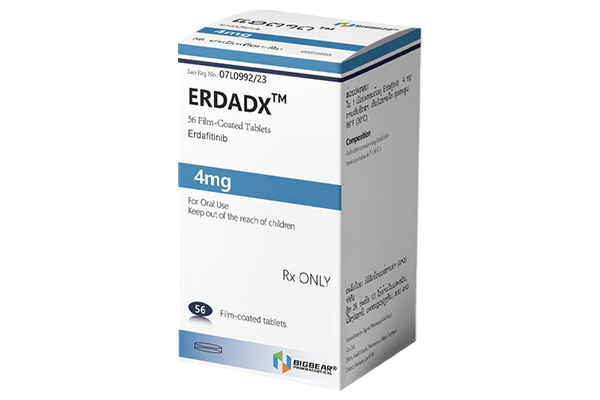
Erdafitinib is an FGFR-targeting kinase inhibitor used to treat urothelial carcinoma with specific gene abnormalities.
I. Erdafitinib Indications
1. Urothelial carcinoma with FGFR gene abnormalities
Eligibility criteria: Confirmation of FGFR3 or FGFR2 gene susceptibility mutations or fusions by an FDA-approved companion diagnostic test.
2. Locally advanced or metastatic urothelial carcinoma
Progression after at least one platinum-based chemotherapy regimen (including progression within 12 months of neoadjuvant/adjuvant chemotherapy).
II. Erdafitinib Contraindications
1. No absolute contraindications.
2. The following high-risk conditions should be noted:
(1) Active eye disease (e.g., uncontrolled glaucoma).
(2) Patients with severe renal insufficiency (eGFR < 30 mL/min) or on dialysis (pharmacokinetic data lack).
(3) Pregnancy (clear teratogenic risk).
III. Use of Erdafitinib in Special Populations
1. Pregnant Women
(1) Risks: Animal studies have shown teratogenicity (vascular/limb malformations) and embryonic death; exposure levels are lower than human therapeutic doses.
(2) Measures:
① Confirm pregnancy status before administration.
② Effective contraception is required during treatment and for one month after discontinuation.
2. Breastfeeding Women
Contraindications: Breastfeeding is prohibited during treatment and for one month after the last dose.
3. Patients of Childbearing Age
(1) Women: Highly effective contraception is required for one month after discontinuation.
(2) Men: If the partner is a woman of childbearing potential, contraception is required for one month after discontinuation. Impact on fertility: May impair female fertility (animal studies show ovarian corpus luteum necrosis).
4. Children
(1) Safety and efficacy not established.
(2) Animal toxicity: Bone/teeth developmental abnormalities (chondrodysplasia, dentin malformation).
5. Elderly
No dose adjustment required (no difference was shown in 45% of patients ≥65 years of age in clinical studies).
6. Hepatic and renal insufficiency
(1) Mild/moderate renal impairment: No adjustment required.
(2) Severe renal impairment/dialysis: No data available, use with caution.
(3) Mild to moderate hepatic impairment: No adjustment required.
(4) Severe hepatic impairment: No data available.
7. CYP2C9 slow metabolizers
Adverse reactions should be monitored in patients with the CYP2C9 genotype (predicted exposure increases by 50%).