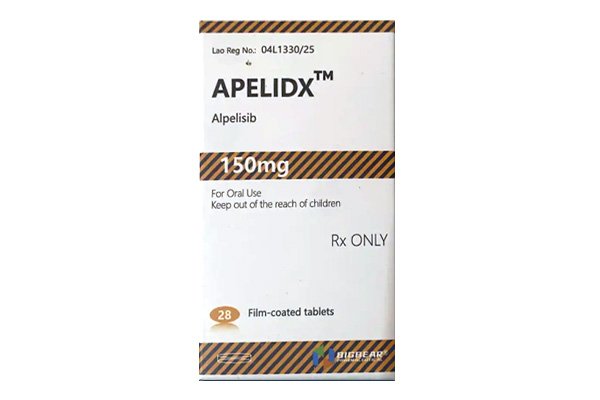
Alpelisib, an oral small-molecule PI3Kα inhibitor from Novartis, Switzerland, offers new hope for patients with advanced or metastatic breast cancer carrying PIK3CA gene mutations.
Alpelisib Indications
When selecting patients with HR-positive, HER2-negative advanced or metastatic breast cancer for treatment with Alpelisib, one or more PIK3CA mutations should be detected in tumor tissue or plasma samples. If no mutation is detected in the plasma sample, tumor tissue should be tested.
Alpelisib Dosage and Administration
1. Alpelisib is taken orally once daily at approximately the same time. (Two 150mg film-coated tablets) with food.
2. Continue treatment until disease progression or intolerable toxicity occurs.
3. The medication should be taken at approximately the same time each day. 4. Administration:
Swallow the tablet whole (do not chew, crush, or break it). Do not take if the tablet is broken, cracked, or misshapen.
5. Missed Dosage Management:
If you miss a dose of Alpelisib, take it with food within 9 hours of your usual dose. If more than 9 hours have passed, do not take the dose for that day. Take the dose at your usual time the next day.
If the patient vomits after taking the medication, it is recommended that the patient not take an extra dose that day and resume taking the medication at the usual time the next day.
Combined Use: When used in combination with Alpelisib, the recommended dose of fulvestrant is 500 mg intramuscularly on days 1, 15, and 29, and then once a month.
Alpelisib Adverse Reactions Dosage Adjustment Guidelines
1. Dosage Adjustment Principles
Only one dose reduction is allowed for pancreatitis-related adverse reactions.
Dosage Adjustment: The dosage should be reduced to below 200 mg daily, and alpelisib should be permanently discontinued.
2. Specific Dosage Adjustment Plan:
The starting dose can be 300 mg once daily. Initially, reduce the dose to 250 mg daily, with 200 mg as the minimum dose, taken once daily. Do not exceed the recommended dose.
3. Management of Adverse Skin Reactions:
If a serious adverse reaction occurs and is diagnosed, alpelisib must be permanently discontinued. Patients with a history of SCAR should not restart the medication.
4. Rash Management Recommendations:
Consult a dermatologist for all levels of rash.
The SOLAR-1 trial showed that antihistamines administered before the onset of a rash can significantly reduce its incidence and severity.
Alpelisib Hyperglycemia Management Guidelines
1. Pre-treatment Assessment
Patients starting apeliib should have their fasting plasma glucose (FPG) monitored at least weekly, and then at least every four weeks, adjusted according to clinical indications.
This, combined with HbA1c monitoring every three months and adjustments based on specific clinical indications, further ensures long-term stable control of diabetes. Patients with risk factors for hyperglycemia should have their fasting blood glucose levels monitored more closely, and adjusted accordingly based on clinical indications.
2. Post-treatment Monitoring
(1) Fasting Plasma Glucose (FPG):
After treatment begins, monitor at least weekly for the first two weeks, then at least every four weeks, or as needed clinically.
Regular blood glucose monitoring (e.g., multiple weekly checks) is especially important for patients with hyperglycemia to better understand changes in their condition.
(2) HbA1c:
Monitor every 3 months, or adjust as needed clinically.
3. Dosage Adjustment and Hyperglycemia Management
(1) Use of Hypoglycemic Drugs:
Based on clinical guidelines and local conditions, metformin, SGLT2 inhibitors, or insulin sensitizers (such as thiazolidinediones, DPP-4 inhibitors, etc.) can be used as the first-line treatment. The dosage of these drugs should be adjusted according to the patient's specific condition.
(2) Metformin Usage (Based on SOLAR-1 Trial Recommendations):
The initial dose is 500 mg once daily.
Based on tolerability, this can be increased to 500 mg twice daily (500 mg each for breakfast and dinner), and if necessary, further increased to 1,000 mg twice daily.
(3) Insulin Use:
Considering its potential risk to hypoglycemia, we prefer to use it as a short-term emergency measure, generally not exceeding 1-2 days, until hyperglycemia is significantly relieved. Because apelisib has a relatively short half-life, blood glucose levels usually recover spontaneously after discontinuation, and insulin intervention may not be necessary.
Apelisiib Diarrhea/Colitis Management Guidelines
1. Grading Criteria
Grading is based on the Common Terminology Criteria for Adverse Events (CTCAE) version 5.0.
2. Dosage Adjustment Recommendations
(1) Grade 1 Diarrhea/Colitis:
No dose adjustment of apelisib is required.
Initiate appropriate medical treatment and monitor according to clinical indications.
(2) Grade 2 Diarrhea/Colitis:
Suspend apelisib administration until improvement to Grade 1 or below, then resume the original dose level.
Relapse ≥ Grade 2: Suspend administration until improvement to Grade 1 or below, then resume to the next lower dose level.
Initiate or intensify appropriate medical treatment and monitor according to clinical indications. (3) Grade 3 diarrhea/colitis:
Suspend ipelipisib until improvement reaches Grade 1 or below, then resume to the next lower dose level.
Initiate or intensify appropriate medical treatment and monitor according to clinical indications.
(4) Grade 4 diarrhea/colitis:
Permanently discontinue ipelipisib.
Alpelisib Other Toxicity Management Guidelines
Exclude other toxicities such as hyperglycemia, rash, serious skin adverse reactions, and diarrhea/colitis.
1. Grading Criteria
Grading is based on CTCAE version 5.0.
2. Specific Toxicity Management
Pancreatitis (Grade 2 or 3):
Suspend ipelipisib until improvement reaches
Only one dose reduction is permitted. If toxicity recurs, ipelipisib must be permanently discontinued.
Elevated total bilirubin (Grade 2):
Discontinue alpelisib until improvement reaches Grade 1 or below.
If improvement is achieved within ≤14 days, resume the original dose; if improvement is achieved within >14 days, resume the next lower dose level.