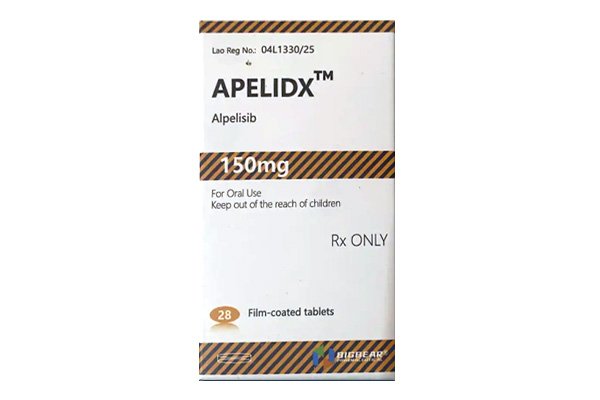
Alpelisib was approved by the U.S. Food and Drug Administration (FDA) in 2019 for use in combination with fulvestrant to treat hormone receptor-positive (HR+), human epidermal growth factor receptor 2-negative (HER2-) breast cancer patients who have experienced disease progression during or after prior endocrine therapy, including postmenopausal women and men.
Indications for Alpelisib
Adult Breast Cancer Patients
Alpelisib is a kinase inhibitor used in combination with fulvestrant to treat adult patients with hormone receptor (HR)-positive, human epidermal growth factor receptor 2 (HER2)-negative, PIK3CA-mutated advanced or metastatic breast cancer (confirmed by an FDA-approved test) who have experienced disease progression following endocrine therapy.
Dosage and Administration of Alpelisib
1. Recommended Dosage
The usual oral dose is once daily. Take 300mg of the medication (equivalent to two 150mg tablets) with a meal.
2. Precautions for Medication Use
Depending on the degree of toxicity of the drug, discontinuation, dose reduction, or permanent discontinuation may be considered. For more severe toxic drugs, immediate discontinuation is recommended. Simultaneously, appropriate measures should be taken to prevent further toxic side effects.
Alpelisib Dosage Forms and Strengths
1. Dosage Form: Tablets.
2. Strengths: 50mg, 150mg, 200mg.
Contraindications of Alpelisib
This product is contraindicated in patients who have previously experienced a severe allergic reaction to apelisiib or any of its active ingredients.
Precautions for Alpelisib
1. Severe Allergic Reaction:
Immediately and permanently discontinue the medication and initiate symptomatic treatment.
2. Serious Skin Adverse Reactions (SCARs):
These include Stevens-Johnson syndrome (SJS), erythema multiforme (EM), toxic epidermal necrolysis (TEN), and DRESS syndrome.
Discontinue use if related symptoms occur, and permanently discontinue use upon diagnosis.
3. Hyperglycemia:
Alpelisib can cause severe hyperglycemia, which in some cases is associated with hyperglycemic hyperosmolar nonketosis syndrome (HHNKS) or ketoacidosis.
Fasting plasma glucose (FPG) and glycated hemoglobin (HbA1c) should be measured in all patients before initiating alphalipib treatment, and basic glycemic control should be optimized accordingly. Pretreatment with metformin should be administered before starting alphalipib treatment, depending on the patient's individual risk factors for hyperglycemia, gastrointestinal tolerance, and specific clinical circumstances.
Pretreatment with metformin before initiating apeliximab treatment significantly reduces the incidence and severity of drug-induced hyperglycemia, but also significantly increases the incidence and severity of adverse reactions such as nausea, vomiting, and diarrhea. Regular monitoring of FPG and HbA1c levels, according to the subsequent treatment plan, is highly beneficial for controlling and managing diabetes. Initiate or optimize antihyperglycemic agents based on clinical indications. If severe hyperglycemia occurs, discontinue, reduce, or stop apeliximab.
4. Pneumonia/Interstitial Lung Disease:
If the patient exhibits significant clinical symptoms or radiographic adverse reactions, discontinue the medication immediately and refer them to a higher-level medical institution.
5. Diarrhea or Colitis:
Most patients will experience diarrhea (which may lead to dehydration or acute kidney injury). If left untreated, complications such as dehydration or acute kidney injury may occur. Immediate antidiarrheal treatment and fluid replacement are necessary.
Patients with colitis should be monitored for abdominal pain and bloody mucus stools. Intravenous or systemic corticosteroids may be used if necessary.
6. Embryo-fetal toxicity:
May cause fetal harm. Patients of childbearing age should use effective contraception.
Common adverse reactions of Alpelisib
The most common adverse reactions, including laboratory abnormalities (incidence ≥20%), are elevated blood glucose, elevated creatinine, diarrhea, rash, decreased lymphocyte count, elevated gamma-glutamyl transferase (GGT), nausea, elevated alanine aminotransferase (ALT), fatigue, decreased hemoglobin, elevated lipase, decreased appetite, stomatitis, vomiting, weight loss, decreased calcium, decreased blood glucose, prolonged activated partial thromboplastin time (aPTT), and alopecia.
Drug interactions of Alpelisib
1. Avoid concomitant use of Alpelisib with potent CYP3A4 inducers.
2. To avoid adverse effects on BCRP levels in patients receiving apelis, concomitant use of BCRP inhibitors should be avoided. However, if no other available drug options are available, close monitoring of the incidence of potential adverse reactions is necessary.
Special Population Use of Alpelisib
To avoid adverse effects on infants, breastfeeding women should avoid breastfeeding as much as possible upon discontinuation of the drug.
Storage Conditions for Alpelisib
Store at 20°C to 25°C (68°F to 77°F), with permissible temperature fluctuations between 15°C and 30°C (59°F to 86°F).