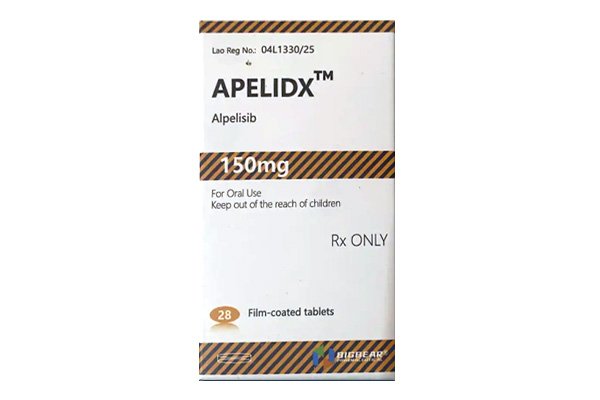
Alpelisib has been approved for marketing in several countries and regions, including the United States, the European Union, and Japan, but it has not yet been approved in China and is not covered by medical insurance.
Alpelisib Indications
Alpelisib, in combination with fulvestrant, is indicated for the treatment of adult patients with hormone receptor (HR)-positive, human epidermal growth factor receptor 2 (HER2)-negative, PIK3CA-mutated advanced or metastatic breast cancer (confirmation requires FDA-approved testing), whose disease has progressed after receiving endocrine therapy.
Alpelisib Dosage and Administration
1. Patient Selection
When selecting HR-positive, HER2-negative advanced or metastatic breast cancer patients for use with Alpelisib, one or more PIK3CA mutations must be detected in tumor tissue or plasma samples. If no mutation is detected in the plasma sample, tumor tissue testing is required.
2. Recommended Dosage and Administration
The recommended dose of apelisib is 300 mg (two 150 mg film-coated tablets) orally once daily with food.
Continue treatment until disease progression or intolerable toxicity occurs.
Swallow the tablet whole at the same time each day. Do not chew, crush, or break it. Do not take accidentally broken tablets.
If a dose is missed, take it within 9 hours of the scheduled time (with food).
If more than 9 hours have passed, skip the dose for that day and continue treatment at the original time the following day. If vomiting occurs after taking the medication, no additional dose is needed for that day; continue treatment as scheduled the following day.
When used in combination with apelisib, the recommended dose of fulvestrant is 500 mg, administered on days 1, 15, and 29, and then monthly thereafter.
3. Dosage Adjustment for Adverse Reactions
(1) Alpelisib Dosage Adjustment Guidelines
Only one dose adjustment is permitted for pancreatitis.
If further adjustment to below 200 mg daily is required, alphalisib should be discontinued.
(2) Specific Dosage Regimen
Starting dose: 300 mg once daily; First dose adjustment: 250 mg once daily; Second dose adjustment: 200 mg once daily.
(3) Management of Skin Adverse Reactions
If a severe skin adverse reaction (SCAR) is diagnosed, alphalisib should be permanently discontinued. Patients who have experienced SCAR during alphalisib treatment should not use alphalisib again.
4. Hyperglycemia Management
(1) Pre-treatment Assessment
For patients about to begin apelixib treatment, fasting plasma glucose (FPG) and glycated hemoglobin (HbA1c) should be measured first. Any existing hyperglycemia should be optimized to the normal range as early as possible before apelixib can be administered.
(2) Pretreatment Recommendations
Based on the patient's hyperglycemia risk factors, gastrointestinal tolerance, and clinical condition, it is recommended to pre-treat with metformin before initiating apelixib treatment in combination with fulvestrant.
(3) Post-treatment Monitoring
Depending on the subsequent treatment regimen, FPG or fasting blood glucose should be monitored at least weekly for the first two weeks after treatment begins, and then at least every four weeks thereafter, with adjustments made as needed clinically.
HbA1c: Monitored every three months, with adjustments made as needed clinically.
For patients at high risk of hyperglycemia, not only should their fasting blood glucose levels be monitored more closely, but their established treatment plans should also be adjusted more flexibly and rationally based on the actual clinical situation.
5. Dosage Adjustment and Management for Diarrhea/Colitis
Patients with grade 2-3 colitis should also consider adding adjuvant therapies such as local or systemic glucocorticoids.
Grade 1: No adjustment of the alpelisib dose is required. Initiate appropriate medical treatment and monitor according to clinical indications.
Grade 2: Discontinue alpelisib administration until improvement to grade 1 or below, then resume at the same dose.
If a relapse occurs ≥ grade 2, discontinue administration until improvement to grade 1 or below, then resume at a lower dose of the next lower grade.
Grade 3: Discontinue administration until improvement to grade 1 or below, then resume at a lower dose of the next lower grade.
Grade 4: Permanently discontinue alpelisib.
6. Dosage Adjustment and Management of Other Toxic Reactions
Grading Criteria: According to CTCAE version 5.0 (excluding hyperglycemia, rash, serious skin adverse reactions, and diarrhea/colitis).
Pancreatitis Management:
For grade 2 and 3 pancreatitis, discontinue administration until improvement.
7. Overdose
To date, there have been few reports of clinical overdose of apelisi, but clinical studies have shown that the maximum dose of apelisi can be 450 mg once daily.
In cases of accidental overdose reported in clinical trials, the adverse reactions associated with overdose were consistent with the known safety profile of apelisi, including hyperglycemia, nausea, fatigue, and rash.
Apelisi (Alpelisib) Dosage Forms and Strengths
Apelisi is available in tablet form at 50 mg, 150 mg, and 200 mg.
50mg: Light pink, unmarked, round, curved film-coated tablets with obliquely cut edges. One side is marked "L7," and the other side is marked "NVR."
150mg: Pale red, unmarked, oval, curved film-coated tablets with obliquely cut edges. One side is marked "UL7," and the other side is marked "NVR."
200mg: Pale red, unmarked, oval, curved film-coated tablets with obliquely cut edges. One side is marked "YL7," and the other side is marked "NVR."
Contraindications for Alpelisib:
Patients with severe hypersensitivity to any of its components.
Precautions for Alpelisib:
1. Severe Hypersensitivity Reactions
Clinical reports indicate that appelisib may cause severe hypersensitivity reactions, potentially developing into life-threatening anaphylactic shock. Clinical manifestations include, but are not limited to: dyspnea, flushing, rash, fever, or tachycardia.
Grade 3 and 4 hypersensitivity reactions occurred in 0.7% of patients.
Cases of angioedema have been reported during post-marketing surveillance.
Inform patients about the symptoms and signs of severe hypersensitivity reactions; if a severe hypersensitivity reaction occurs, apelisib must be permanently discontinued.
2. Serious Skin Adverse Reactions
Apelisib may cause serious skin adverse reactions (SCARs), including:
Stevens-Johnson syndrome (SJS), erythema multiforme (EM), toxic epidermal necrolysis (TEN), eosinophilia, and systemic symptom drug reaction (DRESS).
If symptoms or signs of SCARs occur, apelisib should be discontinued until the cause of the reaction is determined. Consultation with a dermatologist is recommended.
Apelisib must be permanently discontinued after a diagnosis of SCARs. Patients who have experienced severe skin adverse reactions during previous treatment should not restart apelisib.
If SCARs are not diagnosed, dosage adjustments, topical corticosteroids, or oral antihistamines may be considered.
Patients should be promptly informed of any typical, suspicious warning signs of early SCARs infection (such as high fever, flu-like symptoms, minor mucosal lesions, or initial rash or minor lymphadenopathy).
3. Hyperglycemia
Alpelisib treatment may cause severe hyperglycemia. Some cases have been complicated by hyperosmolar hyperglycemic nonketosis syndrome (HHNKS) or ketoacidosis. Fatal ketoacidosis has been reported in post-marketing surveillance.
(1) Monitoring Recommendations:
Monitor fasting plasma glucose (FPG) and HbA1c and optimize glycemic control.
(2) Post-treatment:
Monitor FPG at least weekly for the first 2 weeks, then every 4 weeks thereafter, adjusted as needed clinically.
Monitor HbA1c every 3 months.
For patients with significant risk of hyperglycemia (e.g., BMI ≥ 30, significantly elevated FPG on the first oral glucose tolerance test, HbA1c ≥ upper limit of normal, long-term or short-term use of systemic glucocorticoids, or age ≥ 75 years), the frequency of FPG monitoring should be increased during the initial treatment period.
(3) Hyperglycemia Monitoring and Management
Monitoring Frequency:
Depending on changes in the condition, if hyperglycemia occurs during treatment, fasting plasma glucose (FPG) should be monitored at least twice a week until blood glucose returns to normal, according to clinical indications.
During the use of hypoglycemic drugs, FPG should be monitored once a week for the first 8 weeks, and then once every 2 weeks thereafter, adjusted as needed clinically.
It is recommended to consult a hyperglycemia treatment specialist and provide patients with lifestyle modification guidance (e.g., diet, exercise).
Special Considerations for Special Populations:
The safety of FPG in patients with type 1 diabetes and uncontrolled type 2 diabetes has not been established (such patients were excluded in the SOLAR-1 trial). Patients with a history of well-controlled type 2 diabetes may require intensive glucose-lowering therapy and close monitoring.
Preventative Medication:
Depending on the patient's risk of hyperglycemia, gastrointestinal tolerance, and clinical condition, metformin pretreatment may be considered before apelisib combined with fulvestrant.
However, the METALLICA study showed that, compared to metformin, apelisib for the first 7 days of combination therapy not only better reduced the incidence and severity of hyperglycemia but also potentially exacerbated adverse reactions such as nausea, vomiting, and diarrhea.
Dosage Adjustment:
Depending on the severity of hyperglycemia, apelisib may need to be temporarily suspended, reduced in dosage, or permanently discontinued.
Patient Education:
Inform patients about the symptoms of hyperglycemia, such as unusual thirst, frequent urination, increased urine volume, and increased appetite accompanied by weight loss.
4. Pneumonitis Management
(1) Risk and Incidence:
Alpelisib may cause severe pneumonia (including acute interstitial pneumonia and interstitial lung disease), with a reported incidence of 1.8%.
(2) Management Procedure:
If a patient develops new or worsening respiratory symptoms, alphalisib should be discontinued immediately and pneumonia should be evaluated.
After ruling out other causes such as infection or tumors, if a patient develops typical clinical manifestations of infectious pneumonia, such as hypoxia, cough, and dyspnea, or atypical imaging manifestations of pneumonia, such as interstitial infiltration, a diagnosis of non-infectious pneumonia should be considered.
Alpelisib should be permanently discontinued after a diagnosis of pneumonia.
(3) Patient Warning:
Instruct patients to promptly report new or worsening respiratory symptoms (such as shortness of breath and persistent cough).
5. Diarrhea or Colitis
Patients receiving apelipas may experience severe diarrhea, leading to dehydration, and in some cases, acute kidney injury.
Depending on the severity, apelipas may need to be temporarily suspended, reduced in dosage, or permanently discontinued.
If a patient develops diarrhea or other symptoms, antidiarrheal treatment should be initiated immediately, oral rehydration should be increased, and the doctor should be notified promptly. For patients with severe colitis, treatment with enteral or systemic corticosteroids may be necessary.
6. Embryo-Fetal Toxicity
Based on animal studies and mechanisms of action, apelipas may pose a risk to the fetus:
Women of childbearing age should use effective contraception during treatment and for one week after the last dose.
Male patients with female partners of childbearing age should use condoms and other effective contraception during treatment and for one week after the last dose.
The potential risks to the fetus should be explained to pregnant women and women of childbearing age.
For information on the effects of fulvestrant on pregnancy and contraception, please refer to the relevant instructions in the complete prescribing information package.
Adverse Reactions of Alpelisib
Severe hypersensitivity reactions, severe skin adverse reactions, hyperglycemia, pneumonia, diarrhea, or colitis.
Clinical Experience with Alpelisib
Due to significant differences in clinical trial conditions, the incidence of adverse reactions to a particular drug cannot be directly compared with clinical trial data of other drugs, and may not reflect the incidence in real-world applications.
The safety of apelisib was evaluated in the randomized, double-blind, placebo-controlled SOLAR-1 trial, which enrolled 571 patients with HR-positive, HER2-negative, advanced or metastatic breast cancer, randomly assigned to PIK3CA mutation-positive or negative groups.
Patients received either apelisib 300 mg in combination with fulvestrant (n=284) or placebo in combination with fulvestrant (n=287). Fulvestrant 500 mg was administered intramuscularly on days 1 and 15 of cycle 1, followed by administration on day 1 of every 28-day cycle.
Drug Interactions of Alpelisib
1. Effects of Other Drugs on Alpelisib
Strong CYP3A4 Inducers:
Concomitant use with strong CYP3A4 inducers may decrease the plasma concentration of apelis, potentially weakening its therapeutic efficacy. Concomitant use with strong CYP3A4 inducers should be avoided, and alternative drugs with no or weak CYP3A4 inducing potential should be considered.
Breast Cancer Resistance Protein (BCRP) Inhibitors:
Concomitant use with BCRP inhibitors may significantly increase the plasma concentration of apelis, potentially increasing the risk of toxicity. Patients receiving apelisib should avoid using BCRP inhibitors. If alternatives are not possible, close monitoring for increased adverse reactions is necessary during concomitant use.
Special Populations for Alpelisib Use:
1. Pregnancy
Apelixib must be used in combination with fulvestrant. For pregnancy information regarding fulvestrant, please refer to its complete prescribing instructions. The background risk of major birth defects and miscarriage in the target population is not yet clear. However, in the general US population, the risk of major birth defects in clinically confirmed pregnancies is 2%-4%, and the risk of miscarriage is 15%-20%.
2. Lactation
Apelips must be used in combination with fulvestrant. Please refer to the full prescribing instructions for fulvestrant regarding lactation information.
Currently, there are no data on the presence of apelips in human breast milk, its effects on lactation, or its effects on breastfeeding infants. Due to the potential for serious adverse reactions in breastfeeding infants, it is recommended that breastfeeding women discontinue breastfeeding during apelips treatment and for one week after the last dose.
3. Men and Women of Reproductive Age
Apelips must be used in combination with fulvestrant. Please refer to the full prescribing instructions for fulvestrant regarding contraception and infertility information.
Pregnancy Testing
Pregnancy status must be confirmed in women of reproductive age before initiating apelips treatment.