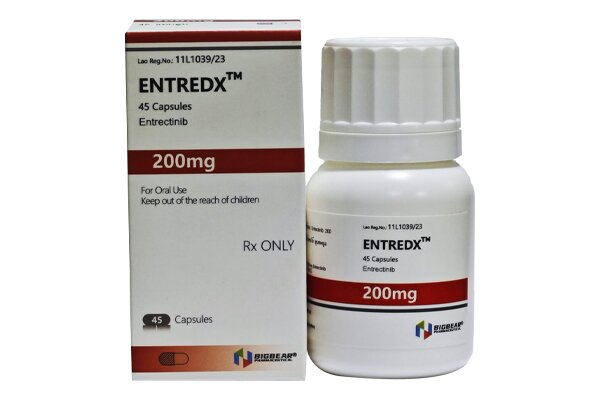
Entrectinib is a potent inhibitor of multiple receptor tyrosine kinases, including tropomyosin receptor kinases (Trk) A, TrkB, TrkC, c-ros oncogene 1 (ROS‑1), and anaplastic lymphoma kinase (ALK).
Entrectinib Precautions
1. Heart Failure
(1) Heart failure has been reported; median time to onset was 2 months. In clinical trials, 50% of patients (6 of 12) had heart failure resolved after initiating appropriate heart failure therapy and interrupting or discontinuing entrectinib.
(2) For patients with symptoms or known risk factors for heart failure, assess LVEF before starting treatment. Monitor for signs and symptoms of heart failure (e.g., dyspnea, edema). For patients with myocarditis with or without reduced ejection fraction, diagnosis may require magnetic resonance imaging (MRI) or cardiac biopsy. If new or worsening heart failure occurs, interrupt treatment, initiate appropriate heart failure therapy, and reassess LVEF; dose reduction or permanent discontinuation may be required.
2. Central Nervous System (CNS) Effects
(1) Entrectinib can cause various adverse CNS effects, including cognitive impairment, mood disorders, dizziness, and sleep disturbances.
(2) Inform patients and their caregivers of the risk of adverse CNS effects. Advise patients not to drive or operate hazardous machinery while experiencing adverse CNS effects. If adverse CNS effects occur, interruption, dose reduction, or permanent discontinuation may be required.
3. Fractures
(1) Fractures have been reported, predominantly involving the hip or lower limbs.
(2) Patients presenting with signs or symptoms of fractures (e.g., pain, changes in mobility, deformity) should be promptly evaluated. The effect on known fracture healing or long‑term fracture risk is unknown.
4. Hepatotoxicity
(1) Hepatotoxicity has been reported; median time to onset of AST or ALT elevation was 2 weeks.
(2) Monitor liver function (e.g., ALT, AST) every 2 weeks during the first month of treatment, then monthly thereafter, and as clinically indicated. If hepatotoxicity occurs, interruption, dose reduction, or permanent discontinuation may be required.
5. Hyperuricemia
(1) Hyperuricemia has been reported, sometimes with symptoms. One case of grade 4 hyperuricemia (associated with tumor lysis syndrome) resulted in death.
(2) Assess serum uric acid levels before starting entrectinib and periodically during treatment. Monitor patients for signs and symptoms of hyperuricemia. For patients with signs or symptoms of hyperuricemia, initiate urate‑lowering therapy as clinically indicated and interrupt entrectinib; dose reduction may be required.
6. QT Interval Prolongation
(1) QTc interval prolongation has been reported.
(2) Monitor QT interval and electrolyte concentrations at baseline and periodically during treatment. More frequent monitoring may be necessary for patients with a history of QT prolongation or with risk factors for QT prolongation (e.g., long QT syndrome, clinically significant bradyarrhythmia, severe or uncontrolled heart failure, electrolyte abnormalities, concomitant use of drugs known to prolong the QT interval).
(3) If QT prolongation occurs, temporary interruption, dose reduction, or permanent discontinuation may be required.
7. Visual Disturbances
(1) Visual disturbances have been reported (i.e., blurred vision, photophobia, diplopia, visual impairment, photopsia, cataract, vitreous floaters).
(2) For patients reporting new visual symptoms, including changes that interfere with activities of daily living, temporarily interrupt entrectinib and consider ophthalmologic evaluation as clinically indicated; dose reduction may be required.
8. Embryo‑Fetal Toxicity
(1) May cause fetal harm. Animal studies showed teratogenicity and embryo‑fetal toxicity (i.e., reduced fetal body weight, decreased skeletal ossification).
(2) Literature reports indicate that in individuals with congenital mutations in the Trk pathway, reduced Trk‑mediated signaling may be associated with obesity, developmental delay, cognitive impairment, pain insensitivity, and anhidrosis.
(3) Avoid pregnancy during treatment. Perform pregnancy testing in females of reproductive potential before starting entrectinib. Such females should use effective contraception during treatment and for at least 5 weeks after the last dose. Male patients with female partners of reproductive potential should use effective contraception during treatment and for 3 months after the last dose.