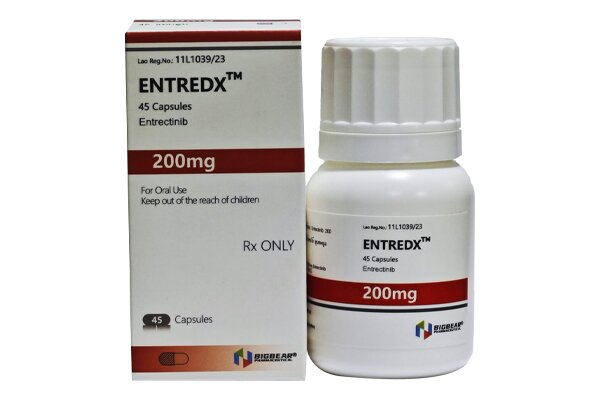
Medical Personnel Management of Entrectinib Adverse Effects
1. Overall Adverse Reactions
Most common adverse reactions (≥20%): fatigue, constipation, dysgeusia, edema, dizziness, diarrhea, nausea, paresthesia, dyspnea, myalgia, cognitive impairment, weight increase, cough, vomiting, pyrexia, arthralgia, and visual impairment.
2. Immune System
Common (1%-10%): pneumonia, sepsis.
3. Musculoskeletal System
Very common (≥10%): myalgia (e.g., musculoskeletal pain, chest wall musculoskeletal pain, myalgia, neck pain) (28%), fractures in children (e.g., hip, femoral or tibial diaphysis, bilateral femoral neck) (23%), arthralgia (21%), muscle weakness (12%), back pain (12%), limb pain (11%).
Common (1%-10%): fractures in adults (e.g., hip, femoral or tibial diaphysis, bilateral femoral neck).
Very rare (<0.01%): tumor="" lysis="" syndrome="">
4. Ocular
Very common (≥10%): visual impairment (e.g., blindness, cataract, cortical cataract, corneal erosion, diplopia, eye disorder, photophobia, photopsia, retinal hemorrhage, blurred vision, visual disturbance, vitreous adhesion, vitreous detachment, floaters) (21%).
5. Metabolism and Nutrition
Very common (≥10%): hyperuricemia (52%), hypernatremia (35%), hypocalcemia (34%), hypophosphatemia (30%), hypoalbuminemia (28%), weight increase (25%), hyperkalemia (25%), anorexia (13%), dehydration (10%).
Uncommon (0.1%-1%): tumor lysis syndrome (TLS).
6. Psychiatric
Very common (≥10%): cognitive impairment (e.g., amnesia, aphasia, cognitive disorder, confusional state, delirium, attention disturbance, hallucination, visual hallucination, memory impairment, mental disorder, altered mood) (27%); sleep disorders (e.g., somnolence, insomnia, sleep disorder, hypersomnia) (14%); mood disorders (e.g., anxiety, affective lability, affective disorder, agitation, depressed mood, euphoria, mood change, mood swings, irritability, depression, persistent depressive disorder, psychomotor retardation) (10%).
7. Genitourinary System
Very common (≥10%): urinary tract infection (13%).
8. Hepatobiliary System
Very common (≥10%): aspartate aminotransferase (AST) increased (44%), alanine aminotransferase (ALT) increased (38%), alkaline phosphatase increased (25%).
9. Respiratory System
Very common (≥10%): dyspnea (30%), cough (24%), pulmonary infection (e.g., lower respiratory tract infection, pulmonary infection, pneumonia, respiratory tract infection) (10%).
Common (1%-10%): pleural effusion, pulmonary embolism, respiratory failure, hypoxemia.
10. General and Administration Site Conditions
Very common (≥10%): fatigue/asthenia (48%), edema (e.g., facial edema, fluid retention, generalized edema, localized edema, edema, peripheral edema, peripheral swelling) (40%), pyrexia (21%).
11. Blood and Lymphatic System
Very common (≥10%): anemia (67%), lymphopenia (40%), neutropenia (28%).
12. Nervous System
Very common (≥10%): dysgeusia (44%), dizziness (e.g., dizziness, vertigo, orthostatic dizziness) (38%), sensory disturbance (e.g., paresthesia, hyperesthesia, hypoesthesia, hypoaesthesia, oral hypoesthesia, palmar-plantar erythrodysesthesia syndrome, oral paresthesia, genital hypoesthesia) (34%), headache (21%), paresthesia (20%), peripheral sensory neuropathy (e.g., neuralgia, peripheral neuropathy, peripheral motor neuropathy, peripheral sensory neuropathy) (18%), ataxia (e.g., ataxia, balance disorder, gait disturbance) (18%), dysphagia (10%).
Common (1%-10%): aphasia, falls.
Renal and urinary: Very common (≥10%): creatinine increased (73%).
13. Cardiovascular System
Very common (≥10%): hypotension (e.g., hypotension, orthostatic hypotension) (18%).
Common (1%-10%): congestive heart failure (CHF), QT interval prolongation, syncope.
Skin and subcutaneous tissue: Very common (≥10%): rash (e.g., rash, maculopapular rash, pruritic rash, erythematous rash, papular rash) (11%).
14. Gastrointestinal System
Very common (≥10%): constipation (46%), diarrhea (35%), nausea (34%), lipase increased (28%), amylase increased (26%), vomiting (24%), abdominal pain (e.g., upper abdominal pain, abdominal pain, lower abdominal discomfort, abdominal tenderness) (16%).
Uncommon (0.1%-1%): large intestinal perforation.