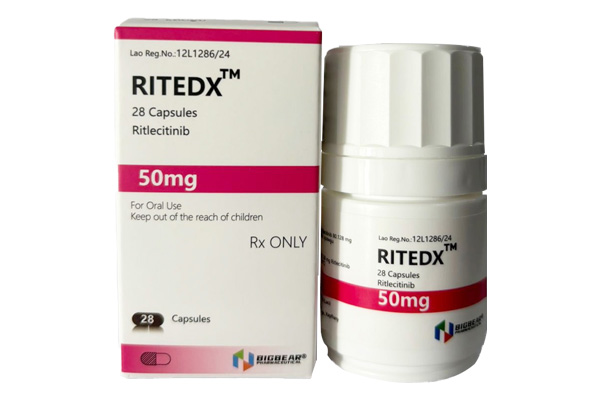
Ritlecitinib is a novel JAK inhibitor developed by Pfizer. Since its launch in 2023, it has become an important therapeutic option for severe alopecia areata. As of 2026, understanding its official price, proper administration, and precautions for use in special populations is critical for treatment planning. This article provides a detailed overview of these three key aspects.
2026 Official Price of Ritlecitinib
The official price of ritlecitinib in 2026 is affected by multiple factors.The Lao Da Xiong version of ritlecitinib is available as 50 mg * 28 capsules per box, at approximately 79 US dollars per box.
Medication Preparation for Ritlecitinib
Adequate preparation is required for the proper use of ritlecitinib.
Pre-Treatment Assessments
Before initiating treatment, baseline tests including complete blood count, liver function, and tuberculosis screening should be performed.Treatment should be delayed in patients with active infections until the infection is controlled.
Vaccination
All necessary vaccinations, including influenza and pneumococcal vaccines, are recommended to be completed at least 4 weeks before starting treatment.Live vaccines should be administered even earlier prior to treatment.
Administration Method
The recommended dose is 50 mg once daily, swallowed whole, with or without food.If a dose is missed, it may be taken within 8 hours; if more than 8 hours have passed, the dose should be skipped.
Proper preparation is essential to ensure therapeutic efficacy, and patients should complete all preparatory steps strictly under medical supervision.
Use in Special Populations
Individualized considerations are required for different patient groups. Key precautions are as follows.
Pediatric Patients
Adolescents aged 12 years and older may receive the standard dose.Safety and efficacy in children below 12 years have not been established; use is not recommended.
Elderly Patients
No dose adjustment is required for patients aged 65 years and older.However, due to increased infection risk, enhanced monitoring is recommended, with regular assessment for infection signs and drug tolerability.
Patients with Renal or Hepatic Impairment
No dose adjustment is needed in patients with mild to moderate hepatic impairment.Use is contraindicated in patients with severe hepatic impairment.Monitoring frequency should be adjusted based on creatinine clearance in patients with renal impairment.
Extra caution is required when using ritlecitinib in special populations. An individualized treatment regimen should be formulated under physician guidance with intensified monitoring.