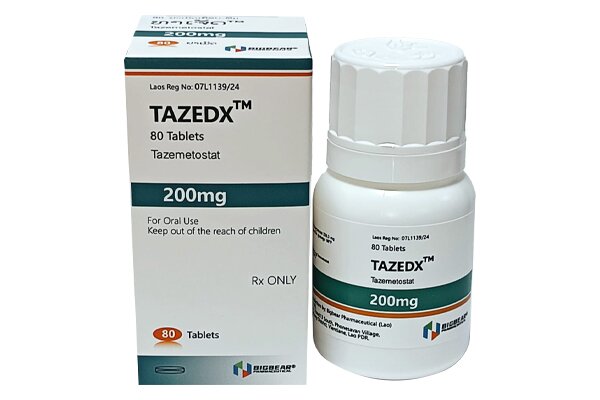
Tazemetostat Specific Drug and Food Interactions
1. Fluconazole: Increases the peak concentration and AUC of Tazemetostat (by 2.3‑fold and 3.1‑fold, respectively). Avoid concomitant use; if co‑administration is unavoidable, reduce the Tazemetostat dose as per the regimen described above. After discontinuing fluconazole, wait for 3 elimination half‑lives of fluconazole, then resume Tazemetostat at the previous dose.
2. Grapefruit or grapefruit juice: May increase systemic exposure to Tazemetostat and the risk of toxicity. Avoid concomitant use.
3. Hormonal contraceptives: May reduce systemic exposure to hormonal contraceptives, diminishing their contraceptive effect. The manufacturer recommends that females of reproductive potential use effective non‑hormonal contraceptive methods.
4. Itraconazole: Increases the peak concentration and AUC of Tazemetostat (by 1.9‑fold and 2.5‑fold, respectively). Avoid concomitant use; if co‑administration is unavoidable, reduce the Tazemetostat dose as per the regimen described above. After discontinuing itraconazole, wait for 3 elimination half‑lives of itraconazole, then resume Tazemetostat at the previous dose.
5. Midazolam: Reduces the peak concentration and AUC of midazolam (by 21% and 40%, respectively).
6. Omeprazole: Increases the AUC and peak concentration of Tazemetostat at steady state (by 26% and 25%, respectively); no clinically relevant effect is expected.
7. Repaglinide: Increases the peak concentration and AUC of repaglinide (by 51% and 80%, respectively).
8. Rifampin: May reduce systemic exposure to Tazemetostat, diminishing its efficacy. Avoid concomitant use.
9. St. John's wort (Hypericum perforatum): May reduce systemic exposure to Tazemetostat, diminishing its efficacy. Avoid concomitant use.
Tazemetostat Pharmacokinetics
1. Absorption
(1) After oral administration, the mean absolute bioavailability is approximately 33%.
(2) Over the dose range of 200–1600 mg twice daily, systemic exposure increases in an approximately dose‑proportional manner.
(3) Peak plasma concentrations are reached approximately 1–2 hours after dosing.
(4) Steady state is achieved in approximately 15 days. The mean accumulation ratio is 0.58.
(5) Food effect: Co‑administration with a high‑fat, high‑calorie meal (approximately 800–1000 calories) does not affect its systemic exposure.
2. Special Populations
(1) Mild hepatic impairment (total bilirubin > ULN but ≤ 1.5 × ULN, or AST > ULN): No effect on the pharmacokinetics of Tazemetostat.
(2) Moderate to severe hepatic impairment (total bilirubin > 1.5 × ULN): Not studied.
(3) Renal impairment, including end‑stage renal disease: No effect on the pharmacokinetics of Tazemetostat.
(4) Age (16–91 years), sex, body weight (37–173 kg), or race: No clinically significant effect on pharmacokinetics.
3. Distribution
(1) Extent of distribution: It is unknown whether Tazemetostat is secreted into human breast milk.
(2) Plasma protein binding: 88%.
4. Elimination
(1) Metabolism: Primarily metabolised by CYP3A to form the major inactive metabolites (M5 and M3); M5 is further metabolised by CYP3A.
(2) Elimination pathways: After oral administration, the majority (94%) is recovered within 12 days. Elimination is mainly via the faeces (79%), with a minor portion via the urine (15%).
(3) Half‑life: 3.1 hours.