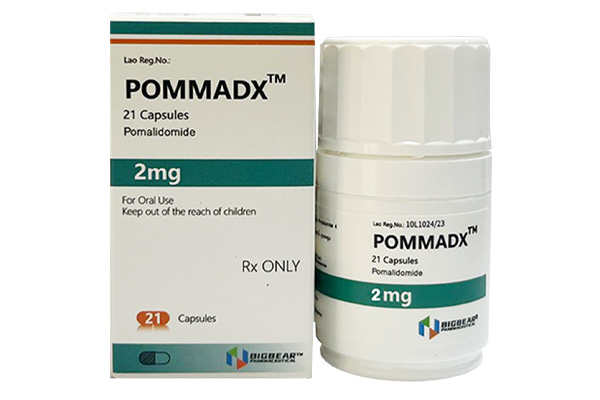
Approval Announcement
May 25, 2020 — Bristol-Myers Squibb (BMS) recently announced that the U.S. Food and Drug Administration (FDA) has approved Pomalyst (pomalidomide), an immunomodulatory agent with anti-tumor activity, for the treatment of patients with Kaposi sarcoma (KS). Specifically, the approval covers:
1.Patients with AIDS-related Kaposi sarcoma whose disease has become resistant to highly active antiretroviral therapy (HAART).
2.HIV-negative patients with Kaposi sarcoma.
Basis for Approval: Study 12-C-0047
Study Design
The approval was based on data from the open-label, single-arm Phase I/II study 12-C-0047. This trial evaluated the safety, pharmacokinetics, and efficacy of Pomalyst in symptomatic HIV-positive and HIV-negative patients with Kaposi sarcoma, most of whom had advanced disease.
Trial Conduct
The trial was conducted by a team led by Dr. Robert Yarchoan under a Cooperative Research and Development Agreement (CRADA). A total of 28 patients (18 HIV-positive, 10 HIV-negative) received Pomalyst at a dose of 5 mg orally once daily for up to 21 cycles (28 days per cycle), until disease progression or unacceptable toxicity. Patients with symptomatic pulmonary or visceral Kaposi sarcoma, a history of venous or arterial thromboembolism, or prothrombotic disorders were excluded. All patients received daily aspirin 81 mg for thromboprophylaxis throughout treatment. The median time to first response from treatment initiation was 1.8 months (range: 0.9–7.6 months).
Primary Endpoint
The primary endpoint of the study was the overall response rate (ORR), including complete response (CR), clinical complete response (cCR), and partial response (PR), assessed by investigators per the response criteria for Kaposi sarcoma established by the AIDS Clinical Trials Group (ACTG) Oncology Committee.
Efficacy Results
Data showed that across all patients, the ORR was 71% (20/28; 95% CI: 51, 87). Of these, 24% (4/28) of patients achieved CR, and 57% (16/28) achieved PR. The median duration of response (DOR) for all patients was 12.1 months (95% CI: 7.6, 16.8). Furthermore, 50% of responding patients maintained their response for 12 months while receiving Pomalyst.
Safety Profile
The most common adverse reactions (≥30%), including laboratory abnormalities, were neutropenia or decreased absolute white blood cell count, elevated creatinine or glucose, rash, constipation, fatigue, decreased hemoglobin, platelets, phosphate, albumin, or calcium, elevated ALT, nausea, and diarrhea. Eleven percent (3/28) of patients discontinued treatment permanently due to adverse reactions. No new safety signals were identified. The safety profile of Pomalyst in Kaposi sarcoma was consistent with its known safety profile in approved indications.
Additional Information
Kaposi Sarcoma Overview
Kaposi sarcoma (KS) is a rare cancer that typically presents as skin lesions but can also develop in several other parts of the body, including the lungs, lymph nodes, and digestive system. It is caused by Kaposi sarcoma-associated herpesvirus (KSHV), also known as human herpesvirus 8 (HHV-8), and is most commonly seen in immunocompromised individuals with HIV infection.
Clinical Significance of Pomalyst
Pomalyst (pomalidomide) is the only oral and first new therapeutic agent approved for the treatment of Kaposi sarcoma in over 20 years. It is important to note that patients with AIDS-related Kaposi sarcoma should continue HAART for HIV treatment as advised by their physician.