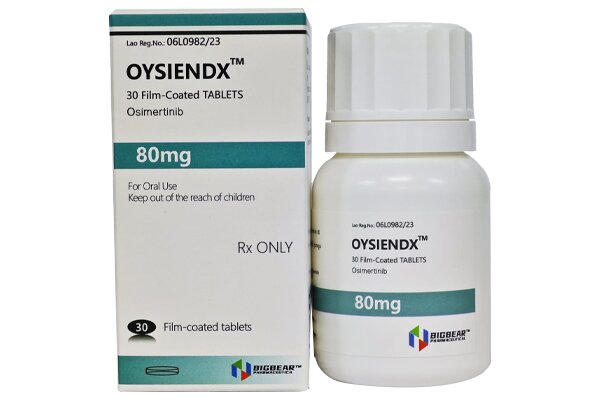
On December 21, 2020, AstraZeneca’s Osimertinib was approved in the United States for the adjuvant treatment of adult patients with early-stage epidermal growth factor receptor-mutated (EGFRm) non-small cell lung cancer (NSCLC) following complete tumor resection. Osimertinib is indicated for patients with EGFRm NSCLC whose tumors have been confirmed—via an approved test—to harbor exon 19 deletions or exon 21 L858R mutations.
This approval was granted under the U.S. Food and Drug Administration’s (FDA) "Real-Time Oncology Review" (RTOR) pilot program. Additionally, five other countries participated in the simultaneous submission and review process through the FDA’s "Project Orbis" initiative.
Among all patients with NSCLC, up to 30% may be diagnosed early enough to be candidates for potentially curative surgery; however, recurrence remains common in early-stage disease. Nearly half of patients diagnosed with Stage IB disease will experience recurrence, while more than three-quarters of those diagnosed with Stage IIIA disease will experience recurrence within five years.
This approval is based on the results of the Phase III ADAURA clinical trial. In this trial, Tagrisso demonstrated a statistically significant and clinically meaningful improvement in disease-free survival (DFS) within the primary analysis population (patients with Stage II and IIIA EGFRm NSCLC). Furthermore, DFS—a key secondary endpoint—also showed significant improvement across the entire trial population (patients with Stage IB–IIIA disease). Roy S. Herbst, MD, PhD—Chief of Medical Oncology at Yale Cancer Center and Smilow Cancer Hospital (New Haven, CT), and Principal Investigator of the Phase III ADAURA trial—stated: "Adjuvant osimertinib delivers unprecedented disease-free survival benefits for patients with early-stage EGFR-mutated lung cancer who face a high risk of recurrence, even after successfully undergoing surgery and subsequent chemotherapy. This approval underscores the critical importance of testing all lung cancer patients for EGFR mutations—regardless of their stage at diagnosis—before determining a treatment plan. This will help ensure that as many patients as possible can benefit from this potentially practice-changing therapy."
Dave Fredrickson, Executive Vice President of the Oncology Business Unit, commented: "For the first time, patients in the U.S. with early-stage EGFR-mutated lung cancer have a targeted, biomarker-driven treatment option. This approval challenges the notion that 'treatment ends after surgery and chemotherapy,' as the ADAURA results demonstrate that osimertinib can significantly alter the course of this disease. We remain steadfast in our commitment to treating cancer patients at earlier stages, when there may still be a chance for a cure."
Osimertinib is a once-daily oral tablet that has been approved in the U.S., Japan, China, the EU, and many other countries worldwide for the first-line treatment of patients with locally advanced or metastatic EGFR-mutated NSCLC, as well as for the treatment of patients with locally advanced or metastatic EGFR T790M mutation-positive NSCLC.