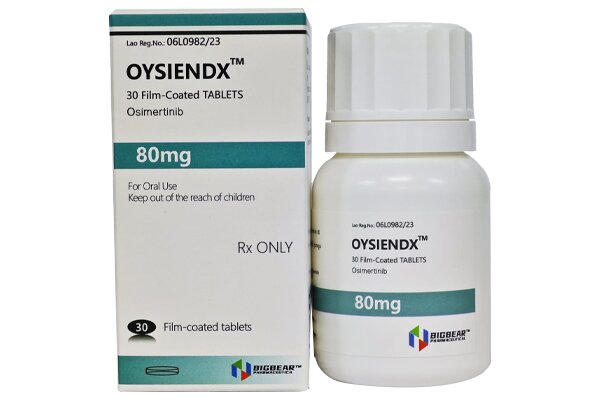
On November 16, 2015, the U.S. Food and Drug Administration (FDA) granted accelerated approval to an oral medication for the treatment of patients with advanced non-small cell lung cancer (NSCLC). The drug, named osimertinib (brand name Tagrisso), is now approved for the treatment of patients whose tumors have a specific epidermal growth factor receptor (EGFR) mutation (T790M) and whose disease has progressed after other EGFR blockade therapies.
According to the National Cancer Institute, lung cancer is the leading cause of cancer death in the United States, with an estimated 221,200 new cases and 158,040 deaths in 2015. Non-small cell lung cancer is the most common type of lung cancer, occurring when cancer cells form in lung tissue. The EGFR gene is a protein involved in the growth and spread of cancer cells.
“Our understanding of the molecular basis of lung cancer and the reasons why these cancers develop resistance to previous treatments is rapidly evolving,” said Richard Pazdur, MD, Director of the Office of Hematology and Oncology Products at the FDA’s Center for Drug Evaluation and Research. “This approval provides a new treatment option for patients who test positive for the EGFR resistance mutation T790M, and is based on substantial evidence from clinical trials demonstrating that osimertinib significantly shrinks tumors in more than half of patients treated.”
Today, the FDA also approved the first companion diagnostic test (cobasEGFRMutationTestv2) for detecting known EGFR resistance mutations targeted by osimertinib. The newly approved version (v2) adds the T790M mutation to the list of clinically relevant mutations detected by the original cobasEGFRMutationTest (v1).
“The approval of safe and effective companion diagnostic tests and drugs remains a significant advancement in oncology,” said Dr. Alberto Gutierrez, Director of the Office of In Vitro Diagnostics and Radiation Health at the FDA’s Center for Devices and Radiological Health. “The availability of cobas EGFR Mesh Test v2 addresses the need to detect this important EGFR gene mutation, which can alter treatment outcomes.”
The most common side effects of osimertinib include diarrhea, skin and nail problems such as dry skin, rash, and infection or redness around the nails. Osimertinib can cause serious side effects, including lung inflammation and heart damage. It may also harm a developing fetus.
The FDA granted AstraZeneca Breakthrough Therapy Designation, Priority Review, and Orphan Drug Designation for osimertinib. Breakthrough Therapy Designation is granted to drugs intended to treat serious diseases and for which preliminary clinical evidence at the time of application submission suggests that the drug may significantly improve upon existing therapies. Priority review designation is granted to drug applications that demonstrate significant improvements in safety or efficacy in the treatment of serious diseases. Orphan drug designation provides incentives such as tax credits, user fee reductions, and market exclusivity to assist and encourage the development of drugs for rare diseases.
Osimertinib was approved under the FDA's accelerated approval program. This program allows approval for drugs used to treat serious or life-threatening diseases based on clinical data showing efficacy at surrogate endpoints that reasonably predict clinical benefit to patients. This program provides patients with earlier access to promising new drugs while the company conducts confirmatory clinical trials.