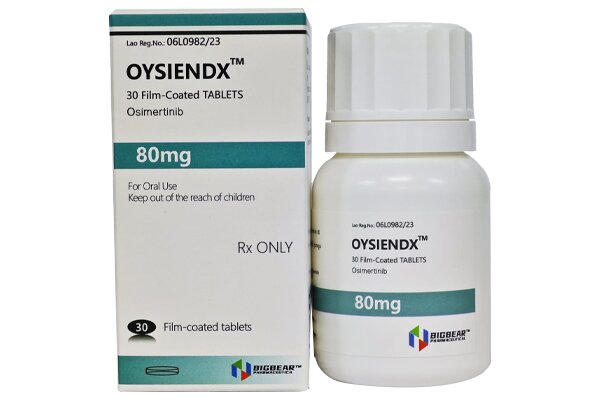
Last Friday, the UK's National Institute for Health and Care Evaluation (NICE) reversed its earlier rejection of AstraZeneca's lung cancer therapy Tagrisso (Osimertinib), approving the drug for the treatment of two lung cancer indications in the UK.
The two lung cancer indications for which Tagrisso was approved in the UK are:
1) For patients with non-small cell lung cancer (NSCLC) that has begun to spread to other parts of the body and who have not yet received cancer treatment;
2) For NSCLC patients with a specific mutation in the EGFR gene (EGFR-T790M), who have failed initial treatment, and whose tumor cells have begun to spread.
NICE stated that the initial rejection of Tagrisso was mainly due to its lack of cost-effectiveness. However, AstraZeneca offered a new business plan (price reduction) to address this issue, allowing Tagrisso to utilize the resources of the UK's National Health Service (NHS) cost-effectively.
Previous clinical trial results showed that Tagrisso outperformed Roche's Tarceva and AstraZeneca's Iressa in inhibiting cancer growth in newly diagnosed NSCLC patients with EGFR mutations. However, NICE previously argued that AstraZeneca lacked direct data to prove Tagrisso's efficacy against Boehringer Ingelheim's Gilotrif (an earlier-generation tyrosine kinase inhibitor already covered by the NHS). Recently, however, AstraZeneca persuaded NICE to grant approval by offering Tagrisso at a confidential discount.
Regarding the upgrade of Tagrisso from the Cancer Drugs Fund (CDF) to standard coverage for previously treated EGFR T790M-mutant NSCLC, NICE stated that the decision was based on new data from the AURA3 trial and data collected from actual use of Tagrisso under conditional pathways. In the AURA3 trial, Tagrisso significantly prolonged the time to cancer progression or death compared to platinum-based doublet chemotherapy. However, Tagrisso did not reach statistical significance on the key endpoint of life extension (reducing the risk of death by 13% compared to chemotherapy).
NICE believes that this data should take into account the 71% rate of switching from chemotherapy to Tagrisso after disease progression, which may have favored the survival benefit data in the chemotherapy group. Therefore, after adopting the model provided by AstraZeneca, the organization believes that Tagrisso's life-extending efficacy and discounted price meet the requirements for inclusion in standard coverage.
The company previously announced at this year's American Society of Clinical Oncology meeting that, as adjuvant therapy after surgery, Tagrisso reduced the risk of disease relapse or death by 83% in stage II and IIIA EGFR-mutant NSCLC. With the approval of the drug as a new indication for patients with EGFR-TKI gene-mutant NSCLC, AstraZeneca aims to promote its use in treatment earlier.